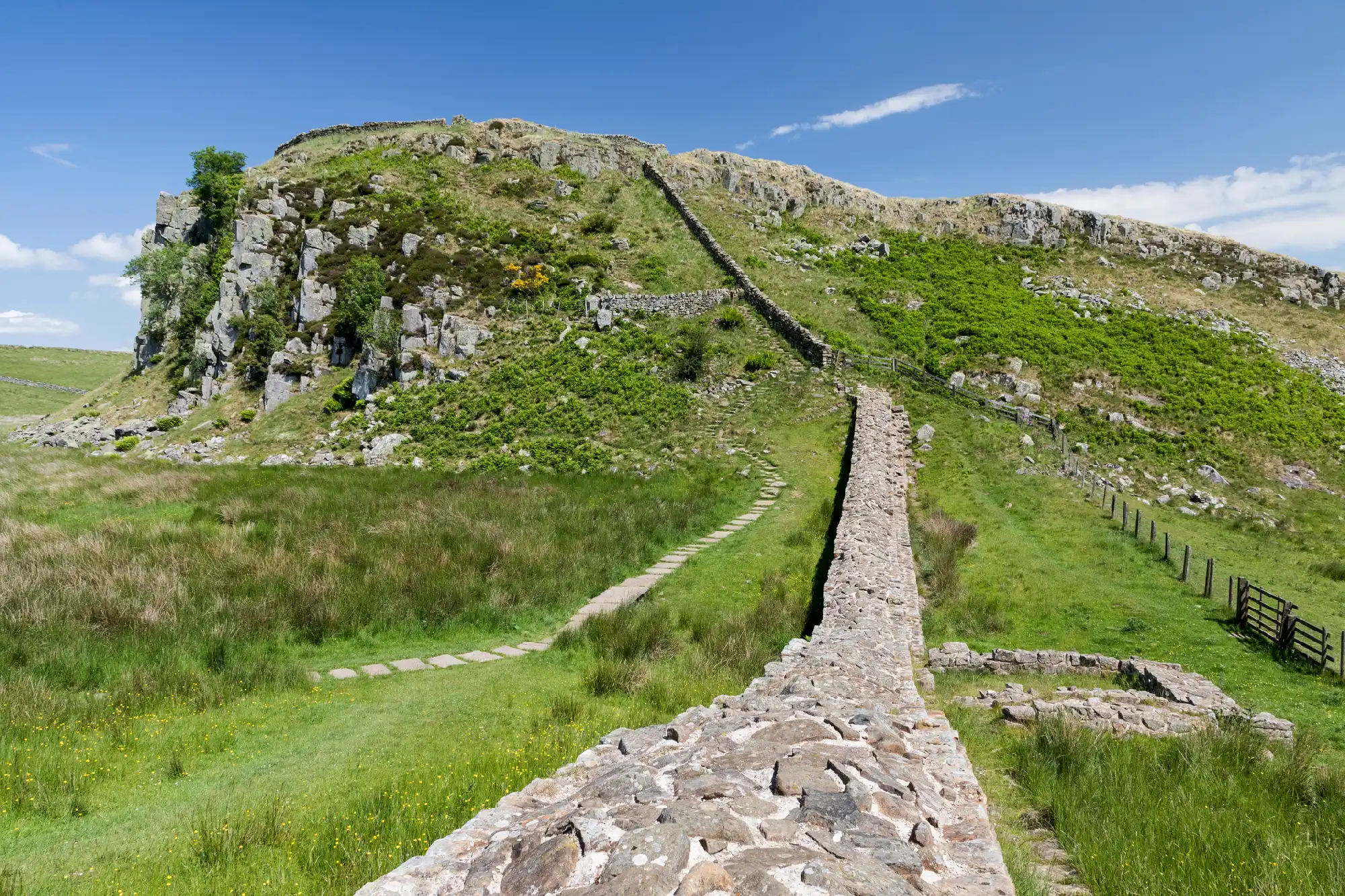
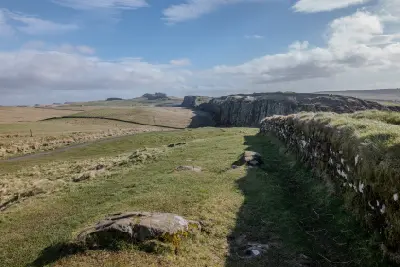
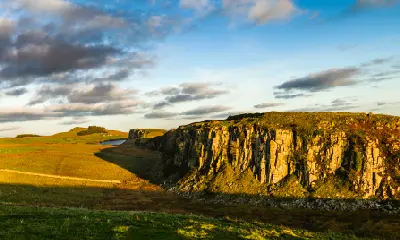
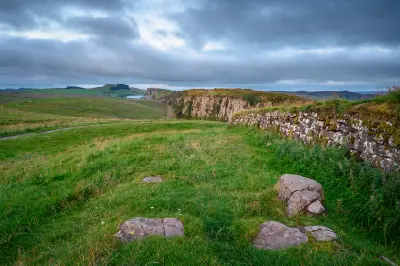
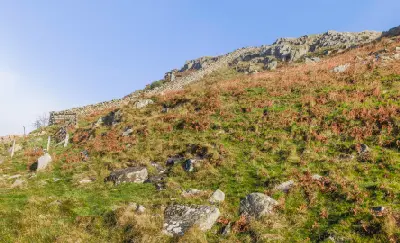
Hadrian's Wall climbs the steep rocky slopes of Peel Crags, following the dramatic escarpment through Northumberland National Park.
Steel Rigg & Peel Crags form one of the most distinctive sections of Hadrian’s Wall, where the Roman frontier follows a series of steep, rocky ridgelines across the Northumberland countryside. The ancient stone wall rises and falls along the Whin Sill escarpment, with open moorland, crags and sweeping valleys extending on either side. Its dramatic topography and surviving Roman stonework provide opportunities for landscape and heritage photography, particularly where the wall creates strong leading lines across the hills.
55.00306, -2.39084
Gallery

Quick Facts
Access
Moderate Hike
45–90 min
Elevation Gain
100 m
Best Light
Low-angle sunlight emphasises the wall's winding route across the ridgelines, revealing the contours of the crags and surrounding valleys.
Why This Light
Season
Seasonally Distinct
Summer brings green grassland, flowering moorland vegetation and long daylight across the exposed ridgelines. Winter reveals muted hillside colours, with occasional frost or snow emphasising the stone wall and rocky escarpment.
Crowds
Often Busy
Restrictions
Steel Rigg is accessible from a nearby National Park car park, with established footpaths leading onto the Hadrian’s Wall ridge. Reaching the principal viewpoints involves steep grassy slopes, stone steps and uneven rocky ground, with exposed sections near the crag edges. Conditions can become slippery after rain, and strong winds or poor visibility may make ridge walking difficult. Visitors should remain on designated paths and avoid climbing or walking directly on the historic wall to protect the Roman remains.