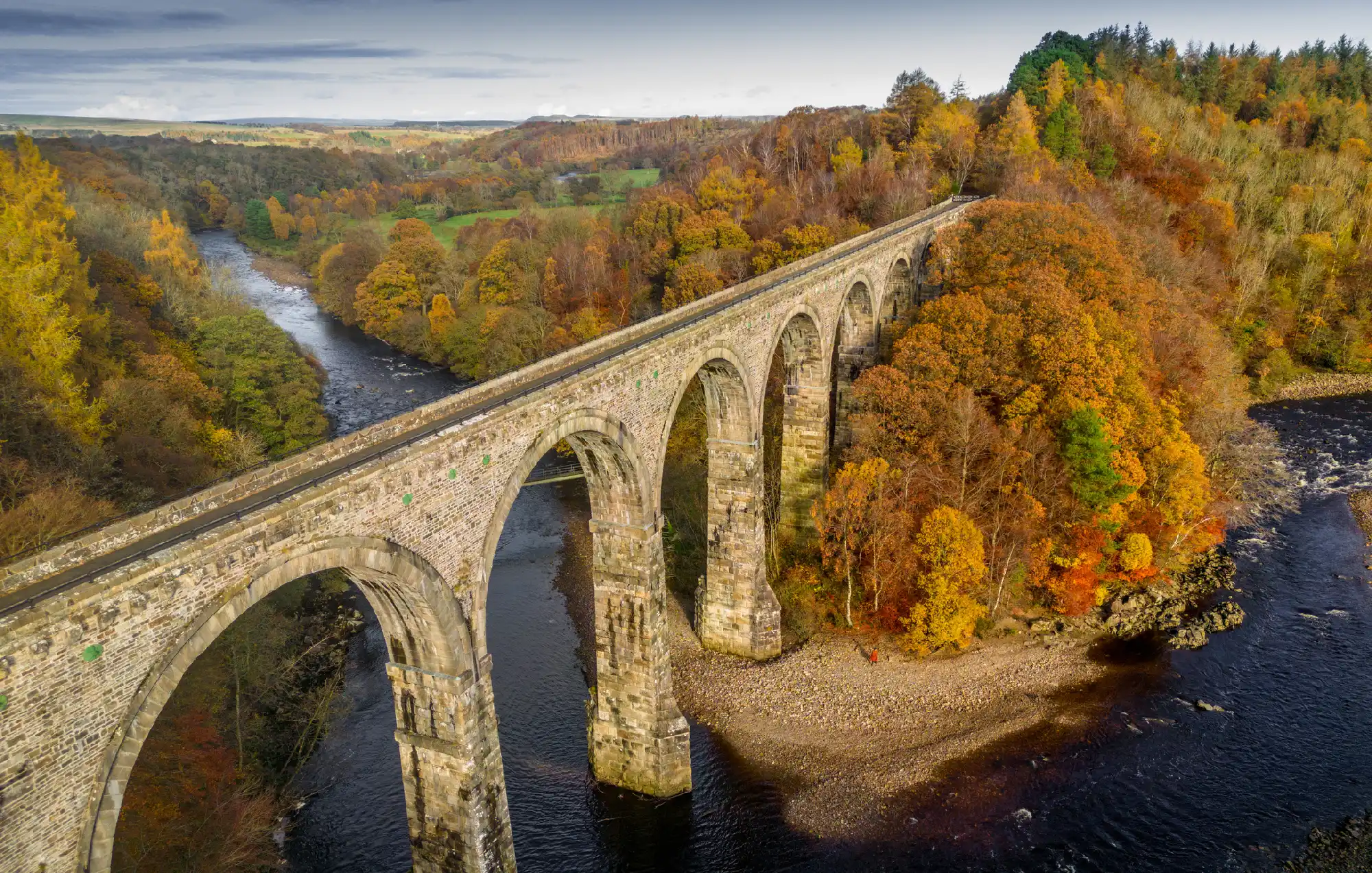
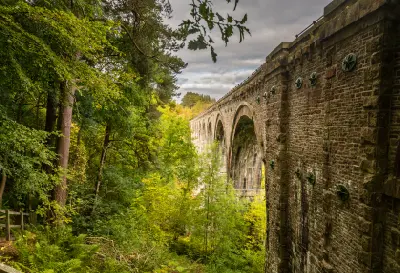
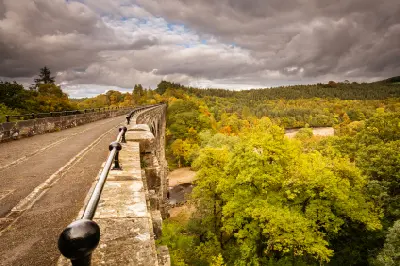
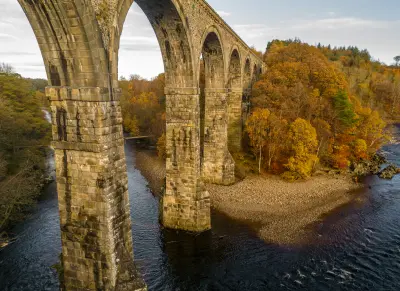
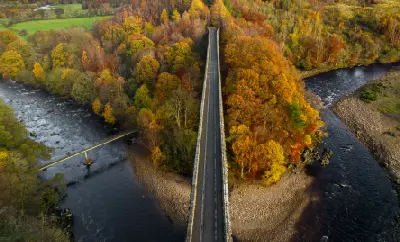
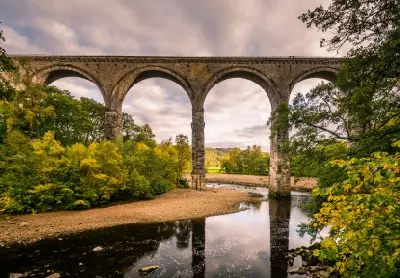
Lambley Viaduct spans the River South Tyne on elegant stone arches, surrounded by golden autumn woodland in the Northumberland countryside, England.
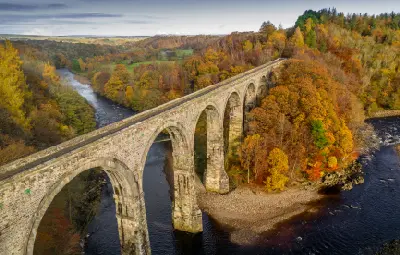
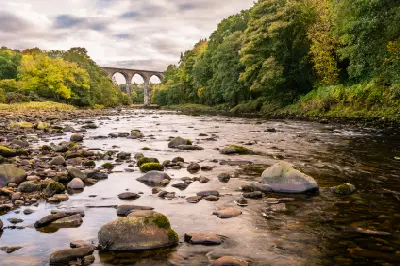
Lambley Viaduct is a 19th-century stone railway bridge spanning the River South Tyne near Lambley in southern Northumberland. Its nine tall masonry arches cross a wooded river valley, forming a prominent example of Victorian railway engineering along the former Alston Branch Line. The combination of repeating architectural forms, flowing water and surrounding woodland provides opportunities for landscape and architectural photography, particularly during autumn.
54.91909, -2.50842
Gallery
Quick Facts
Access
Short Walk
15–45 min
Elevation Gain
40 m
Best Light
Low-angle sunlight reveals the viaduct's stone arches, while soft light preserves detail in the wooded valley and reflections along the river.
Why This Light
Season
Seasonally Distinct
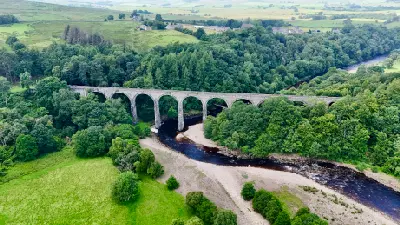
Summer brings dense green woodland around the viaduct, with vegetation framing the stone arches and the River South Tyne flowing through the valley below. Winter reveals more of the bridge's structure through bare trees, with occasional frost, mist and higher river levels following rainfall.
Crowds
Usually Quiet
Restrictions
Lambley Viaduct is accessible on foot via public paths connected to the former railway route, with the bridge deck open to pedestrians. The approach involves uneven woodland paths and some slopes, while reaching lower viewpoints beside the river may require a longer or steeper walk. The viaduct is elevated above the valley, so visitors should remain within the designated pedestrian route and avoid climbing on the masonry. Riverbanks can be slippery or inaccessible during high water, and drone operators should check applicable flight restrictions before photographing the structure from above.