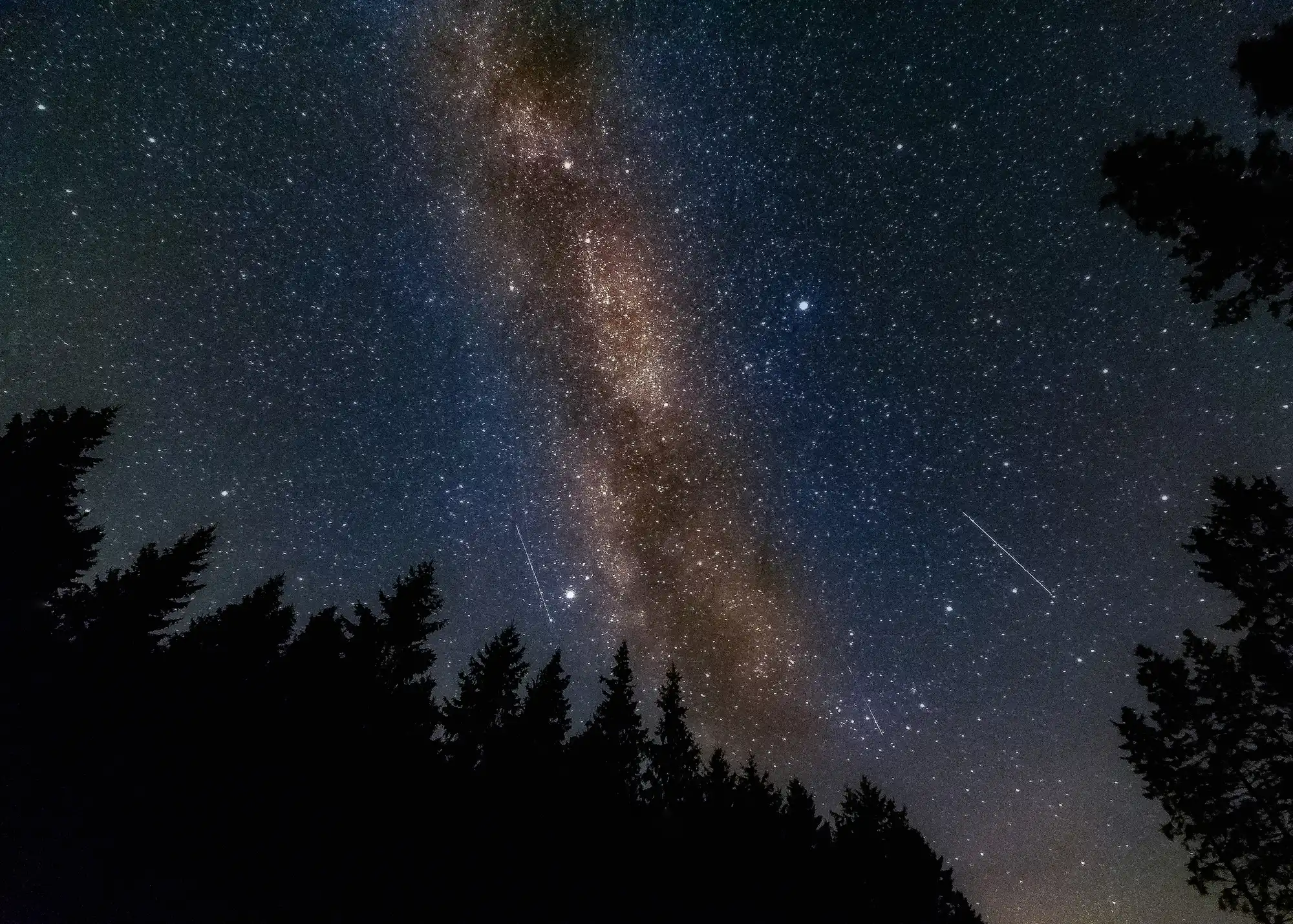
The Milky Way rises above the silhouetted conifers of Kielder Forest, revealing a brilliant field of stars in Northumberland's dark night skies.
Kielder Observatory is an astronomical facility set within Kielder Forest in western Northumberland, overlooking the surrounding hills and remote woodland landscape. Located within the Northumberland International Dark Sky Park, it benefits from exceptionally low levels of artificial light, making the wider area an important destination for observing and photographing the night sky. The observatory's distinctive timber architecture, forest silhouettes and dark horizons provide opportunities for astrophotography, including the Milky Way, star trails and celestial events.
55.23198, -2.61718
Gallery





Quick Facts
Access
Short Walk
0–5 min
Elevation Gain
10 m
Best Light
Dark, moonless skies reveal faint stars and Milky Way detail, while limited artificial lighting preserves contrast above the surrounding forest.
Why This Light
Season
Seasonally Distinct
Summer brings shorter nights, with opportunities to photograph bright stars and the Milky Way during suitable periods of darkness. Winter provides longer observing hours and darker early evenings, with occasional snow or frost creating contrasting foregrounds beneath clear skies.
Crowds
Usually Quiet
Restrictions
Kielder Observatory operates primarily through pre-booked astronomy events, with admission charges and scheduled visiting times. The observatory is reached by a forest access road followed by a short walk from the designated parking area. Visitors should not assume the observatory grounds are freely accessible outside booked sessions. Night driving requires care because of unlit roads, wildlife and changing weather, while winter conditions may affect access. Photography during organised events may be subject to restrictions on tripods, flash and artificial lighting. Independent astrophotography is possible from suitable publicly accessible locations elsewhere in the wider dark-sky park.