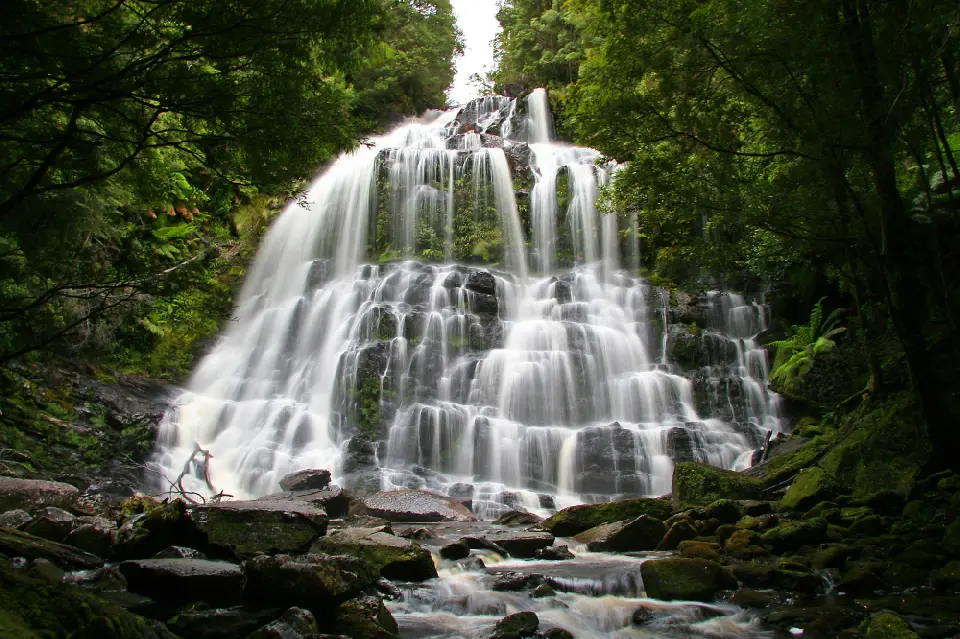
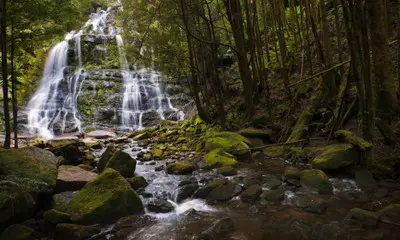
Nelson Falls cascades over tiered rock ledges amid dense temperate rainforest in western Tasmania.
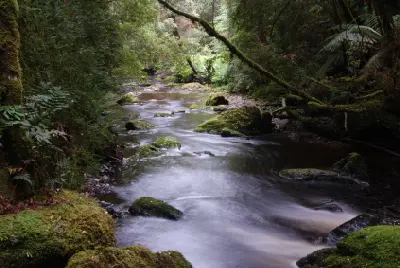
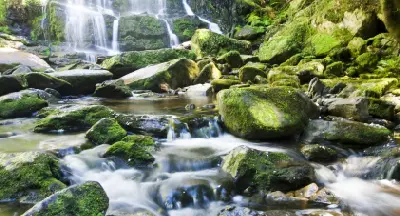
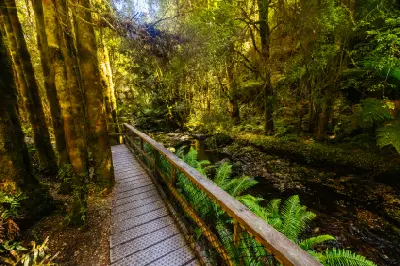
Nelson Falls is a broad multi-tiered waterfall surrounded by dense temperate rainforest in western Tasmania. Water descends over dark, stepped rock beneath a canopy of myrtle, sassafras and tree ferns, with moss covering much of the surrounding forest floor. The combination of cascading water, exceptionally lush vegetation and easy access makes it one of western Tasmania's strongest rainforest photography locations.
-42.09989, 145.73737
Gallery
Quick Facts
Access
Short Walk
15–45 min
Elevation Gain
30 m
Best Light
Soft forest light controls highlights in the falling water while retaining detail and rich colour across moss, wet rock and surrounding vegetation.
Why This Light
Season
Seasonally Distinct
Winter and spring generally bring stronger water flow and particularly lush rainforest conditions. Summer can produce lower flows and brighter forest light, while autumn brings cooler, wetter conditions and rich colour throughout the surrounding vegetation.
Crowds
Often Busy
Restrictions
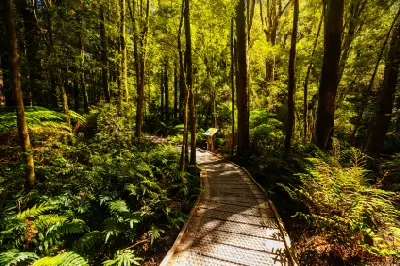
Nelson Falls is reached from the Lyell Highway by a short established walking track through temperate rainforest. The route is relatively gentle and leads to viewing positions close to the waterfall. Rain can leave the boardwalk, rocks and surrounding surfaces wet and slippery.