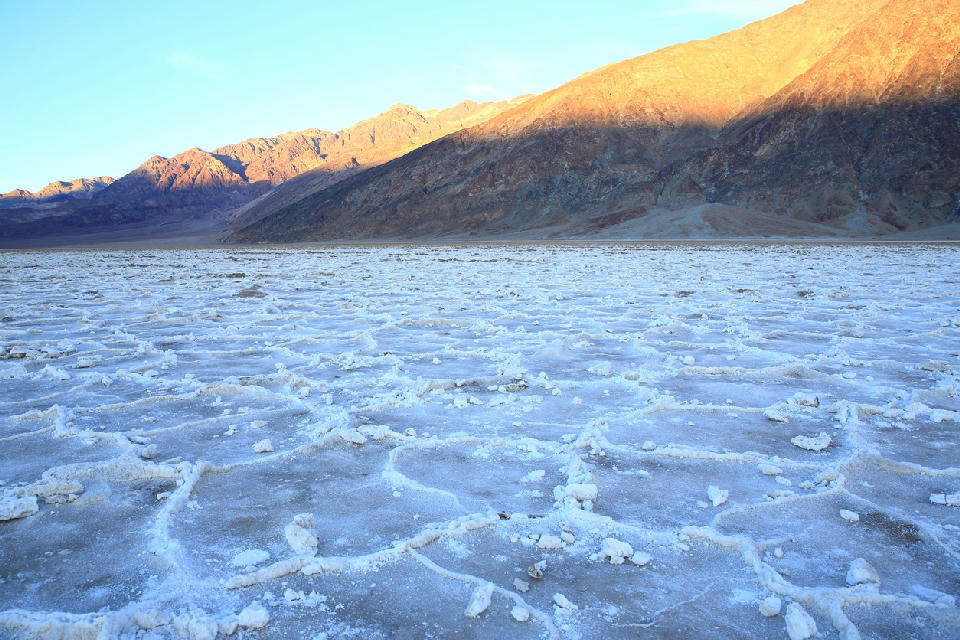
Sunset light over the salt flats of Badwater Basin in Death Valley National Park, California, with polygon salt patterns stretching across the valley floor.
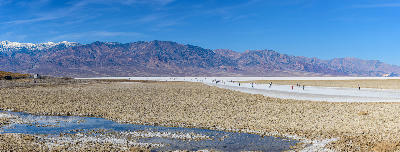
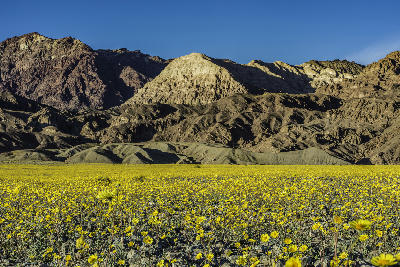
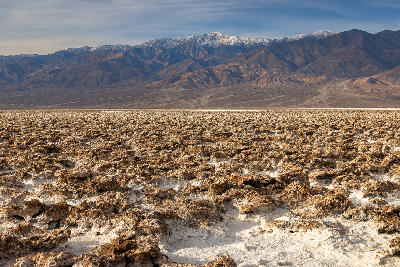
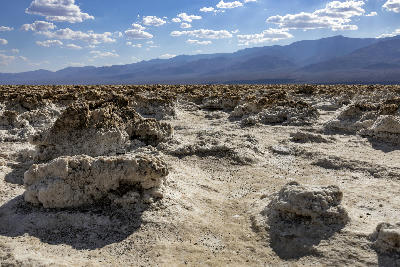
Badwater Basin is a salt flat landscape in Death Valley defined by expansive white crusts, geometric surface patterns, and extremely low elevation within a broad desert basin. The area marks the lowest point in North America, where evaporation has left behind mineral deposits across a flat valley floor. Its spatial identity is defined by minimalism and surface texture. The terrain consists of flat salt crusts extending across the basin, with subtle variation created by polygonal formations and shallow depressions. Elevation change is minimal, with the surrounding mountain ranges forming distant boundaries rather than immediate features. Seasonal conditions influence surface appearance and accessibility. Moisture, temperature, and evaporation cycles affect the visibility and definition of salt patterns, while light conditions shape contrast across the terrain.
Gallery
Key POIs in Death Valley Salt Flats (Badwater Basin)
Nearby Places
View all on mapDante’s View
landmark — 9.5 km
Death Valley National Park
Artist’s Palette & Black Mountains
area district — 9.6 km
Death Valley National Park
Artist’s Palette
landmark — 12.8 km
Death Valley National Park
Artist’s Drive
landmark — 13.4 km
Death Valley National Park
Gower Gulch
landmark — 18.0 km
Death Valley National Park
Furnace Creek & Zabriskie Point
area district — 18.9 km
Death Valley National Park
Zabriskie Point
landmark — 18.9 km
Death Valley National Park
Golden Canyon
landmark — 19.2 km
Death Valley National Park
Overview
Badwater Basin is structured as a continuous salt flat system where surface detail replaces topographical variation. The landscape operates at a micro-scale, with patterns and textures becoming the primary visual elements. Unlike dune or canyon environments, there is little vertical structure. Compositions are built from the ground surface outward, often incorporating distant mountains as secondary elements rather than focal points. The visual structure is defined by repetition and abstraction. Salt polygons, lines, and textures create compositions that emphasise pattern, minimalism, and spatial openness.
Key photography subjects
- Salt polygons forming repeating geometric patterns
- Flat expanses extending toward distant horizons
- Abstract surface textures across salt crust
- Minimalist compositions with limited vertical elements
- Subtle tonal variation across white surfaces
- Distant mountains framing open basin
- Light revealing texture and pattern across ground
Workshops in Death Valley Salt Flats (Badwater Basin)
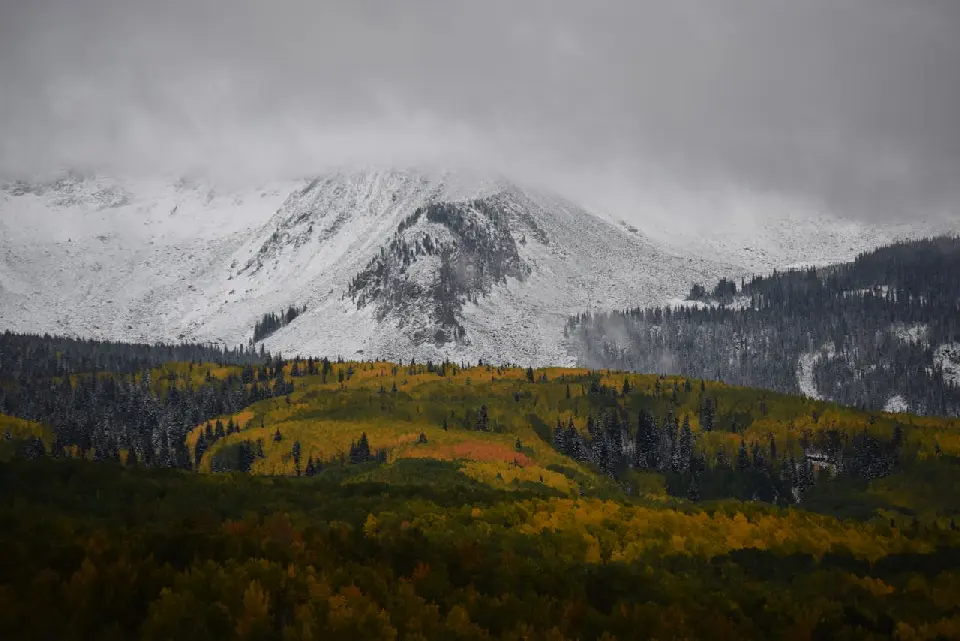
Colorado Fall Color Photography Art Retreat

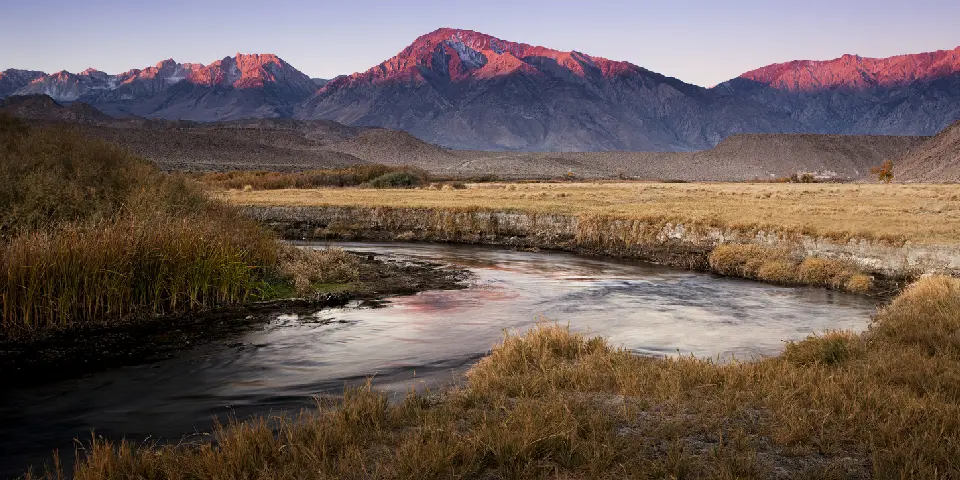
Autumn in Eastern Sierra

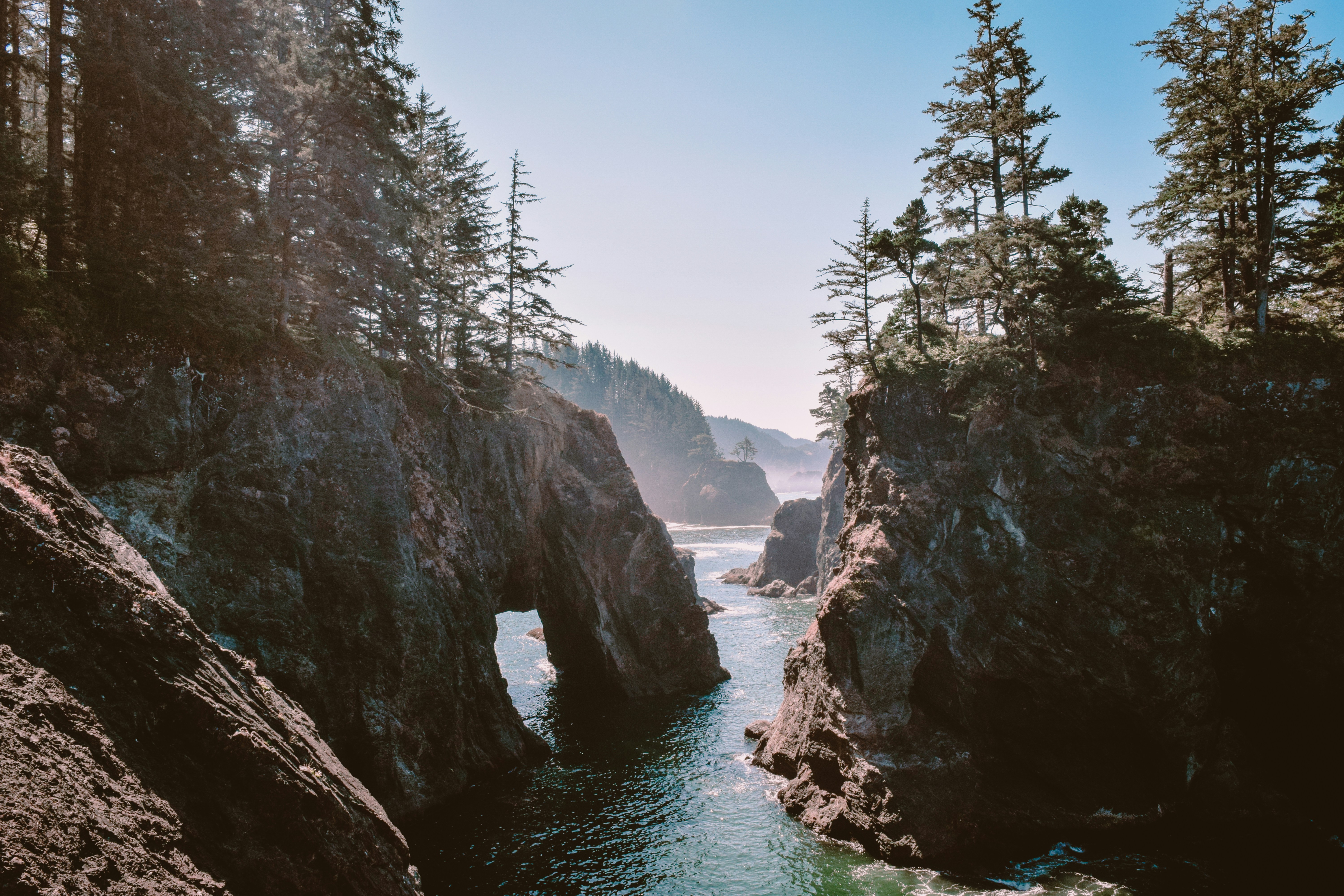
Oregon Coast Adventure Photography Workshop
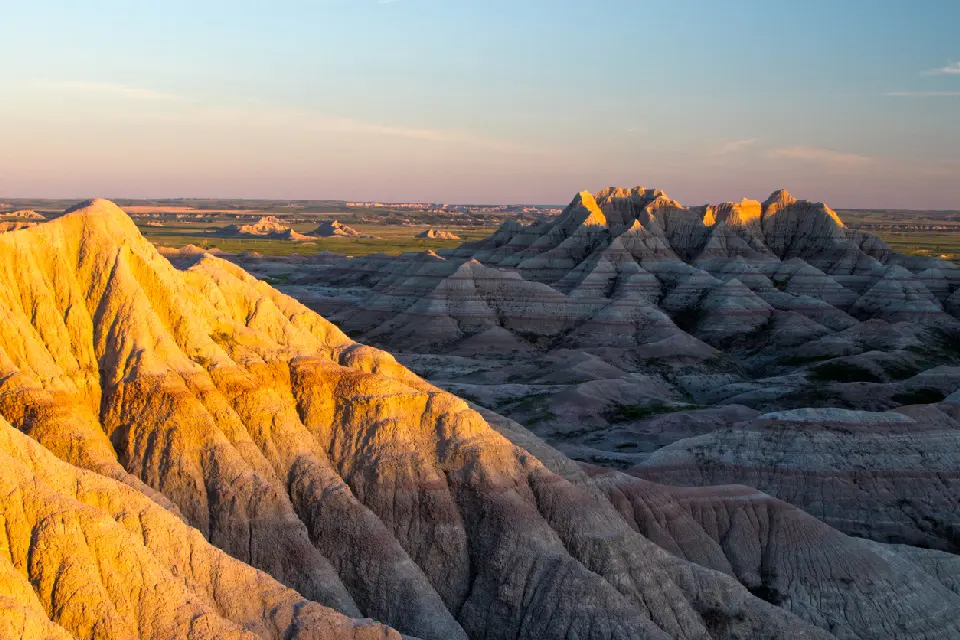
Autumn in Utah Badlands