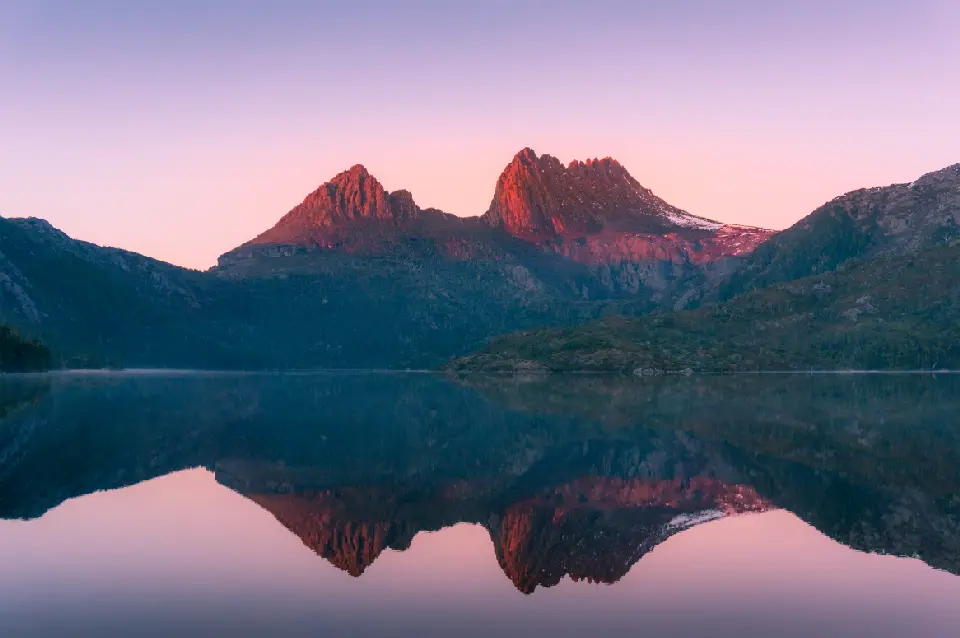
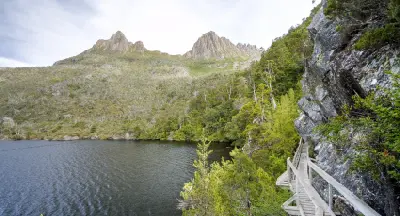
Cradle Mountain catches the first warm light of sunrise above the still waters of Dove Lake in Tasmania, Australia.
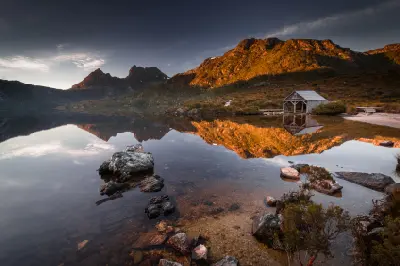
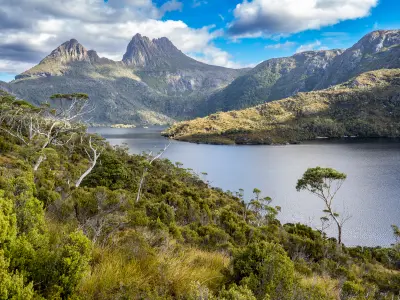
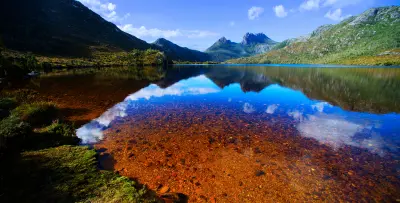
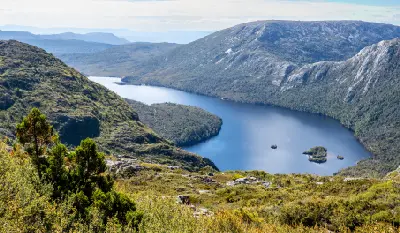
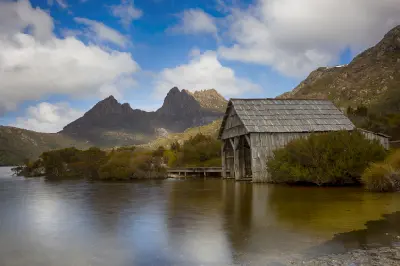
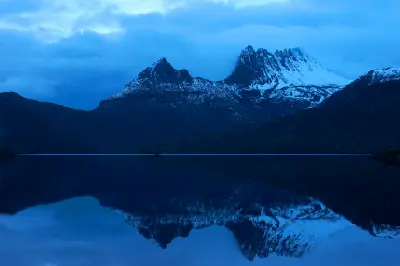
Dove Lake is a glacial lake beneath Cradle Mountain in Tasmania's central highlands and one of the state's most recognisable alpine landscapes. Dark water is surrounded by button-grass moorland, ancient rainforest and rugged mountain slopes, with the distinctive summit of Cradle Mountain rising beyond the southern shore. Changing weather, reflections and seasonal snow can dramatically alter the character of the lake.
-41.66041, 145.96141
Gallery
Quick Facts
Access
Short Walk
5–15 min
Elevation Gain
10 m
Best Light
Calm early light can produce mountain reflections across the lake, while low-angle light reveals the rugged form and texture of Cradle Mountain.
Why This Light
Season
Seasonally Distinct
Summer brings longer daylight and generally easier access, while autumn introduces colour to deciduous fagus around the highlands. Winter can bring snow to the shoreline and surrounding peaks, while spring combines fresh vegetation with highly variable alpine weather.
Crowds
Often Busy
Restrictions
Dove Lake is reached by the managed road and shuttle system within Cradle Mountain–Lake St Clair National Park. The principal shoreline viewpoints require only short walks, while the Dove Lake Circuit provides additional perspectives around the lake and involves a considerably longer walk.