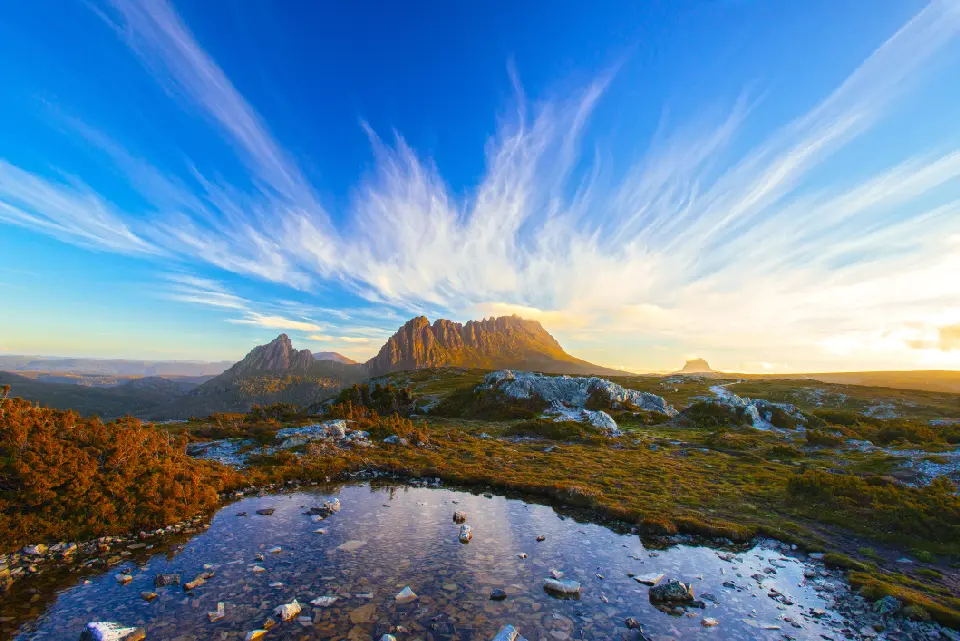
Cradle Mountain catches the warm evening light above alpine tarns and rugged moorland in Tasmania’s Central Highlands.
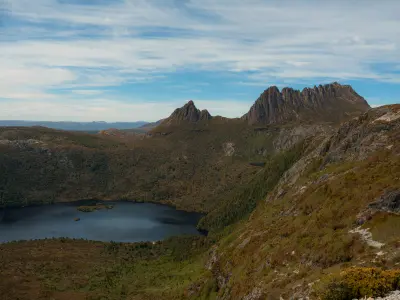
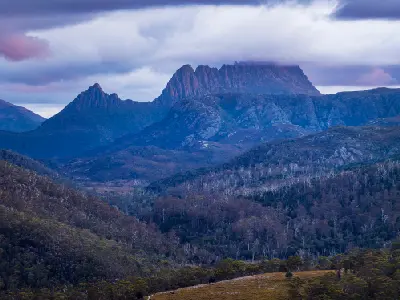
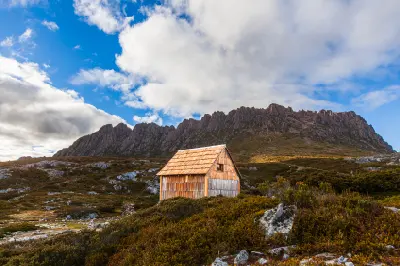
Cradle Mountain is one of Tasmania's most distinctive alpine landmarks, rising above glacial lakes, button-grass moorland and ancient temperate vegetation within Cradle Mountain–Lake St Clair National Park. Its jagged dolerite summit forms a dramatic backdrop to Dove Lake and the surrounding highlands, while rapidly changing weather can transform the mountain from clear reflected views to mist, snow and low cloud within a short period.
-41.68464, 145.95130
Gallery
Quick Facts
Access
Moderate Hike
90–180 min
Elevation Gain
250 m
Best Light
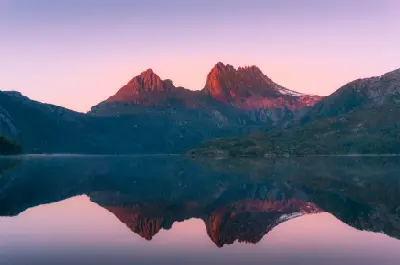
Low-angle light reveals the mountain's rugged dolerite profile, while calm mornings can produce reflections across surrounding lakes and tarns.
Why This Light
Season
Seasonally Distinct
Summer brings longer daylight and generally easier alpine access, while autumn introduces colour to deciduous fagus on higher slopes. Winter frequently brings snow and ice, while spring combines variable mountain weather with lingering snow.
Crowds
Often Busy
Restrictions
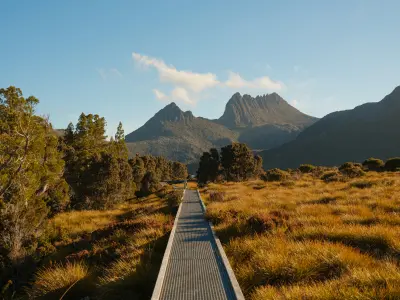
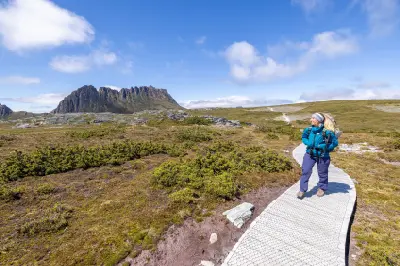
Cradle Mountain can be photographed from easily reached positions around Dove Lake, with excellent views requiring only short walks from the managed visitor access points. Higher perspectives such as Marion's Lookout require substantially longer and steeper hikes, while reaching the summit is a serious alpine undertaking.