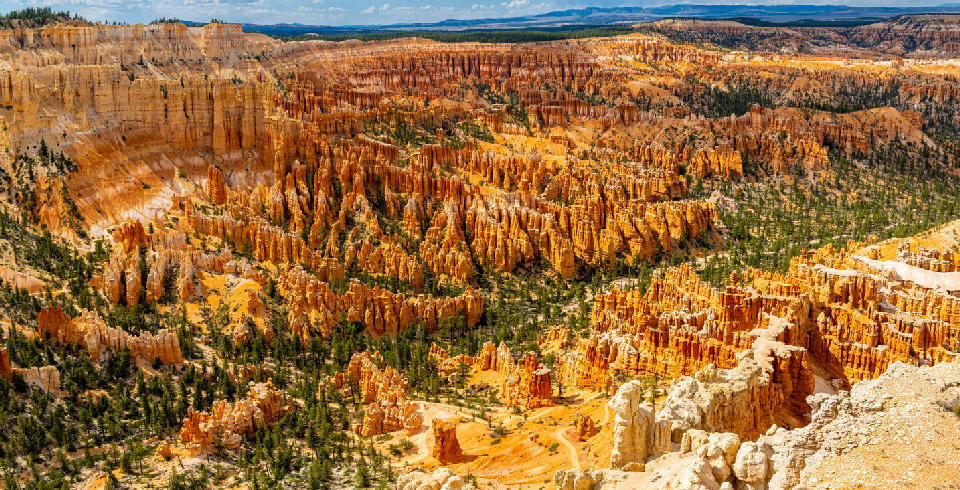
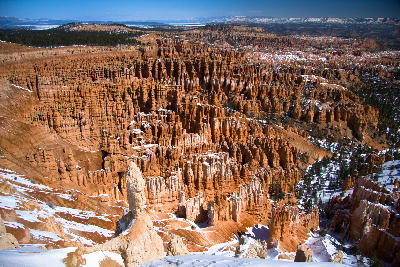
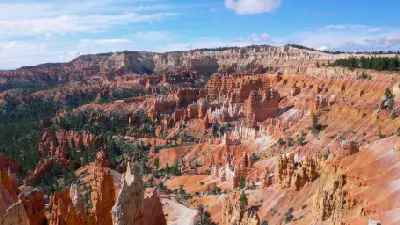
Panoramic view across the Bryce Amphitheater from Bryce Point, showing dense hoodoo formations and canyon layers in Bryce Canyon National Park.
Bryce Amphitheater is the central basin within Bryce Canyon, defined by a large concentration of hoodoo formations arranged across a broad, open depression. The elevated rim provides a consistent downward perspective into densely packed vertical columns and layered terrain. The composition resolves through variation in elevation and angle along the rim, which changes separation, depth, and alignment of formations across the amphitheatre.
37.62753, -112.15023
Gallery
Quick Facts
Access
Short Walk
15–45 min
Elevation Gain
40 m
Best Light
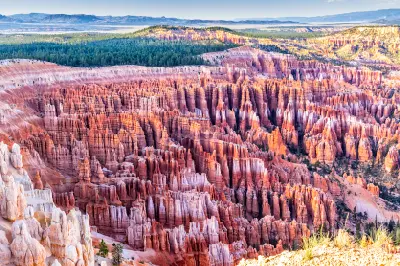
Low-angle light moves across the amphitheatre, progressively illuminating hoodoo clusters and creating alternating bands of light and shadow that increase depth.
Why This Light
Season
Seasonally Distinct
Summer conditions provide consistent access along the rim with clear visibility across the amphitheatre. Winter introduces snow accumulation that simplifies foreground surfaces and increases contrast between hoodoos and surrounding terrain.
Crowds
Busy Sunrise/Sunset
Restrictions
Access requires entry to Bryce Canyon National Park; viewpoints are connected by maintained rim paths with short walking distances between them.