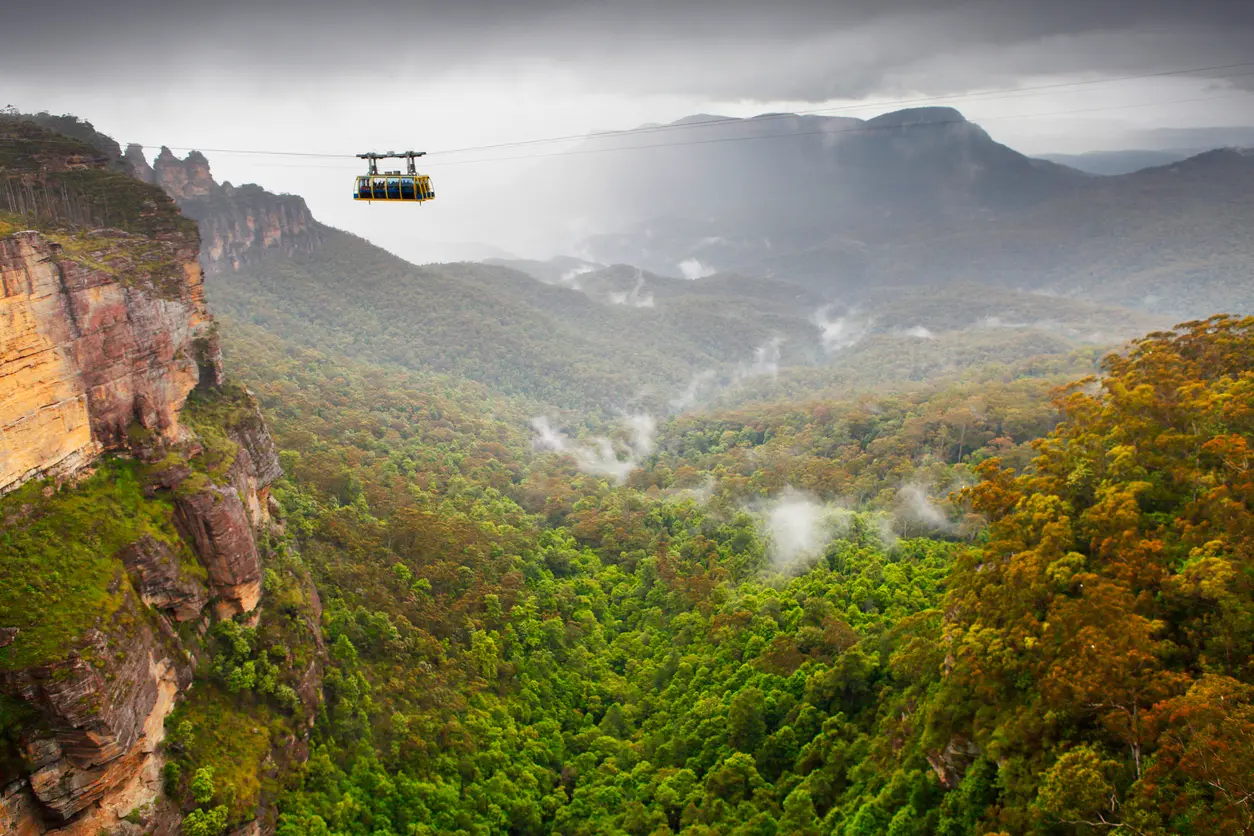
Scenic Skyway above the misty Blue Mountains, New South Wales, Australia.
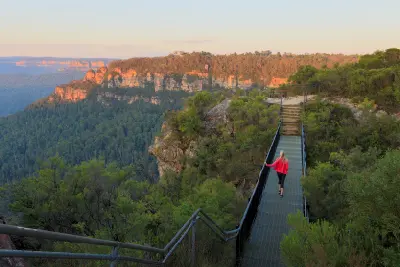
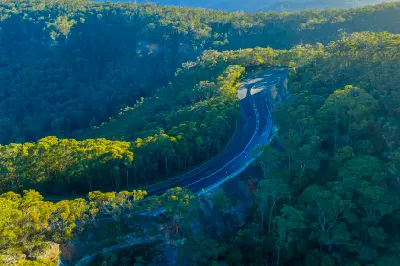
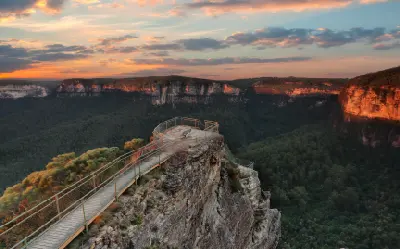
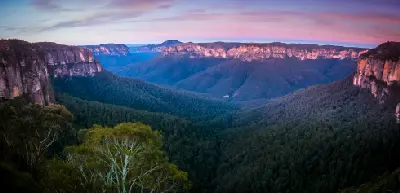
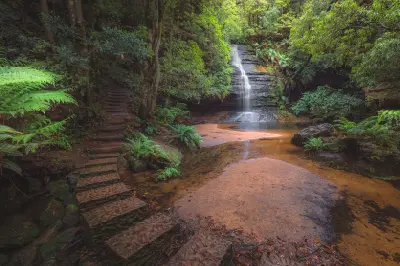
The Blue Mountains form an extensive sandstone plateau west of Sydney, defined by deeply incised valleys, towering escarpments and densely forested wilderness. The region includes dramatic cliff systems around Katoomba and Blackheath, where elevated lookouts overlook successive ridges and valleys extending towards the western horizon. The terrain transitions between broad plateau surfaces, vertical sandstone cliffs, narrow gorges and deeply sheltered valleys. Waterfalls descend from the escarpment edges, while extensive eucalyptus forest covers the valley floors and slopes, creating the characteristic blue-grey haze associated with the region. Seasonal rainfall, mist and changing atmospheric conditions continually alter visibility and colour, producing strong variations between clear expansive views and enclosed, cloud-filled landscapes.
Gallery
Key POIs in Blue Mountains
Nearby Places
View all on mapBlues Point
landmark — 85.2 km
Sydney, Blue Mountains & NSW Coast
Sydney Harbour Bridge
landmark — 85.9 km
Sydney, Blue Mountains & NSW Coast
Circular Quay
landmark — 86.1 km
Sydney, Blue Mountains & NSW Coast
Kirribilli Waterfront
landmark — 86.2 km
Sydney, Blue Mountains & NSW Coast
Sydney Opera House
landmark — 86.4 km
Sydney, Blue Mountains & NSW Coast
Sydney Harbour
area district — 86.4 km
Sydney, Blue Mountains & NSW Coast
Mrs Macquarie's Point
landmark — 87.0 km
Sydney, Blue Mountains & NSW Coast
Sea Cliff Bridge
landmark — 87.5 km
Sydney, Blue Mountains & NSW Coast
Overview
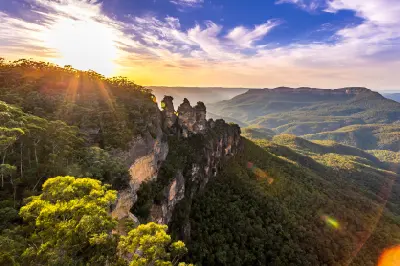
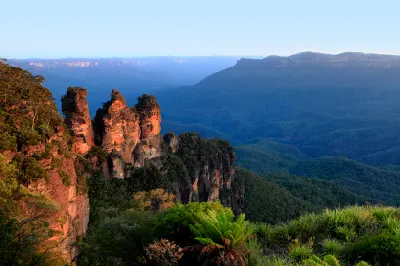
The Blue Mountains are formed from horizontally layered sandstone plateaus dissected over millions of years by rivers and erosion. Rather than conventional mountain peaks, much of the landscape consists of elevated tablelands separated by immense valleys, with resistant sandstone producing sheer cliffs, isolated rock formations and narrow canyon systems. Around Katoomba and Blackheath, major escarpments provide extensive views across Jamison, Grose and adjoining valleys. Landmarks such as the Three Sisters rise from the cliff margins, while Wentworth Falls drops from the plateau into the valley below and the Grand Canyon reveals a more enclosed landscape of sandstone walls and temperate vegetation. The visual structure of the region is defined by repeated layers of cliff, forest and distant ridge. Atmospheric haze separates successive landforms into progressively softer tones, while mist, low cloud and directional light can rapidly transform the scale and depth of the landscape.
Key photography subjects
- Layered sandstone escarpments and immense forested valleys
- Three Sisters and isolated sandstone formations
- Govetts Leap, Pulpit Rock and elevated wilderness views
- Wentworth Falls, canyons and plateau-edge waterfalls
- Eucalyptus forest and characteristic blue atmospheric haze
- Sandstone cliffs, gorges and weathered rock textures
- Sunrise, mist, cloud inversions and changing mountain light
Workshops in Blue Mountains
No upcoming workshops scheduled for Blue Mountains at this time.
Check back soon or explore other destinations.