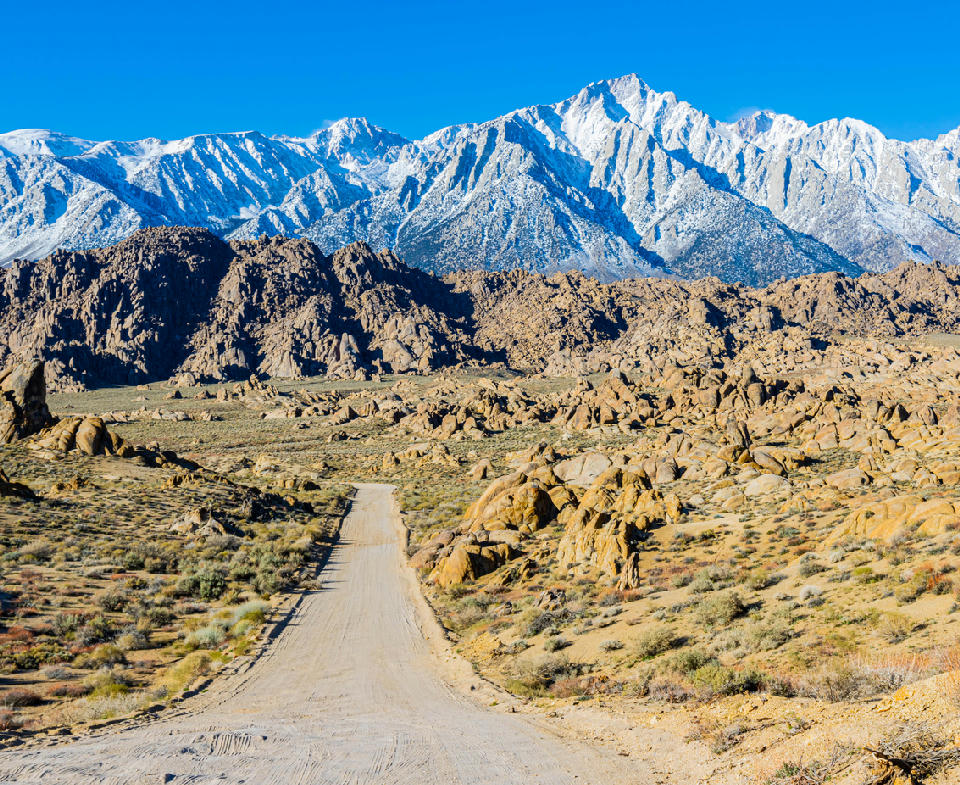
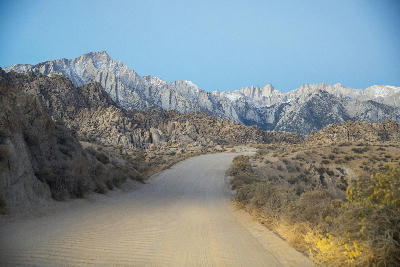
Dirt road winding through Alabama Hills with the Mount Whitney massif rising behind in the Eastern Sierra Nevada
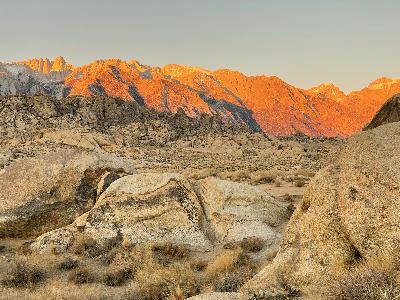
The rounded rock formations of the Alabama Hills sit beneath the steep granite face of Mount Whitney on the eastern edge of the Sierra Nevada. This landscape is defined by the contrast between low, sculpted desert terrain in the foreground and the abrupt rise of high alpine peaks behind. The terrain transitions from open desert plains into clusters of weathered boulders, arches, and rock formations, before rising sharply into the Sierra Nevada escarpment. Elevation change is compressed into a short horizontal distance, creating a strong foreground-to-background relationship. Seasonal conditions influence clarity, snow cover on the peaks, and light behaviour across rock surfaces. Atmospheric conditions often enhance separation between the foreground formations and the mountain backdrop.
Gallery
Key POIs in Alabama Hills & Mount Whitney
Nearby Places
View all on mapFather Crowley Overlook
landmark — 58.9 km
Death Valley National Park
South Lake
water feature — 73.7 km
Eastern Sierra Nevada
Bishop Creek Canyon
area district — 81.7 km
Eastern Sierra Nevada
North Lake
water feature — 81.9 km
Eastern Sierra Nevada
Methuselah Grove
landmark — 86.9 km
Eastern Sierra Nevada
Owens Valley
area district — 88.8 km
Eastern Sierra Nevada
Ancient Bristlecone Pine Forest
area district — 89.9 km
Eastern Sierra Nevada
Mesquite Flat Sand Dunes
landmark — 92.5 km
Death Valley National Park
Overview
This region is structured around a foreground–background contrast system, where low desert terrain provides compositional framing for one of the highest mountain faces in the contiguous United States. The Alabama Hills themselves form a dispersed network of rounded boulders, arches, and rock clusters. These formations sit within relatively flat terrain, allowing flexible positioning and composition toward the Sierra Nevada. Behind them, the eastern face of Mount Whitney rises abruptly, creating a dramatic vertical backdrop. This compression of distance between desert and alpine environments defines the visual identity of the area. The visual structure is built on alignment and framing. Foreground elements—arches, boulders, and ridgelines—are used to direct attention toward the mountains, creating depth and separation across the scene.
Key photography subjects
- Rounded boulder formations across desert terrain
- Natural rock arches used for framing mountain backdrops
- Mount Whitney and Sierra Nevada peaks rising sharply behind
- Foreground–background contrast between desert and alpine terrain
- Leading lines created by dirt roads and rock formations
- Light interacting with textured rock surfaces
- Snow-capped peaks providing seasonal contrast
Workshops in Alabama Hills & Mount Whitney
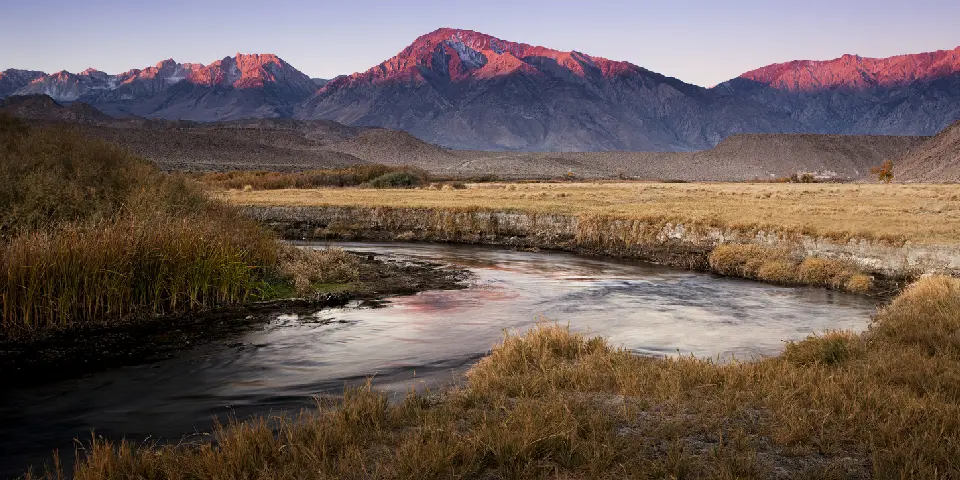
Autumn in Eastern Sierra

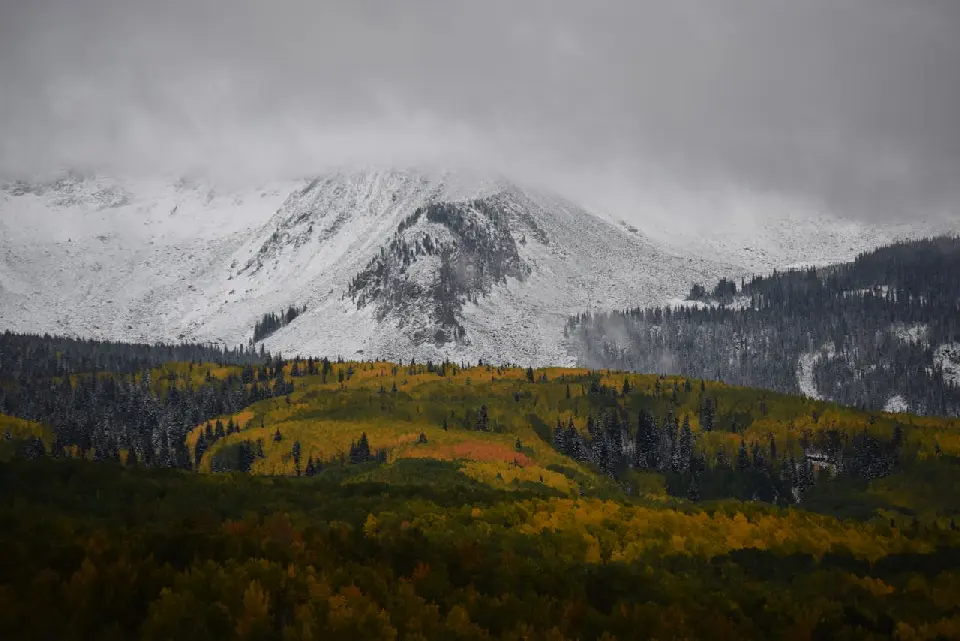
Colorado Fall Color Photography Art Retreat

Oregon Coast Adventure Photography Workshop
Autumn in Utah Badlands