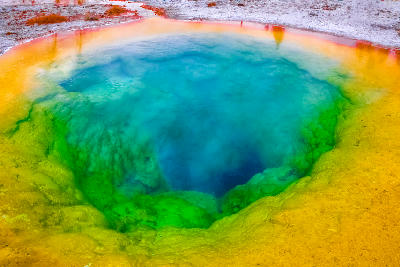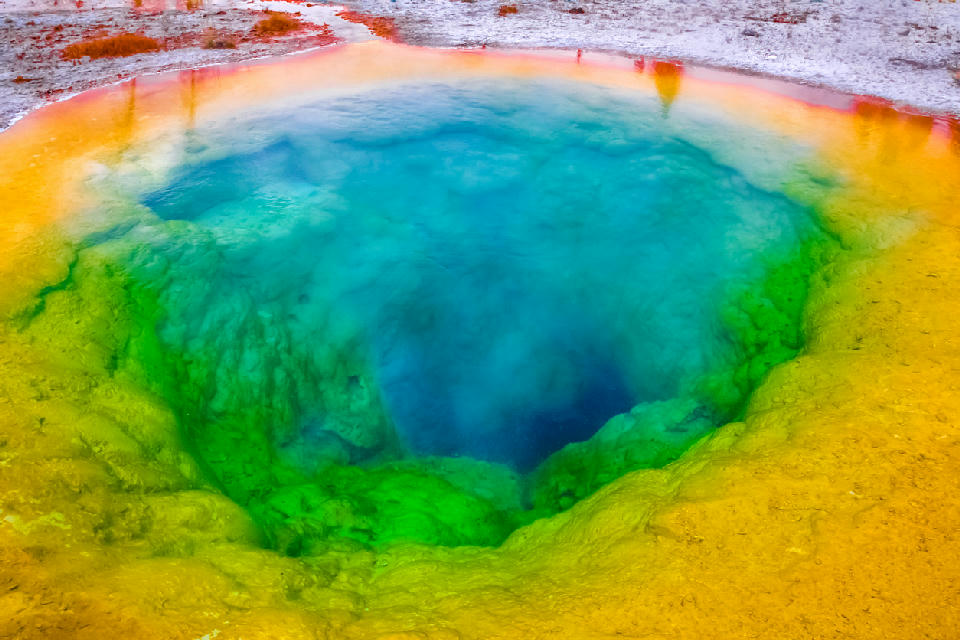
Colourful Morning Glory Pool in the Yellowstone Geothermal System in Wyoming.

    Vivid colours of Morning Glory Pool within the Yellowstone Geothermal System, Yellowstone National Park, Wyoming, USA.

    Yellowstone & Grand Teton

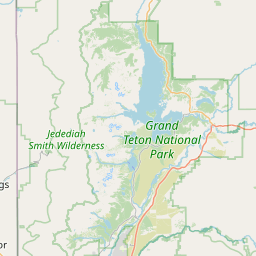
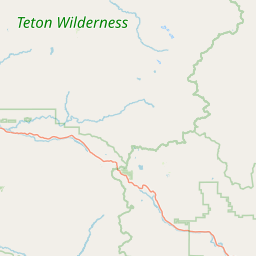
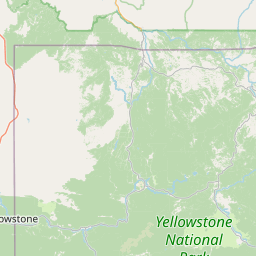
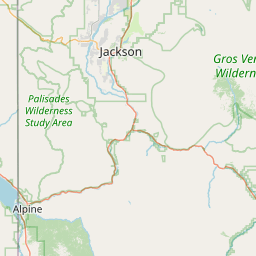
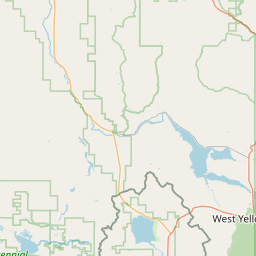
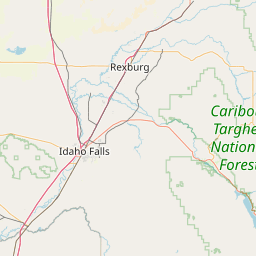
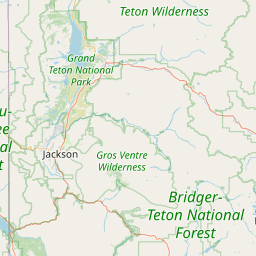
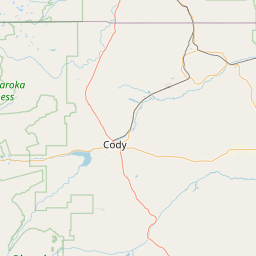
    Yellowstone and Grand Teton is a mountain and geothermal landscape in the northwestern United States defined by the interaction between volcanic systems, alpine terrain, and broad valley basins. The region combines the geothermal features of Yellowstone National Park with the sharp mountain forms of Grand Teton National Park, creating a landscape where contrasting systems exist within close proximity. Its spatial identity is defined by contrast between surface activity and vertical alpine structure.

    The terrain transitions between geothermal basins, forested plateaus, river systems, open valleys, and steep mountain ranges. Elevation varies across the region, from relatively flat volcanic terrain to sharply rising alpine peaks.

    Seasonal conditions influence visibility, water flow, and surface contrast. Steam, snow, and atmospheric clarity interact across the landscape, shaping how features are revealed or obscured.

    Geographic discovery

    Explore Yellowstone & Grand Teton by Area

    Choose a part of Yellowstone & Grand Teton to discover its landscapes, photographic character, and locations.

    Open interactive Explore

    Explore Areas in Yellowstone & Grand Teton

    Open in Explore
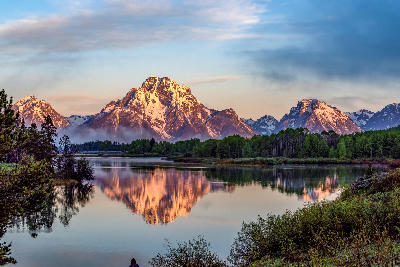
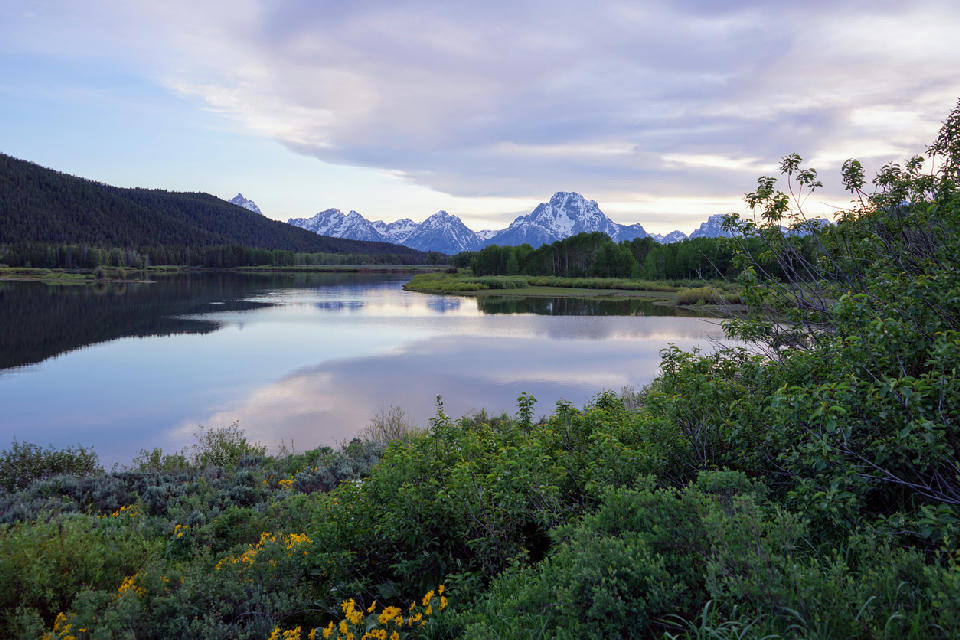
    Still lake with vegetation and reflections beneath the Grand Teton Alpine Lakes system at dusk in Wyoming.

    Grand Teton Alpine Lakes

    The lake system sits along the base of the Teton Range, with multiple lakes aligned across the valley floor and lower elevations. The terrain is open and accessible, with shorelines, wetlands, and forest edges forming simple foreground zones in front of the mountains. Photographically, the area works through reflection, symmetry, and alignment. The lakes mirror the Teton peaks under calm conditions, creating balanced compositions with strong foreground–background relationships. Light plays a key role, with early and late light, still water, and seasonal changes influencing clarity, colour, and reflection quality.

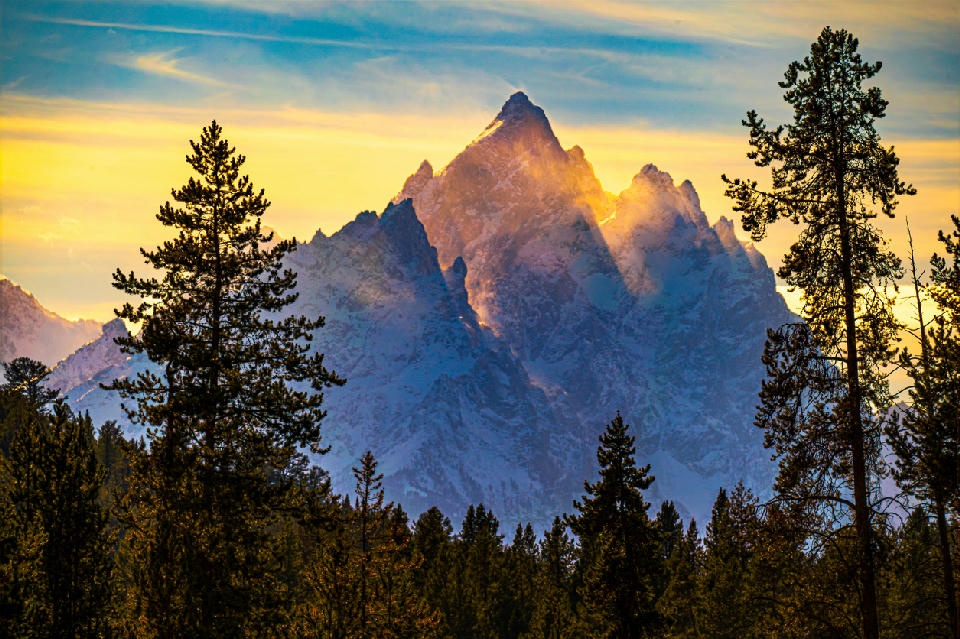
    Sunrise light hitting the summit of Grand Teton with pine trees silhouetted in the foreground, Wyoming.

    Grand Teton Range

    The Teton Range forms a steep mountain wall that rises abruptly from the Jackson Hole valley, creating a strong contrast between flat foreground and vertical peaks. The landscape includes a series of lakes and open plains positioned directly in front of the mountains, providing clear and consistent viewing angles. Photographically, the area works through foreground–background relationships and clean composition. Lakes, rivers, and plains act as simple foregrounds, while the jagged peaks form a continuous backdrop across the horizon. Light plays a major role, with directional light, reflections, and seasonal changes shaping contrast and clarity across the range.

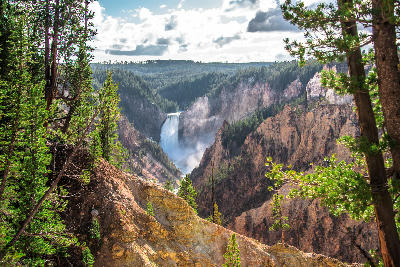
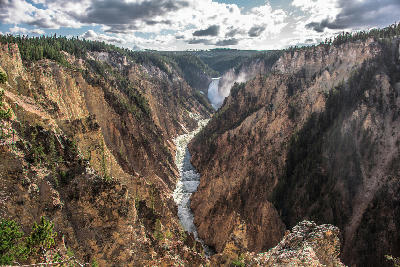
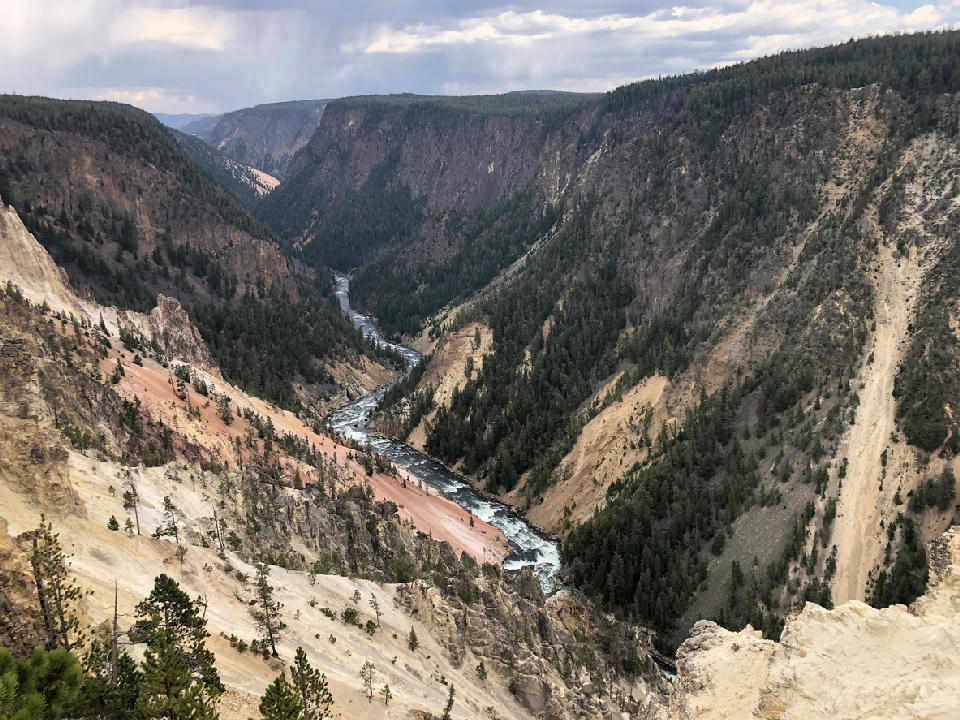
    Deep canyon with the Yellowstone River flowing between colorful rock walls in Yellowstone National Park, Wyoming.

    Yellowstone Canyon & Waterfall System

    The area is formed by the Yellowstone River cutting through layered rock, creating a deep canyon with steep sides and multiple waterfalls. The terrain combines vertical drop, cliff edges, and viewpoints along the canyon rim, with strong depth and elevation change throughout. Photographically, the region works through scale, depth, and focal points. Waterfalls act as central subjects within larger canyon compositions, while viewpoints allow framing across the canyon walls and river below. Light interacts with the canyon through shadow and directional illumination, shaping contrast and colour across the rock formations and water.

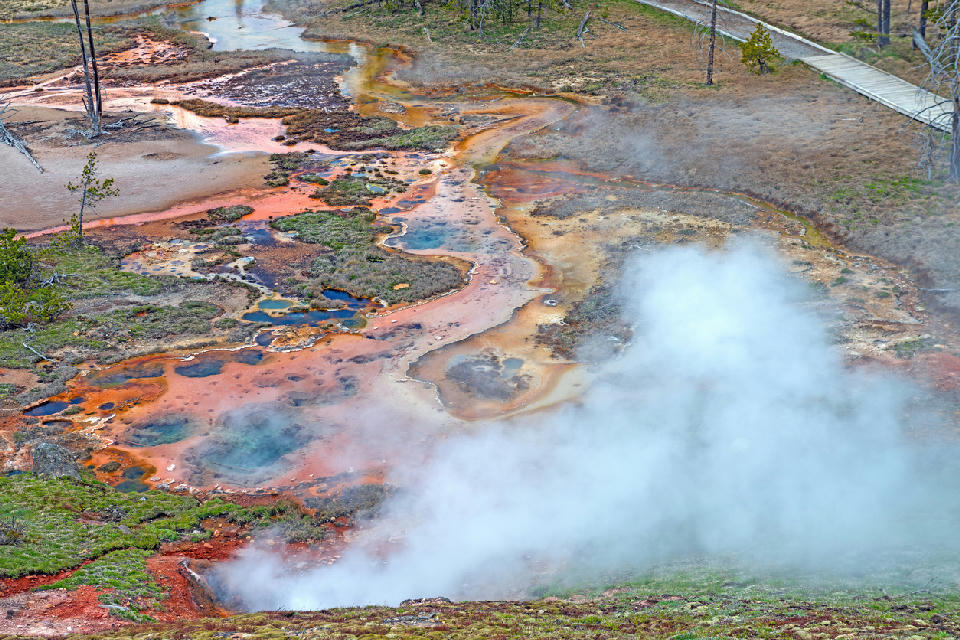
    Aerial view of multicolored hot springs, mineral deposits, and steam vents at Artists Paintpots in Yellowstone National Park, Wyoming.

    Yellowstone Geothermal System

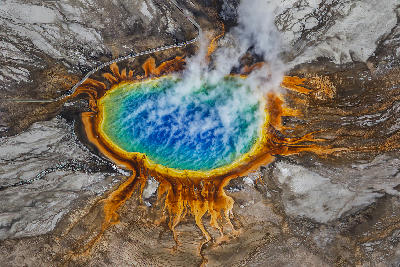
    The area is formed by active geothermal features spread across basins and flat terrain, with vents, pools, and runoff channels creating a structured but irregular landscape. Surfaces vary between water, mineral deposits, and exposed ground, with colour and texture changing across short distances. Photographically, the region works through pattern, colour, and abstraction. Hot springs and runoff areas create layered compositions, while steam and heat distortions add atmosphere and variation. Light interacts with both water and mineral surfaces, with low-angle light enhancing texture and colour contrast across the geothermal features.

    Photographic journey

    Yellowstone & Grand Teton Photography Route

    Yellowstone & Grand Teton Photography Route · 27 stops

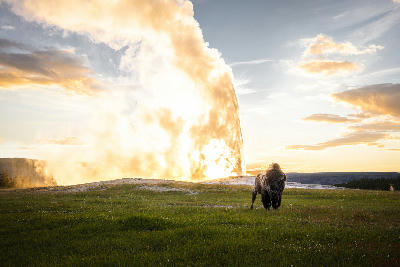
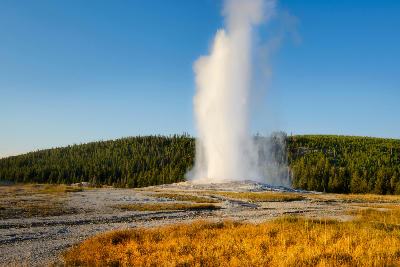
    Old Faithful Geyser eruption Yellowstone National Park geothermal geyser plume Wyoming USA01

    Old Faithful

    Old Faithful is a geothermal geyser that erupts at regular intervals, releasing a vertical column of water and steam from a fixed vent. The geyser sits within an open basin with clear sightlines around the eruption area. The composition resolves through vertical motion and the relationship between water, steam, and surrounding terrain.
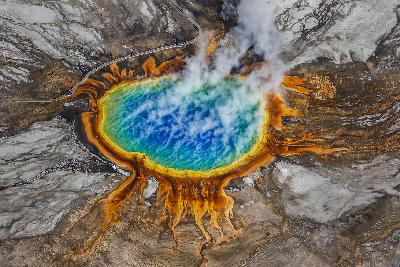
    Grand Prismatic Spring Yellowstone aerial view showing colorful geothermal hot spring with steam and bacterial mats06

    Grand Prismatic Spring

    Grand Prismatic Spring is a large geothermal pool defined by concentric bands of colour formed by heat and mineral activity. The spring sits within a flat basin with steam and runoff channels surrounding it. The composition resolves through pattern, colour, and the relationship between surface and atmosphere.

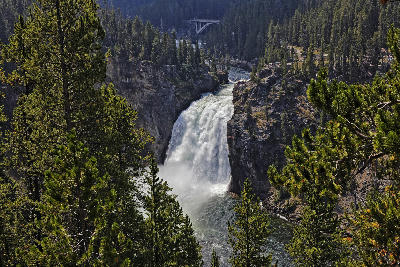
    Upper Falls of the Yellowstone River framed by pine trees with bridge visible upstream11

    Upper Falls (Yellowstone)

    Upper Falls is a waterfall where the Yellowstone River drops in a shorter vertical section above the main canyon. The falls sit at the upper entrance to the Grand Canyon of the Yellowstone with surrounding rock walls and river channel. The composition resolves through vertical flow and the relationship between the river and canyon.

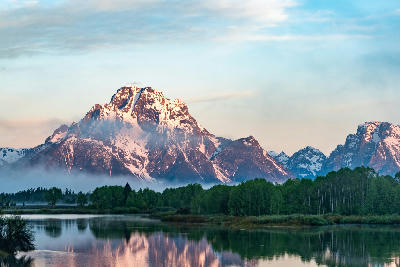
    Mount Moran reflected in the Snake River at Oxbow Bend with soft sunrise light and low mist, Grand Teton National Park, Wyoming.17

    Oxbow Bend

    Oxbow Bend is a broad curve of the Snake River with open views toward the Teton Range. The river forms a smooth foreground surface with the mountains rising beyond. The composition resolves through reflections, layering, and the relationship between river and peaks.

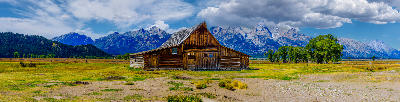
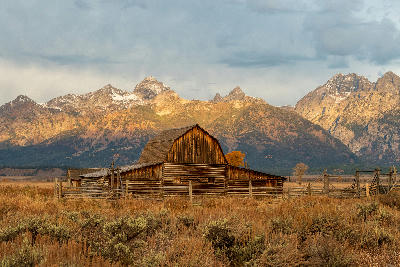
    Historic Moulton Barn on Mormon Row with the Teton Range in the background, Grand Teton National Park, Wyoming, USA.22

    Mormon Row

    Mormon Row is a historic homestead area with wooden barns set against the Teton Range. The structures sit within open fields with clear views toward the mountains. The composition resolves through the relationship between foreground structures and the mountain backdrop.

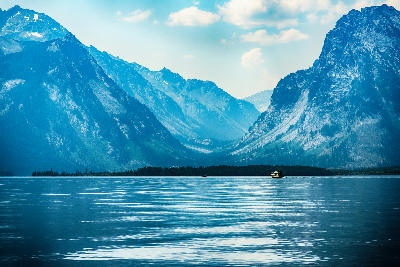
    Single boat on Jackson Lake with layered Teton Range mountains in Grand Teton National Park, Wyoming, USA.27

    Jackson Lake

    Jackson Lake is a large alpine lake with wide views toward the Teton Range across open water. The lake forms an expansive foreground with distant mountain alignment. The composition resolves through scale, layering, and the relationship between water and peaks.

    Explore the Full Yellowstone & Grand Teton Route27 stops across Yellowstone & Grand Teton

    Overview

    This region is structured around two distinct but connected systems. Yellowstone operates as a volcanic plateau, where geothermal features are distributed across open terrain. Grand Teton forms a contrasting alpine system, where steep peaks rise directly from valley floors.

    The connection between the two is defined by transition. Moving south from Yellowstone introduces increasing vertical relief, culminating in the sharp mountain front of the Tetons.

    The visual structure is defined by contrast. Flat geothermal surfaces, flowing rivers, and open basins are set against dramatic alpine peaks, creating compositions that combine horizontal and vertical elements within a single region.

    Key Photography Subjects

    • Geothermal basins with colour and steam patterns
    • Alpine peaks rising sharply from valley floors
    • River systems flowing through open basins
    • Layered compositions from valley to mountain front
    • Steam interacting with landscape under changing light
    • Open foregrounds leading to dominant mountain forms
    • Seasonal snow and atmosphere defining contrast

    Gallery

    Workshops in Yellowstone & Grand Teton

    No upcoming workshops scheduled for Yellowstone & Grand Teton at this time.

    Check back soon or explore other destinations.