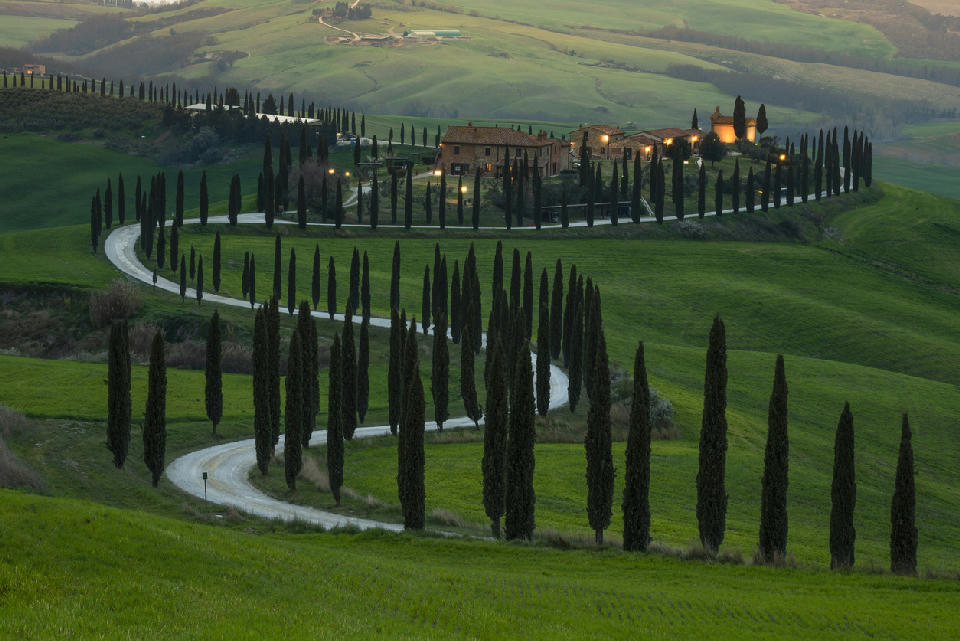
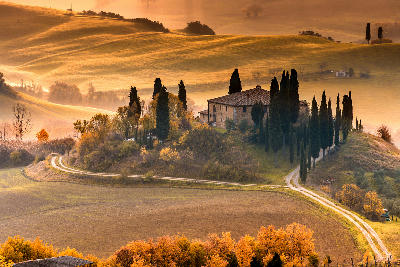
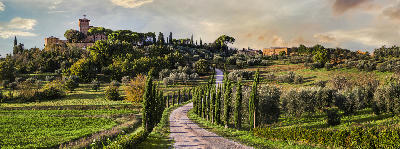
Cypress-lined road leading to Podere Belvedere farmhouse near San Quirico d'Orcia in Val d'Orcia, Tuscany, Italy.
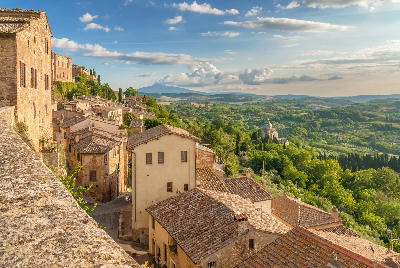
Tuscany is a region in central Italy defined by rolling hills, river valleys, coastal plains, and a varied interior that transitions from cultivated farmland to forested uplands. The landscape is shaped by long-term agricultural use, settlement patterns, and gradual elevation change rather than extreme relief. The region includes broad plains, rounded hill systems, and isolated mountain ranges, with development concentrated in valleys and on elevated sites. Much of the countryside remains visually open, allowing landform, field structure, and vegetation patterns to dominate. Seasonal variation influences colour, texture, and light quality, with winter and early spring emphasising form and tone, and warmer months introducing denser vegetation and stronger contrasts.
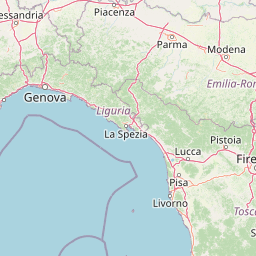
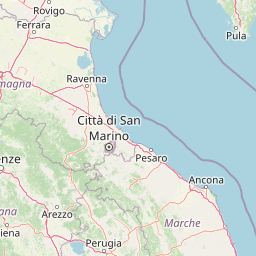
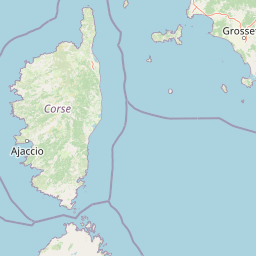
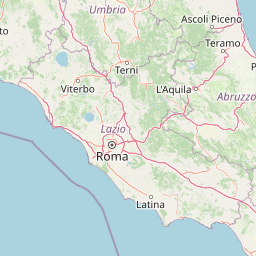
Structured Map of Tuscany
A connected view of the landscape, organised by regions, areas, and key locations.
Duomo di Firenze
landmark
Florence
town city
Ponte Vecchio
landmark
Siena
town city
Piazza del Campo
landmark
Duomo di Siena
landmark
Montepulciano
town city
Val d'Orcia
area district
Torrenieri
town city
Montalcino
town city
Boschetto Dei Cipressi
landmark
San Quirico D’orcia
town city
Podere Belvedere
landmark
Podere Terrapille (Gladiator Road)
landmark
Cappella Della Madonna Di Vitaleta
landmark
Pienza
town city
Bagno Vignoni Thermal Pool
landmark
Poggio Covili
landmark
Rocca di Tentennano
landmark
Castiglione D’orcia
town city
Castello Banfi
landmark
Cascate del Mulino
landmark
Sovana
town city
Pitigliano
town city
Sorano
town city
Areas in Tuscany
Cities & Towns in Tuscany
Gallery
Overview
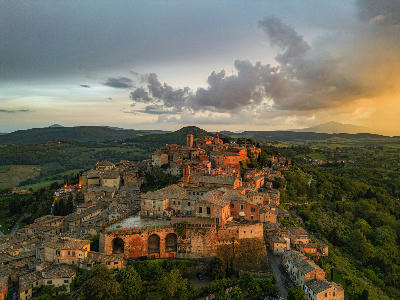
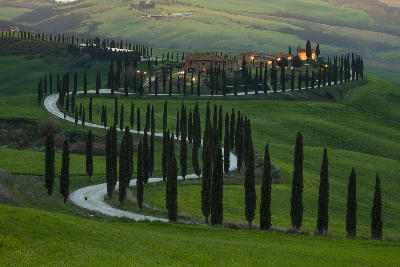
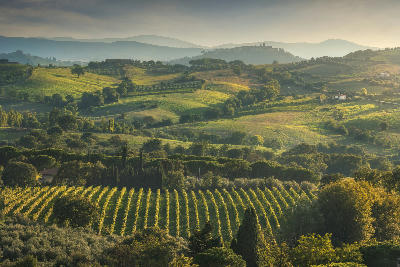
Tuscany’s terrain is organised around a series of hill systems and basins separated by rivers and shallow valleys. Agricultural land use is extensive, creating clearly legible patterns of fields, vineyards, and olive groves across gently undulating ground. Settlements are often positioned on ridges or hilltops, reinforcing the region’s layered spatial structure. Inland areas transition from open farmland to forested hills and lower mountain terrain, while the western edge opens toward coastal plains and the Tyrrhenian Sea. These shifts create distinct sub-landscapes within relatively short distances, each with its own visual rhythm and scale. Light conditions vary across the region depending on season and weather, with frequent clear skies producing strong directional light, while overcast conditions reduce contrast and emphasise tonal continuity. These changes affect surface detail and depth without altering the underlying geometry of the landscape.
Key photography subjects
- Rolling hills and agricultural patterns
- Vineyards, olive groves, and cultivated plains
- Hilltop towns and ridge-line settlements
- River valleys and layered terrain
- Forested hills and upland transitions
- Coastal plains and shoreline landscapes
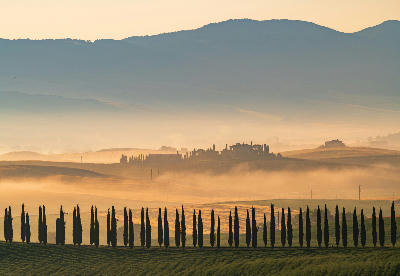
- Seasonal light, colour shifts, and atmospheric haze
Workshops in Tuscany
Dolomites Photo Tour