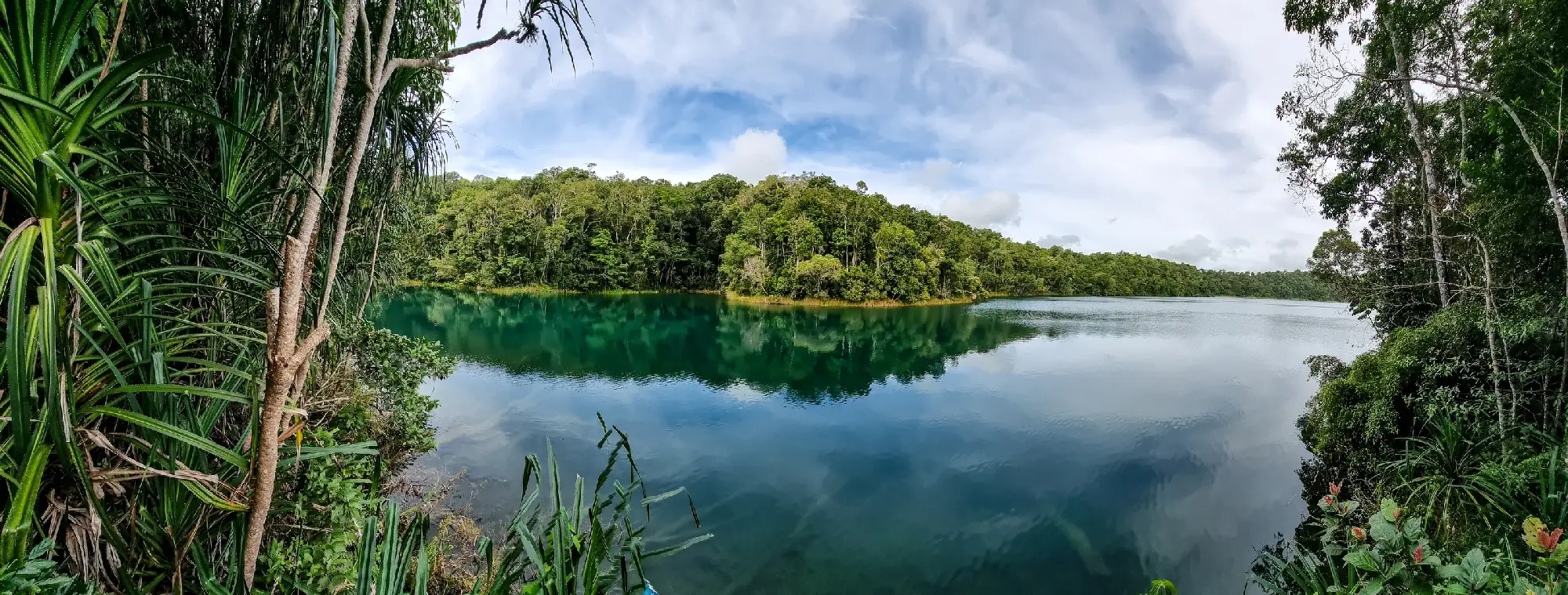
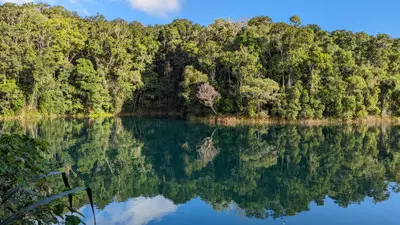
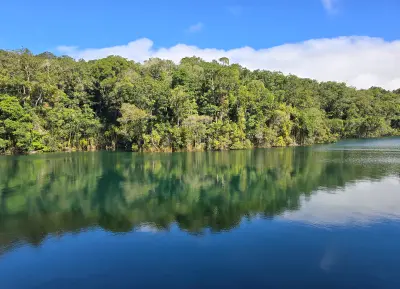
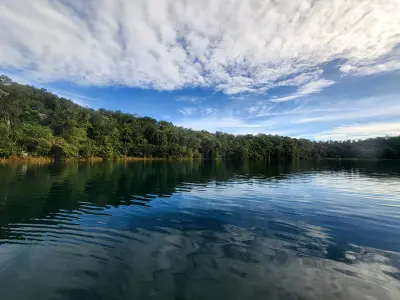
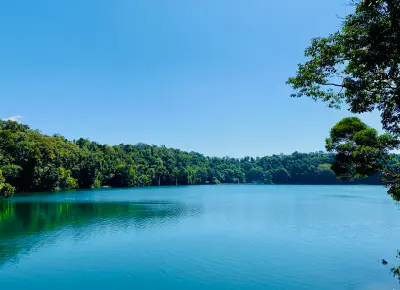
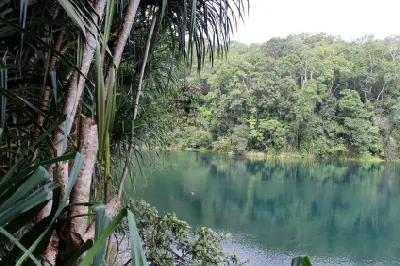
The emerald waters of Lake Eacham stretch between rainforest-covered shores, revealing the tranquil setting of this volcanic crater lake in Queensland's Atherton Tablelands.
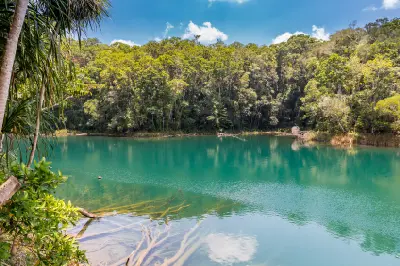
Lake Eacham is a volcanic crater lake within Crater Lakes National Park on the Atherton Tablelands. Dense tropical rainforest surrounds the nearly circular lake, with clear freshwater, forested shores and walking tracks providing access around the crater. Still water, reflections and the enclosed rainforest setting provide opportunities for landscape, nature and detail photography.
-17.28484, 145.62546
Gallery
Quick Facts
Access
Short Walk
5–15 min
Elevation Gain
10 m
Best Light
Calm morning water can mirror the surrounding rainforest, while soft light controls contrast between bright sky, reflective water and shaded vegetation.
Why This Light
Season
Year-Round Stable
Summer brings wetter conditions, dense green rainforest and greater humidity around the lake, with changing cloud and rain influencing reflections. Winter brings generally drier conditions and clearer skies, while the evergreen forest and permanent crater lake retain a similar visual character.
Crowds
Often Busy
Restrictions
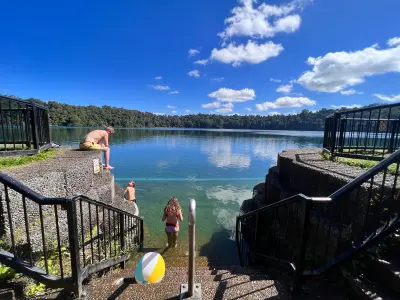
Lake Eacham is reached by sealed road within Crater Lakes National Park, with parking, picnic facilities and short paths providing access to the lakeshore. A longer walking track circles the lake through rainforest. Conditions around the water and tracks can become slippery after rain, and reflections vary considerably with wind and weather.