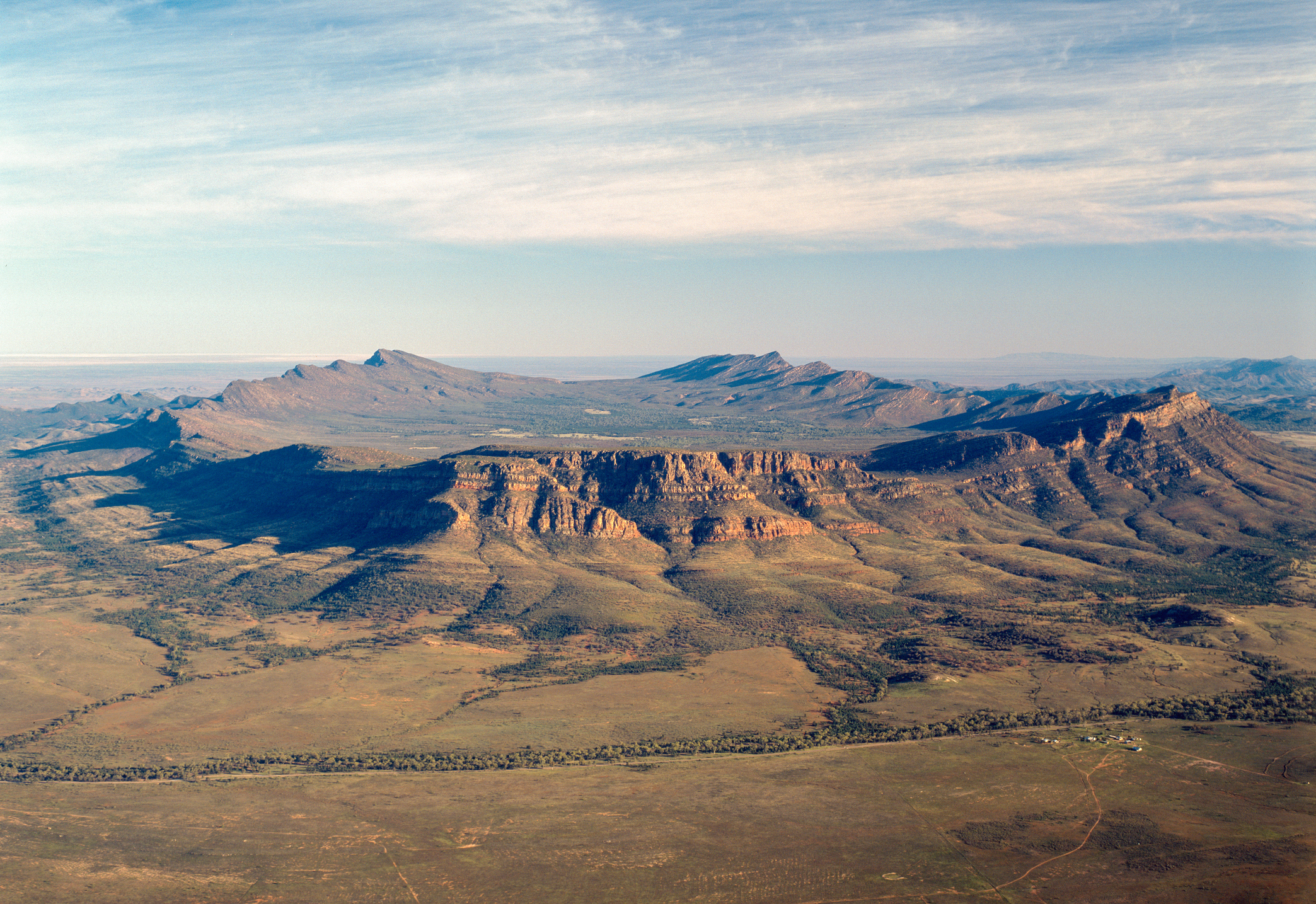
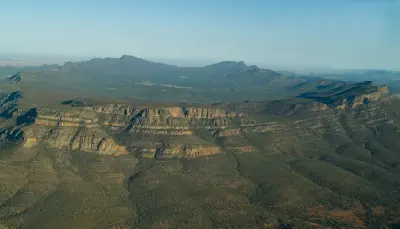
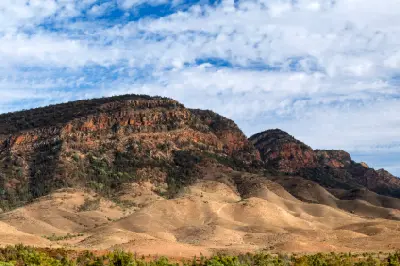
Aerial view of Wilpena Pound in the Flinders Ranges, revealing its vast natural amphitheatre, rugged sandstone ridges and surrounding outback plains.
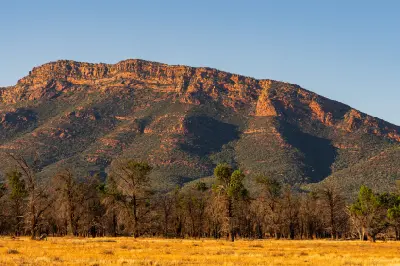
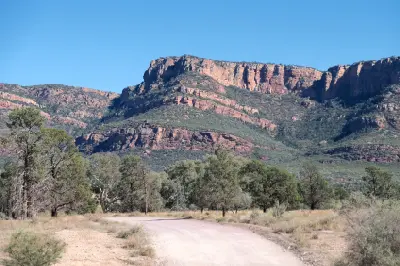
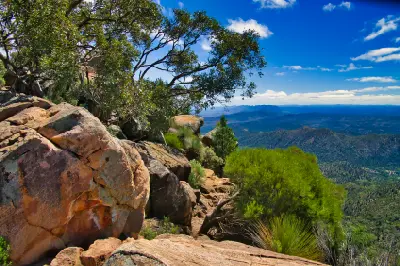
Wilpena Pound, also known as Ikara, is a vast natural amphitheatre of folded sedimentary rock formations within Ikara-Flinders Ranges National Park, South Australia. A continuous ring of rugged ridges encloses a broad valley of native woodland and grassland, with walking tracks, elevated lookouts and scenic flights providing different perspectives across the formation. The sweeping geological structure, layered escarpments and changing colours of the surrounding ranges provide opportunities for landscape, aerial and geological photography.
-31.52646, 138.60615
Gallery
Quick Facts
Access
Moderate Hike
90–180 min
Elevation Gain
150 m
Best Light
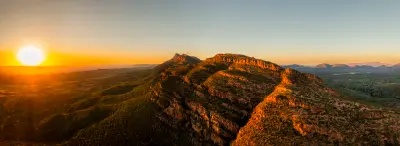
Low-angle sunlight defines the folded ridgelines and escarpment faces, creating shadows that reveal the amphitheatre's geological structure.
Why This Light
Season
Seasonally Distinct
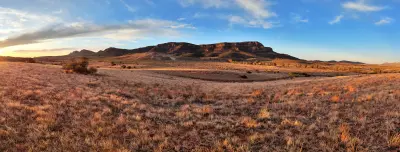
Summer brings dry golden grasses, muted vegetation and exposed red-brown rock formations, with occasional thunderstorms creating dramatic cloud formations above the ranges. Winter brings greener valley vegetation, clearer atmospheric conditions and stronger contrasts between the wooded interior and surrounding sandstone ridges.
Crowds
Often Busy
Restrictions
Wilpena Pound is reached by sealed road through Ikara-Flinders Ranges National Park, with walking tracks beginning near Wilpena Pound Resort. The Wangara Lookout walk provides elevated views into the Pound, while longer routes climb surrounding ridges and summits. A national park vehicle entry fee generally applies. Summer temperatures can make exposed walks hazardous, and tracks may close during extreme heat, fire danger or severe weather. Scenic flights operate separately and are subject to weather conditions.