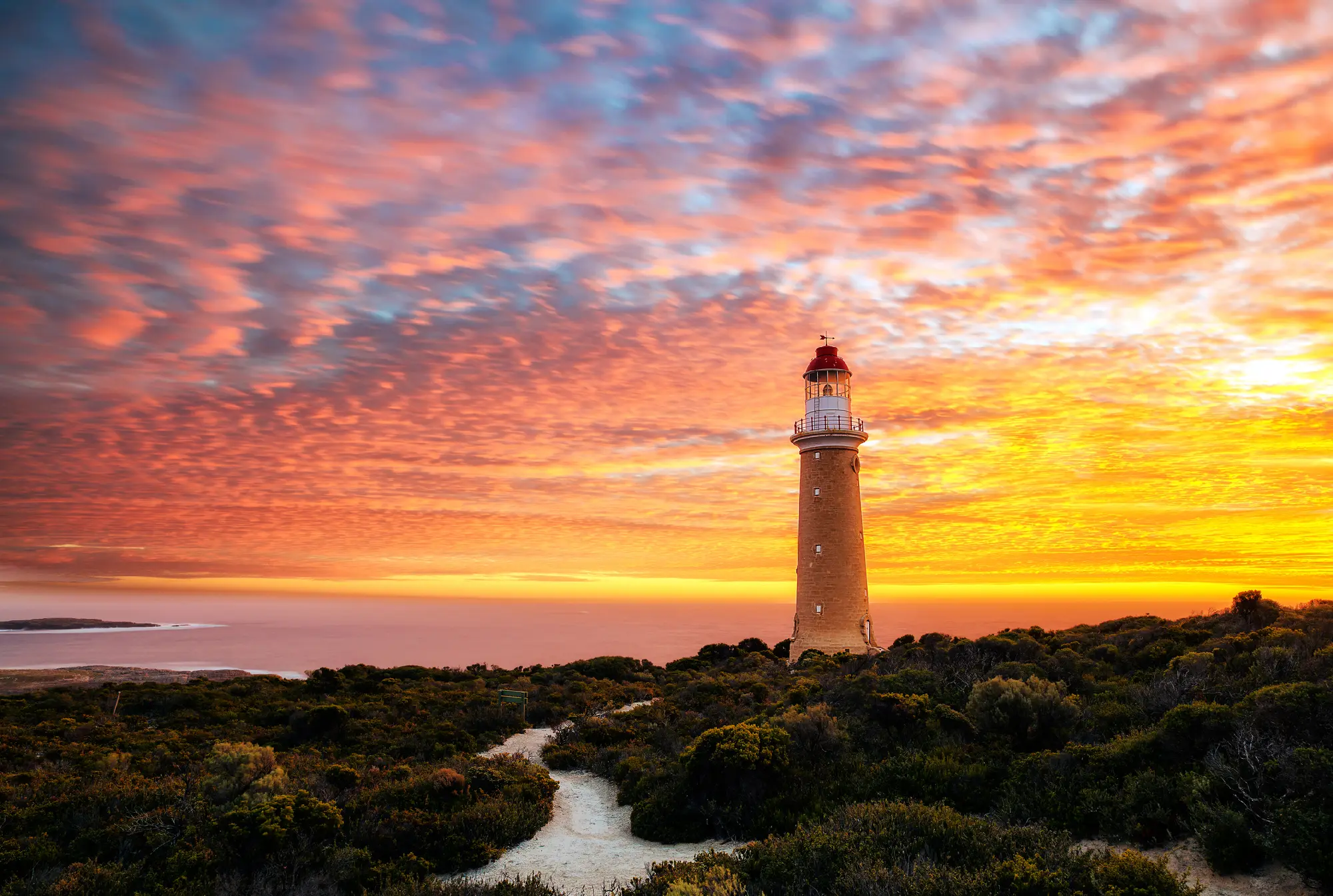
Cape du Couedic Lighthouse rises above the coastal heathland on Kangaroo Island, silhouetted against a spectacular orange and pink sunset over the Southern Ocean.
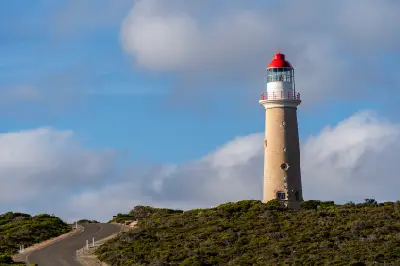
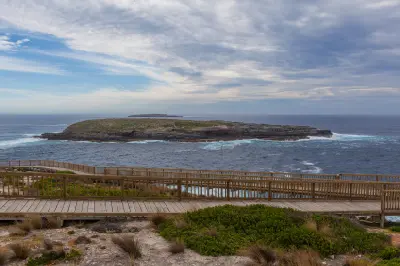
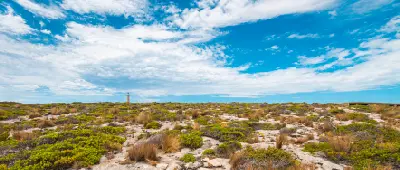
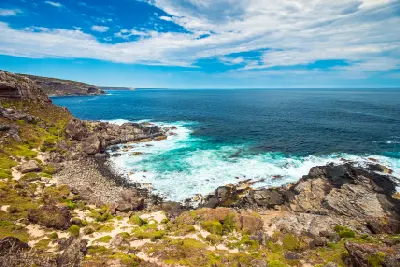
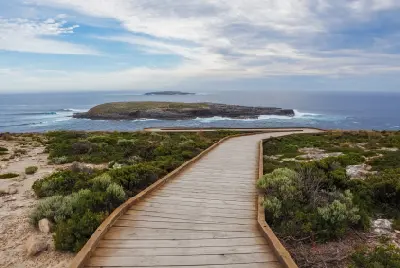
Cape du Couedic is a rugged coastal headland at the southwestern end of Kangaroo Island, within Flinders Chase National Park, South Australia. The headland contains a historic stone lighthouse, weathered coastal cliffs and exposed rock formations overlooking the Southern Ocean, with nearby boardwalks providing access to coastal viewpoints. The lighthouse, dramatic shoreline and contrasting stone and ocean textures provide opportunities for architectural, coastal landscape and geological photography.
-36.05797, 136.70515
Gallery
Quick Facts
Access
Roadside / Step-out
0–5 min
Elevation Gain
5 m
Best Light
Low-angle sunlight defines the lighthouse stonework and coastal cliffs, while backlighting can illuminate sea spray along the exposed shoreline.
Why This Light
Season
Seasonally Distinct
Summer brings drier coastal vegetation, warmer tones across the limestone lighthouse and generally calmer ocean conditions beneath clearer skies. Winter brings greener vegetation, more frequent storm clouds and heavier Southern Ocean swell, with sea spray and changing light adding texture to the exposed coastline.
Crowds
Often Busy
Restrictions
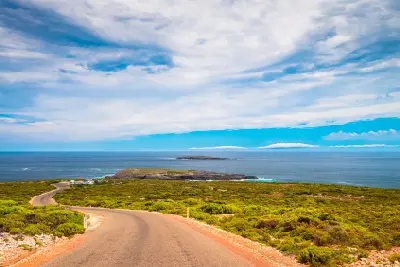
Cape du Couedic is reached by sealed road within Flinders Chase National Park, with parking near the historic lighthouse and access to surrounding coastal viewpoints. A national park entry fee applies. The lighthouse is not generally open for unrestricted public entry, although the exterior can be viewed from designated areas. Strong winds, exposed cliffs and heavy ocean swell require care. Drone operations within the national park require appropriate authorisation. Admirals Arch is reached separately by a nearby boardwalk and steps.