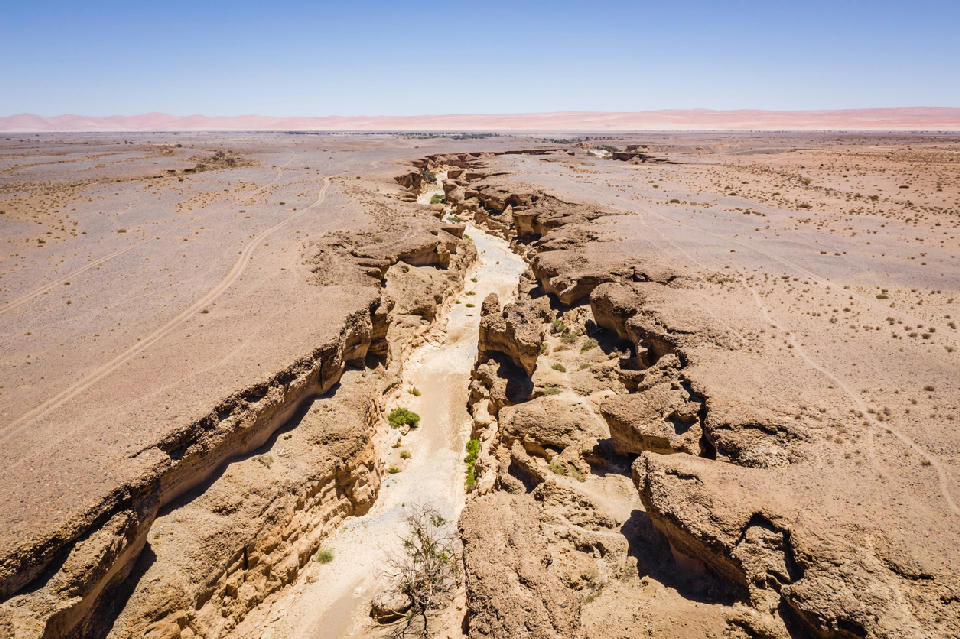
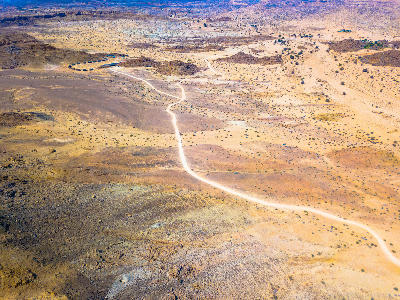
Aerial view of Sesriem Canyon cutting through the desert edge of Namibia’s Namib-Naukluft landscape.
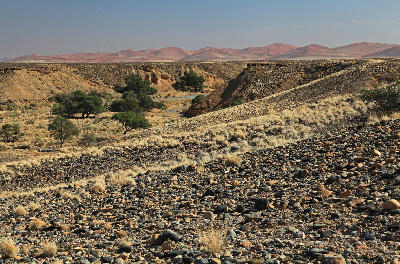
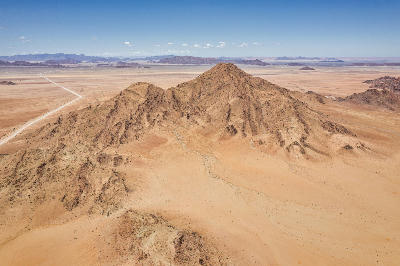
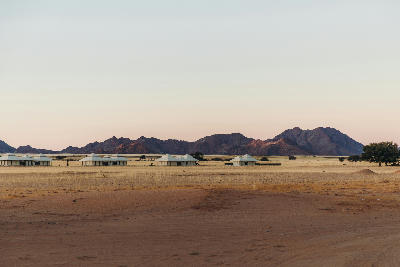
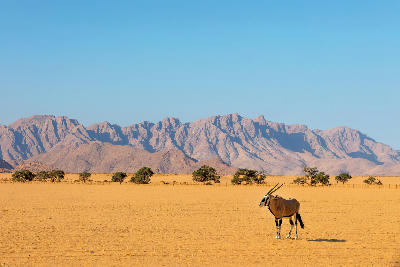
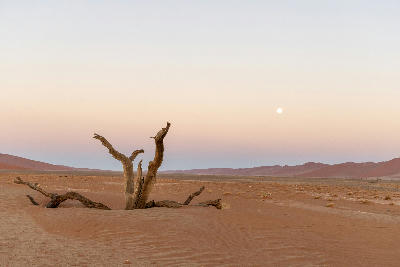
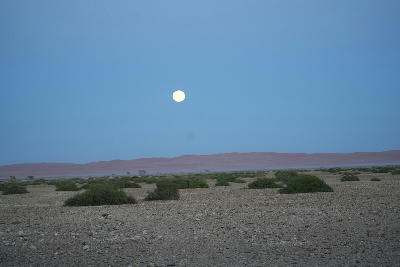
Sesriem & Namib Desert Edge is a transitional desert landscape in western Namibia, defined by open gravel plains, dry river corridors, distant dune systems, and expansive desert terrain extending toward the interior Namib. The landscape is structured by scale, openness, and long sightlines across sparsely vegetated desert environments. The terrain transitions between broad gravel plains, low ridgelines, shallow canyon formations, and distant dune fields surrounding the approach into the Sossusvlei region. Unlike the enclosed dune basins deeper within the Namib Desert, this area is more open and expansive, with wide visual separation between foreground and background elements. Seasonal and atmospheric conditions strongly influence colour and visibility. Heat haze, desert dust, and low-angle sunlight shape contrast and depth across the open terrain, while changing light conditions alter visibility between plains, mountains, and distant dunes.
Gallery
Key POIs in Sesriem & Namib Desert Edge
Nearby Places
View all on mapDune 45 (Namib Desert)
landmark — 44.8 km
Sossusvlei Dunes
Sossusvlei Dunes
area district — 59.5 km
Hiddenvlei
landmark — 59.9 km
Sossusvlei Dunes
Sossusvlei (Namib Dunes)
landmark — 60.7 km
Sossusvlei Dunes
Big Daddy Dune
landmark — 61.3 km
Sossusvlei Dunes
Deadvlei (Camel Thorn Trees)
landmark — 61.9 km
Sossusvlei Dunes
Overview
Sesriem & Namib Desert Edge is structured as an open transitional desert system, where composition is defined by scale, atmosphere, and spatial separation across broad arid terrain. The landscape forms the environmental transition between the interior Namib Desert and the wider desert plains surrounding the Sossusvlei region. Gravel plains, isolated vegetation, desert roads, and distant mountain systems create large open compositions with minimal visual obstruction. For photographers, the region functions through minimalism and environmental scale. Compositions are built using open space, distant dune systems, desert roads, and isolated terrain features positioned within expansive desert environments. The visual structure is defined by distance and atmospheric layering. Heat haze, directional light, and wide desert sightlines create gradual tonal transitions across the landscape.
Key photography subjects
- Open gravel plains extending toward dune systems
- Desert roads crossing broad arid terrain
- Isolated vegetation within minimalist compositions
- Distant mountain backdrops and dune horizons
- Shallow canyon formations and dry river corridors
- Atmospheric haze across open desert landscapes
- Light shaping texture and scale across gravel terrain
Workshops in Sesriem & Namib Desert Edge
No upcoming workshops scheduled for Sesriem & Namib Desert Edge at this time.
Check back soon or explore other destinations.