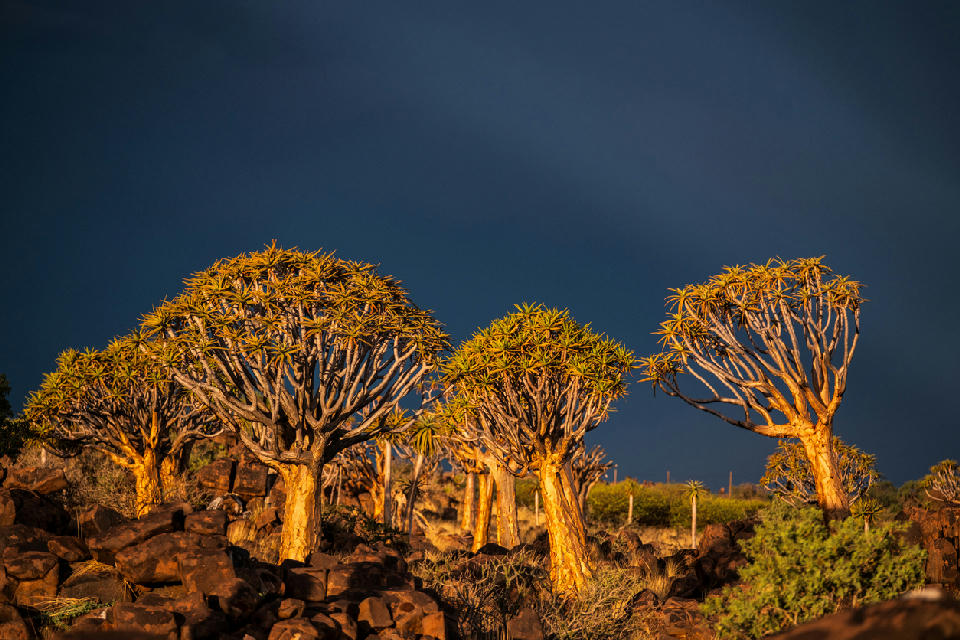
Quiver trees illuminated by warm evening light beneath dark storm clouds in southern Namibia.
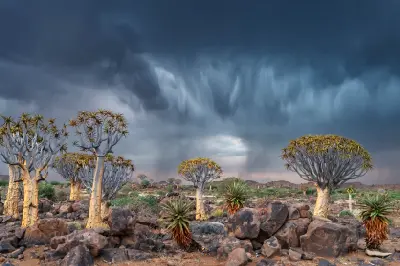
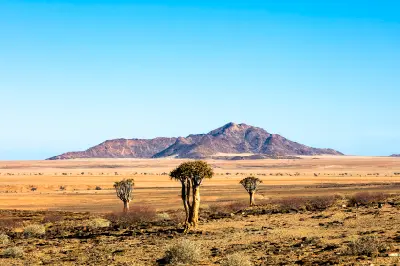
The Quiver Tree & Aloe Desert forms a distinctive arid landscape in southern Namibia, defined by rocky plains, granite and dolerite outcrops, sparse grasslands and concentrations of sculptural desert vegetation. Around Keetmanshoop, quiver trees rise above exposed rock and open plains, creating one of the most recognisable landscapes of Namibia's southern interior. The terrain transitions between low rocky ridges, boulder fields, shallow valleys and broad semi-desert plains. Quiver trees favour exposed rocky ground, while aloes, succulents and drought-adapted grasses occupy an environment shaped by intense sunlight, limited rainfall and large variations in temperature. Seasonal rainfall can briefly introduce green grasses and flowering vegetation, while prolonged dry periods emphasise the warm rock, pale earth and isolated forms of the trees against expansive desert skies.
Gallery
Key POIs in Quiver Tree & Aloe Desert
Overview
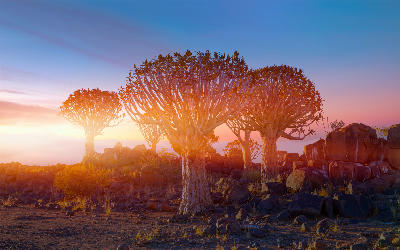
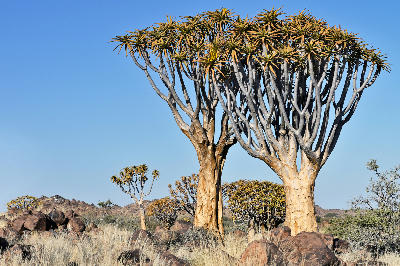
Southern Namibia's quiver tree country occupies a transitional arid landscape where rocky uplands and open plains support vegetation adapted to extreme dryness. The quiver tree, a large branching aloe, commonly grows on exposed slopes and among boulder fields, where scattered individuals and dense concentrations create distinctive silhouettes above the surrounding terrain. Around the Quiver Tree Forest near Keetmanshoop, dark dolerite rocks provide a particularly strong setting for mature trees, while the wider landscape extends through sparsely vegetated plains, low hills and isolated rocky outcrops. The separation between individual trees reinforces the scale and openness characteristic of this part of Namibia. The visual structure of the region is defined by strong contrasts between sculptural vegetation, textured rock and uncluttered horizons. Low-angle sunlight reveals the branching forms and warm colours of the trees, while storm clouds, clear desert skies and seasonal vegetation can dramatically alter the appearance of the otherwise sparse landscape.
Key photography subjects
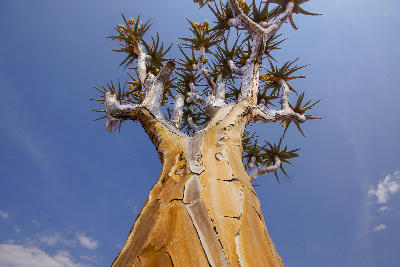
- Quiver trees and sculptural branching forms
- Quiver Tree Forest and dolerite boulder landscapes
- Aloes, succulents and drought-adapted desert vegetation
- Rocky ridges, open plains and isolated desert hills
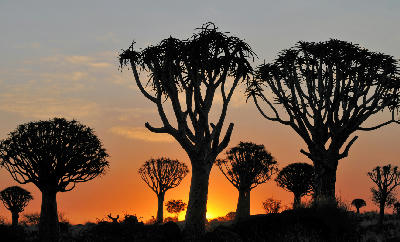
- Tree silhouettes against expansive desert skies
- Seasonal grasses, storm clouds and changing desert conditions
- Sunrise, sunset and low-angle desert light
Workshops in Quiver Tree & Aloe Desert
No upcoming workshops scheduled for Quiver Tree & Aloe Desert at this time.
Check back soon or explore other destinations.