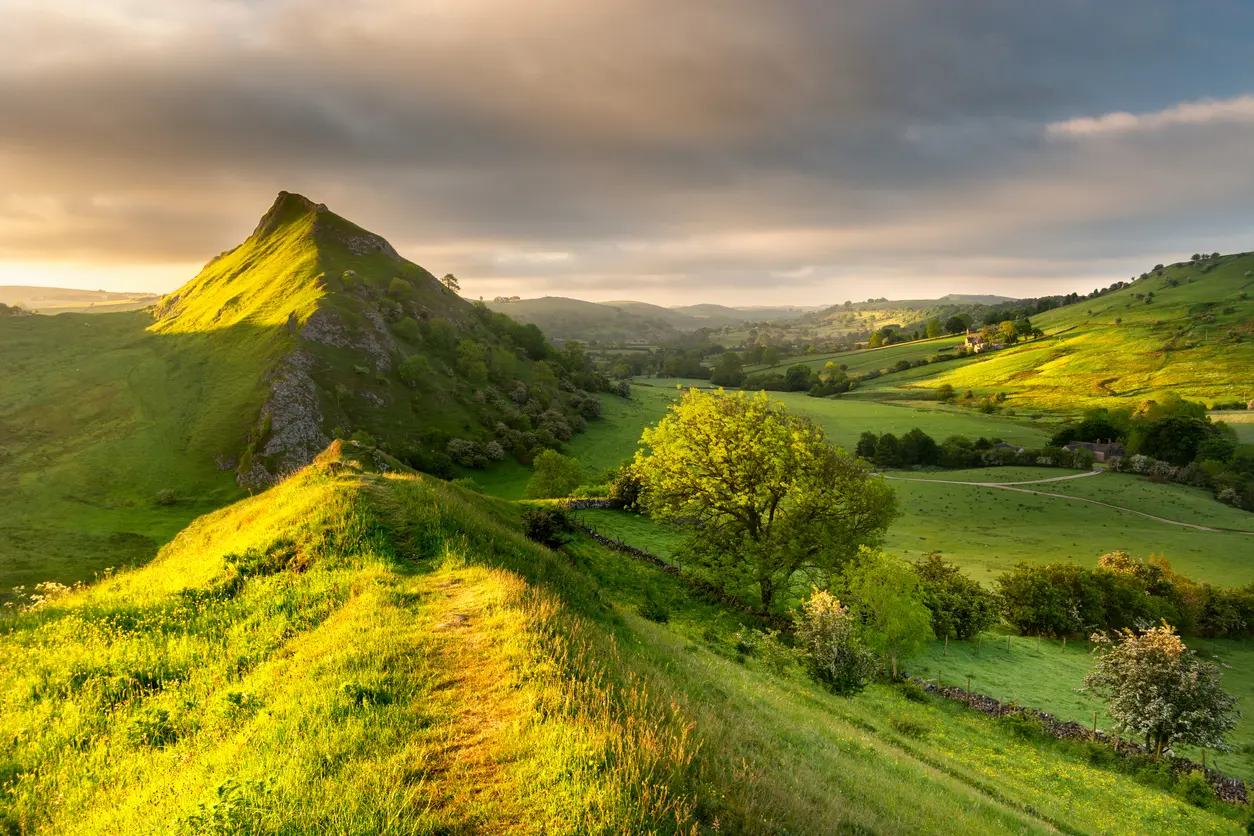
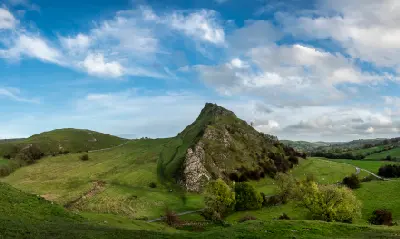
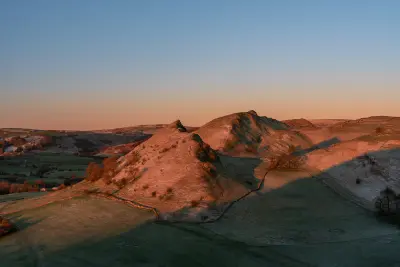
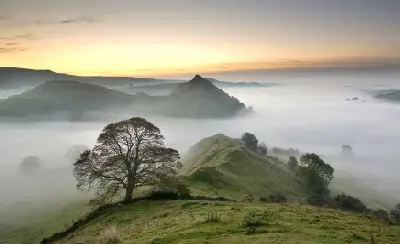
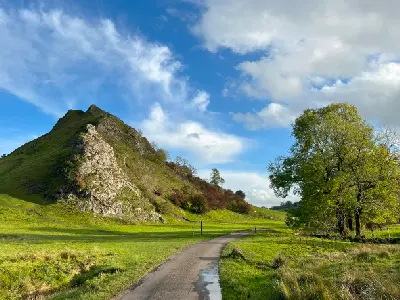
Chrome Hill in the Peak District, Derbyshire, England, in early morning light.
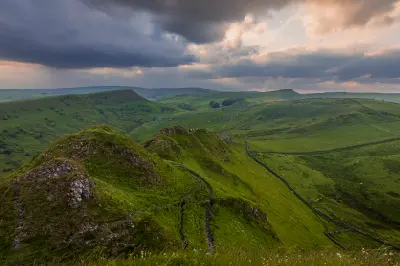
Chrome Hill is a distinctive limestone hill in the White Peak area of the Peak District National Park, near the village of Earl Sterndale in Derbyshire. Often nicknamed the 'Dragon's Back' because of its dramatic, undulating ridge, it rises to approximately 425 metres above sea level. Its steep slopes, exposed limestone formations and panoramic views across the surrounding countryside make it a popular destination for walkers and landscape photographers. Its neighbouring landmark, Parkhouse Hill, creates one of the area's most recognisable geological landscapes.
53.20309, -1.89571
Gallery
Quick Facts
Access
Moderate Hike
45–90 min
Elevation Gain
150 m
Best Light
Light works best when the sun is low and side-on to the ridge because it sculpts the knife-edge crest and separates Chrome Hill from Parkhouse Hill.
Why This Light
Season
Seasonally Distinct
Summer brings green turf, long daylight and long evening light along the ridge. Winter brings frost, low sun and occasional snow on the steep limestone slopes, with muddy and slippery ground.
Crowds
Often Busy
Restrictions
Open access land (CRoW Act 2000). There is no formal car park, so parking is limited to roadside spots and village pubs at Earl Sterndale and Hollinsclough. Expect livestock, so keep dogs on leads. The ridge is steep and exposed, and the grass and limestone get slippery when wet.