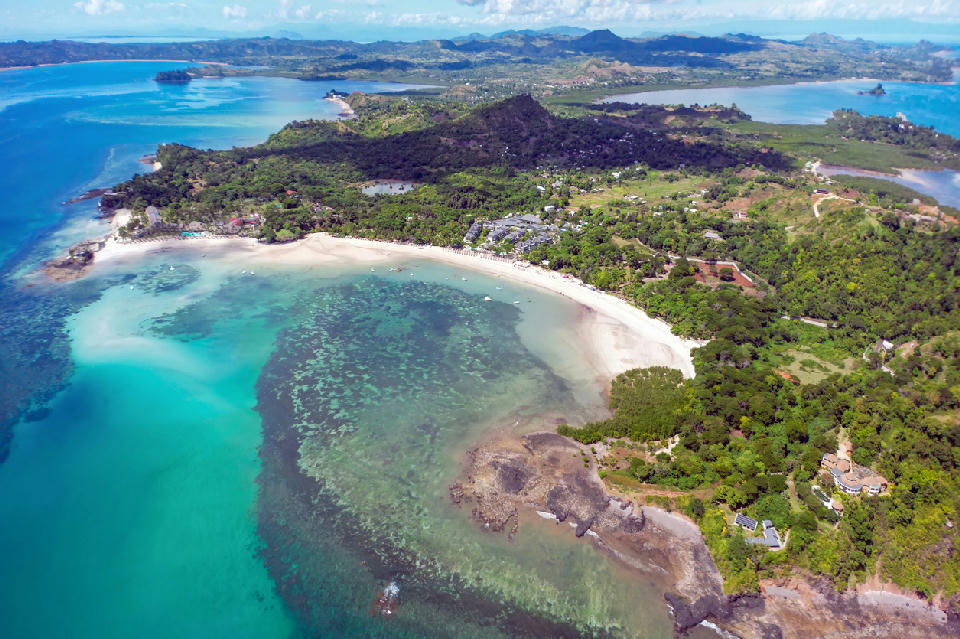
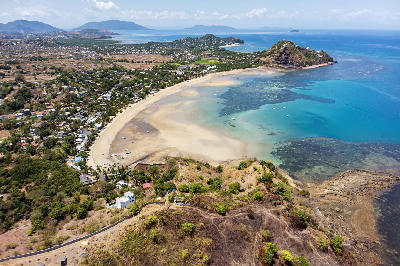
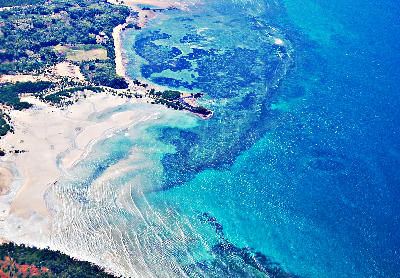
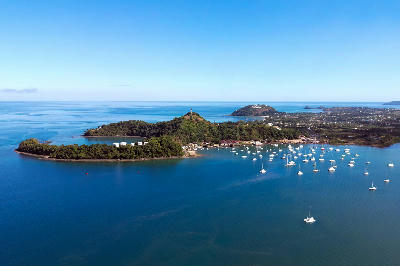
Aerial view of Andilana Beach and the surrounding reef-lined coastline of Nosy Be showing turquoise Indian Ocean water and tropical island geography in northern Madagascar.
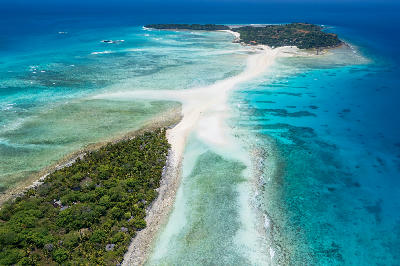
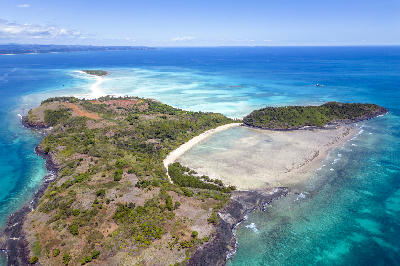
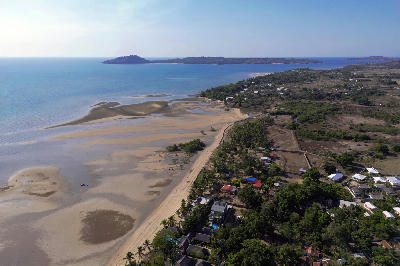
Nosy Be and the surrounding Madagascar coastlines form a tropical coastal landscape in northwestern Madagascar. The region is defined by coral-fringed beaches, shallow turquoise water, offshore islands, tidal sandbars, and tropical shoreline environments shaped by the Indian Ocean. The landscape combines tropical islands, reef systems, shallow bays, coastal vegetation, and exposed shoreline formations extending along Madagascar’s northwestern coast. Terrain varies between palm-lined beaches, rocky coastal edges, shallow marine platforms, and offshore sandbar systems surrounded by clear ocean water. Nosy Be represents Madagascar’s primary tropical coastal photography system. The interaction between bright ocean colour, white sand, shallow reef structures, and tropical vegetation creates a distinctly different visual environment from the island’s rainforest, canyon, baobab, and limestone regions.
Gallery
Key POIs in Nosy Be & Madagascar Coastlines
Overview
Nosy Be functions as a tropical coastal system, where photography is shaped by ocean colour, shoreline structure, light reflection, and island geography. The coastline combines shallow turquoise water, reef-lined bays, white beaches, offshore islands, and exposed tidal formations. Elevated viewpoints and aerial perspectives reveal layered ocean textures and shifting colour separation between shallow lagoons and deeper offshore water. For photographers, the region works through colour contrast, openness, atmosphere, and coastal layering. Beaches and sandbars create clean minimalist compositions, while reef systems, islands, and shoreline curves introduce structure and depth across wide ocean scenes. Light plays a major role throughout the coastline. Bright tropical conditions enhance separation between sand, reef, and open ocean, while sunrise and sunset produce warmer tonal contrast across the beaches and coastal vegetation. Reflections, tidal movement, and changing cloud cover continuously reshape the visual character of the shoreline.
Key photography subjects
- Tropical beaches and shallow turquoise coastal water
- Offshore islands and layered ocean compositions
- Tidal sandbars and reef-lined shoreline formations
- Palm-lined beaches and tropical coastal vegetation
- Aerial perspectives across lagoons and ocean channels
- Rocky coastal edges and shallow reef systems
- Reflections and colour separation across sea and sky
- Tropical light shaping atmosphere along the coastline