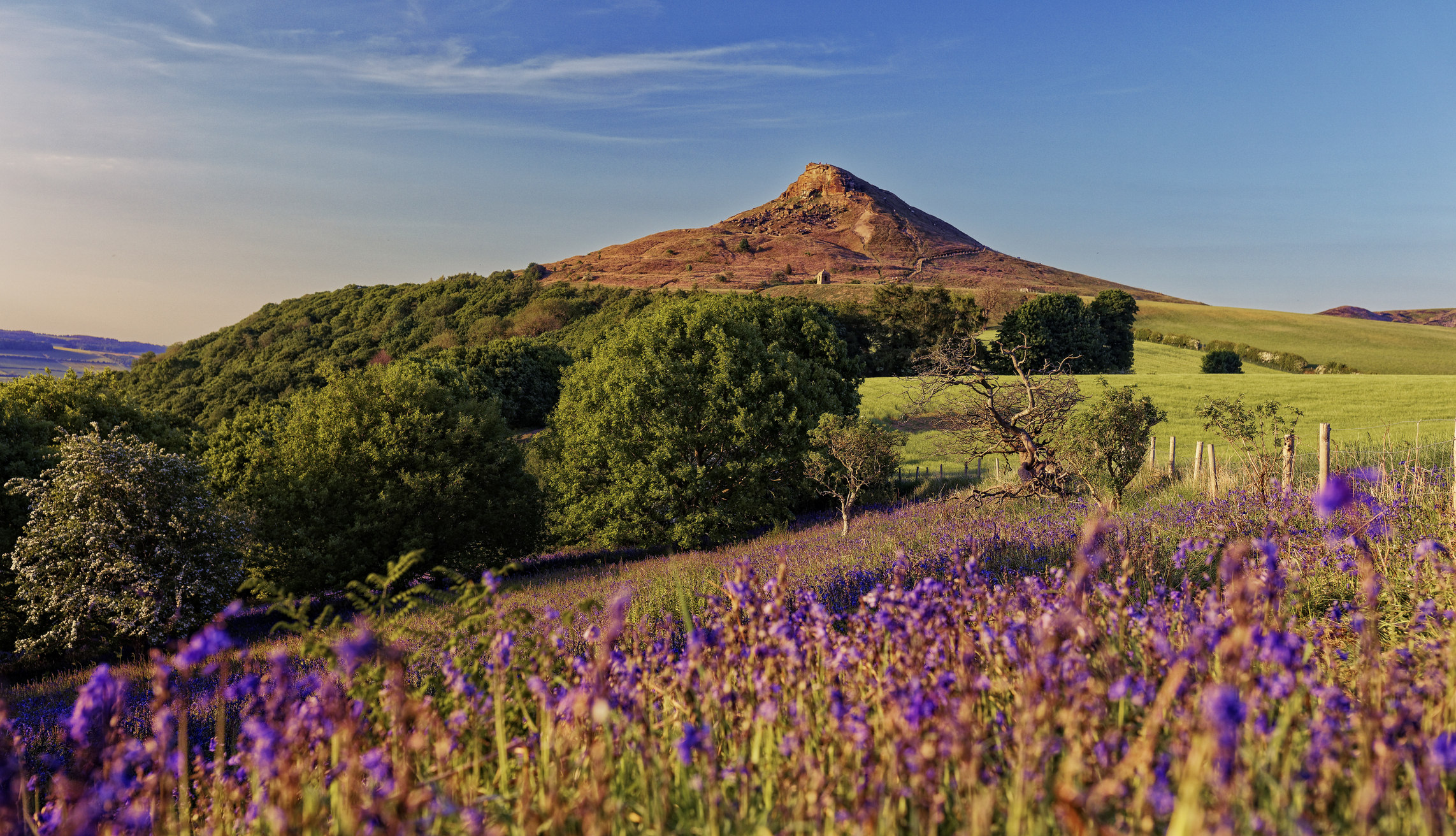
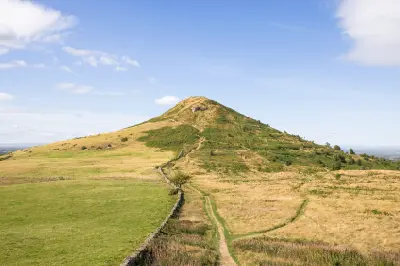
Roseberry Topping rises above rolling green countryside and a foreground of purple wildflowers, its distinctive summit illuminated by warm evening sunlight in North Yorkshire.
Roseberry Topping is a distinctive 320-metre hill on the northwestern edge of the North York Moors National Park, rising above the Cleveland Hills near Great Ayton. Its steep, asymmetrical profile and rocky summit make it a recognisable landmark across the surrounding farmland and moorland. The hill offers opportunities to photograph its characteristic silhouette from below, alongside elevated views across the Tees Valley and neighbouring hills from the summit.
54.50544, -1.10723
Gallery




Quick Facts
Access
Moderate Hike
45–90 min
Elevation Gain
200 m
Best Light
Low-angle sunlight emphasises the hill's steep profile and rocky summit, while changing cloud shadows reveal contours across the surrounding landscape.
Why This Light
Season
Seasonally Distinct
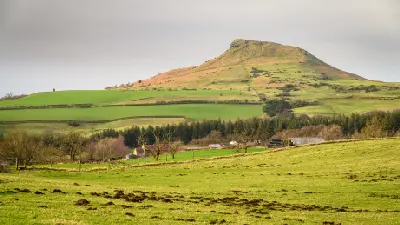
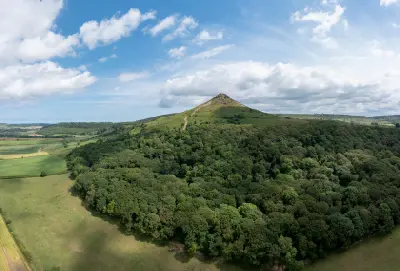
Summer brings green woodland and grassland across the lower slopes, with purple heather appearing on nearby moorland in late summer. Winter reveals bare trees, muted hillside vegetation and occasional frost or snow around the exposed summit.
Crowds
Often Busy
Restrictions
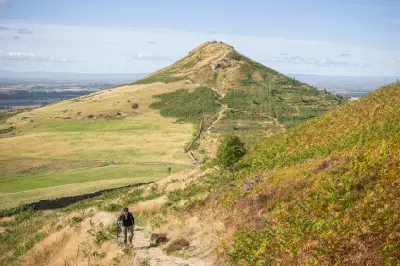
The usual walking routes begin near Newton-under-Roseberry or Great Ayton, with a sustained uphill climb to the summit. Paths include steep sections, stone steps and uneven ground that can become muddy or slippery after rain. The exposed summit can experience strong winds, and care is needed near steep slopes and rocky edges. Parking is available at designated access points, although spaces may be limited during busy weekends.