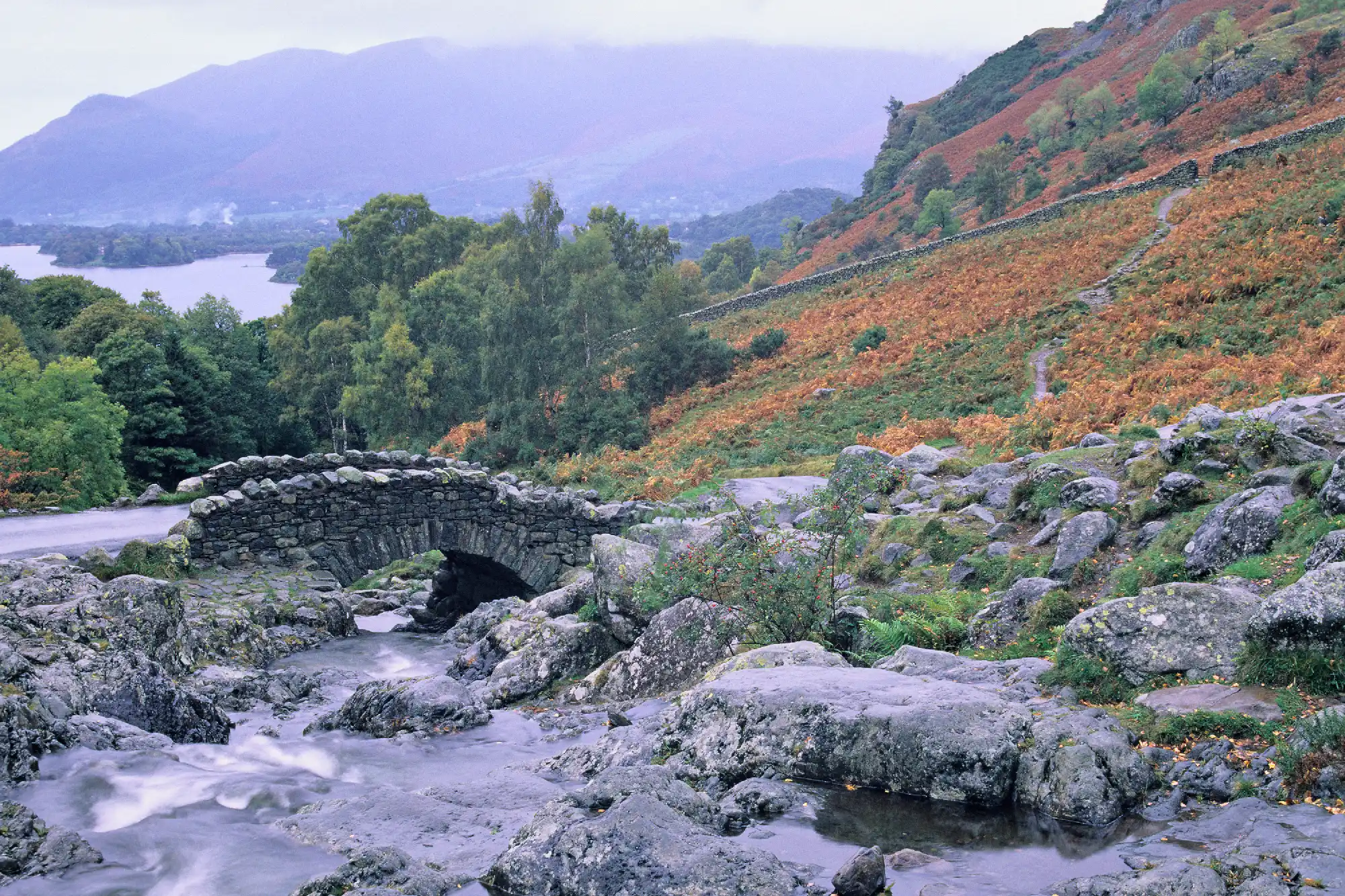
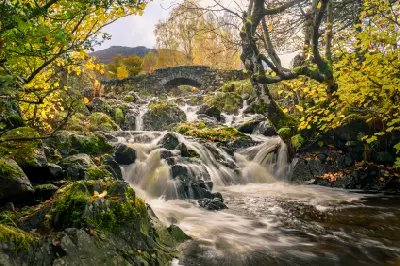
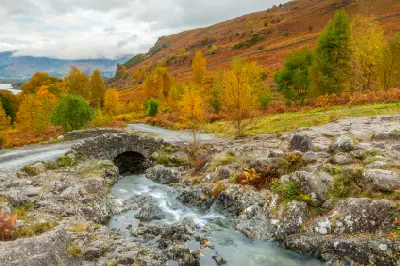
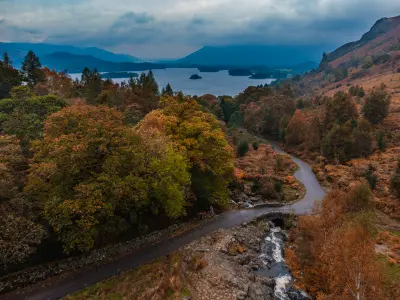
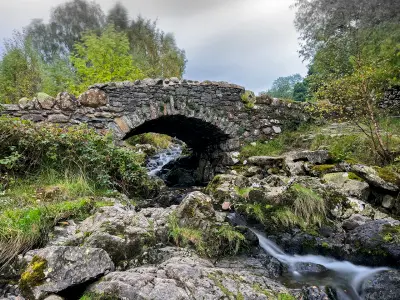
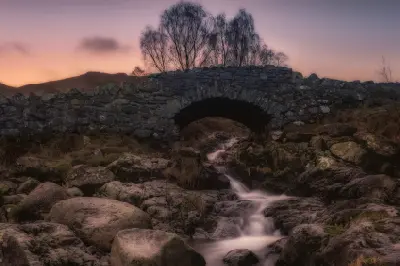
Ashness Bridge crosses a rocky stream above Derwentwater, with a winding hillside path and the Lake District fells rising beyond.
Ashness Bridge is a traditional stone packhorse bridge crossing Barrow Beck above the eastern shore of Derwentwater in the Lake District National Park. Its single stone arch, flowing stream and surrounding woodland form a recognised Lake District composition, with distant views towards Skiddaw in clear conditions. The bridge is accessible from the narrow road climbing towards Surprise View and is one of the area's most established landscape photography subjects.
54.56727, -3.13024
Gallery
Quick Facts
Access
Roadside / Step-out
0–5 min
Elevation Gain
5 m
Best Light
Soft light preserves detail in the stone arch, stream and shaded woodland, while low-angle sunlight can illuminate the distant fells beyond the bridge.
Why This Light
Season
Seasonally Distinct
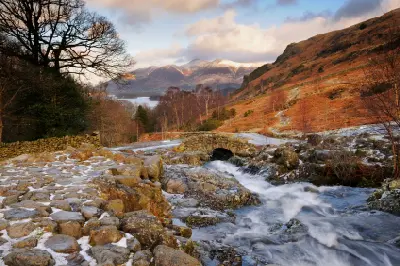
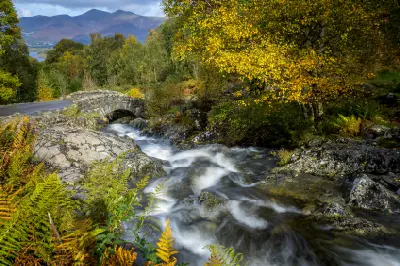
Summer brings green woodland, moss-covered stones and flowing water framed by dense vegetation around the bridge. Winter reveals more of the surrounding tree structure, with occasional frost, snow and stronger views towards the distant fells.
Crowds
Busy Sunrise/Sunset
Restrictions
The bridge is reached from a narrow road above Derwentwater, with limited roadside parking nearby. The stone surfaces and streamside rocks can be slippery, particularly after rain or during freezing conditions. Visitors should keep the road and bridge clear for passing traffic.