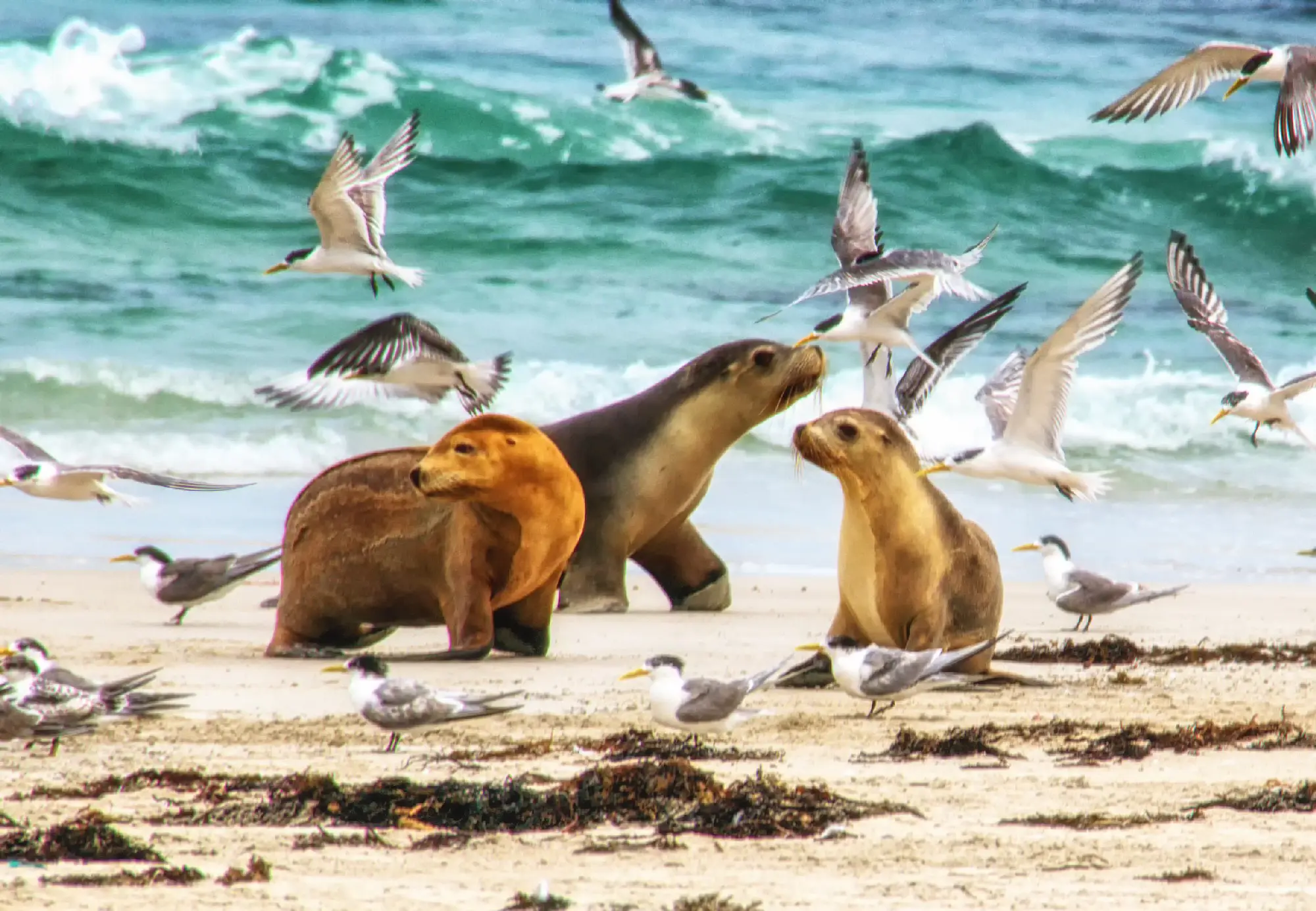
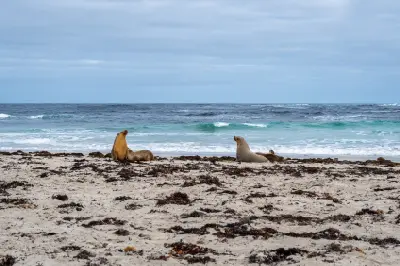
Three Australian sea lions gather on the sandy shore at Seal Bay, Kangaroo Island, surrounded by seabirds flying above the beach as turquoise waves break behind them.
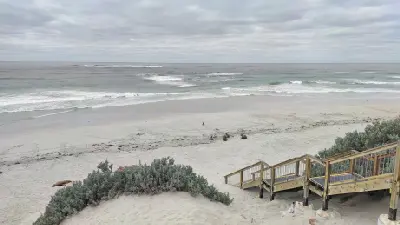
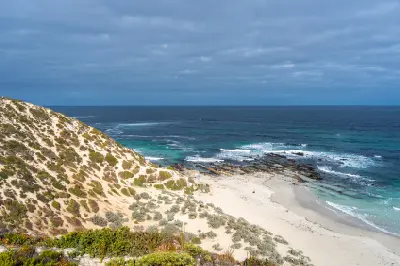
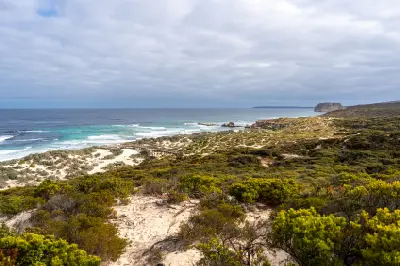
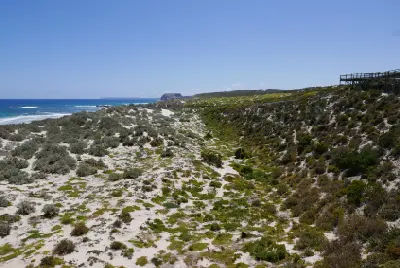
Seal Bay is a protected coastal reserve on the southern coast of Kangaroo Island, South Australia, supporting one of Australia's largest colonies of endangered Australian sea lions. Visitors can observe sea lions resting, nursing pups and moving across the beach from elevated boardwalks or on guided beach tours. The resident wildlife, sweeping sandy shoreline and coastal dunes provide opportunities for wildlife, behavioural and coastal landscape photography.
-35.97152, 137.31772
Gallery
Quick Facts
Access
Short Walk
15–45 min
Elevation Gain
20 m
Best Light
Low-angle sunlight reveals fur texture and shapes the coastal dunes, while softer light retains detail across pale sand and darker sea lions.
Why This Light
Season
Year-Round Stable
Summer brings dry coastal vegetation, pale sandy dunes and generally warmer conditions, with Australian sea lions resting and moving along the beach. Winter brings greener dune vegetation, more frequent storm clouds and rougher Southern Ocean conditions, while sea lion activity continues throughout the year.
Crowds
Often Busy
Restrictions
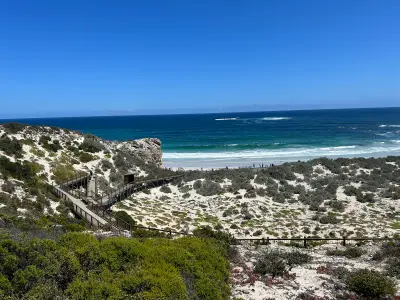
Seal Bay Conservation Park is reached by sealed road on the southern coast of Kangaroo Island. Visitors can observe the sea lion colony from an elevated boardwalk or join a guided tour providing closer access to the beach. Entry and tour fees apply, with beach access restricted to authorised guided groups. Visitors must maintain required distances from sea lions, remain on designated paths and follow ranger instructions. Wildlife activity and tour availability vary, so advance booking is advisable.