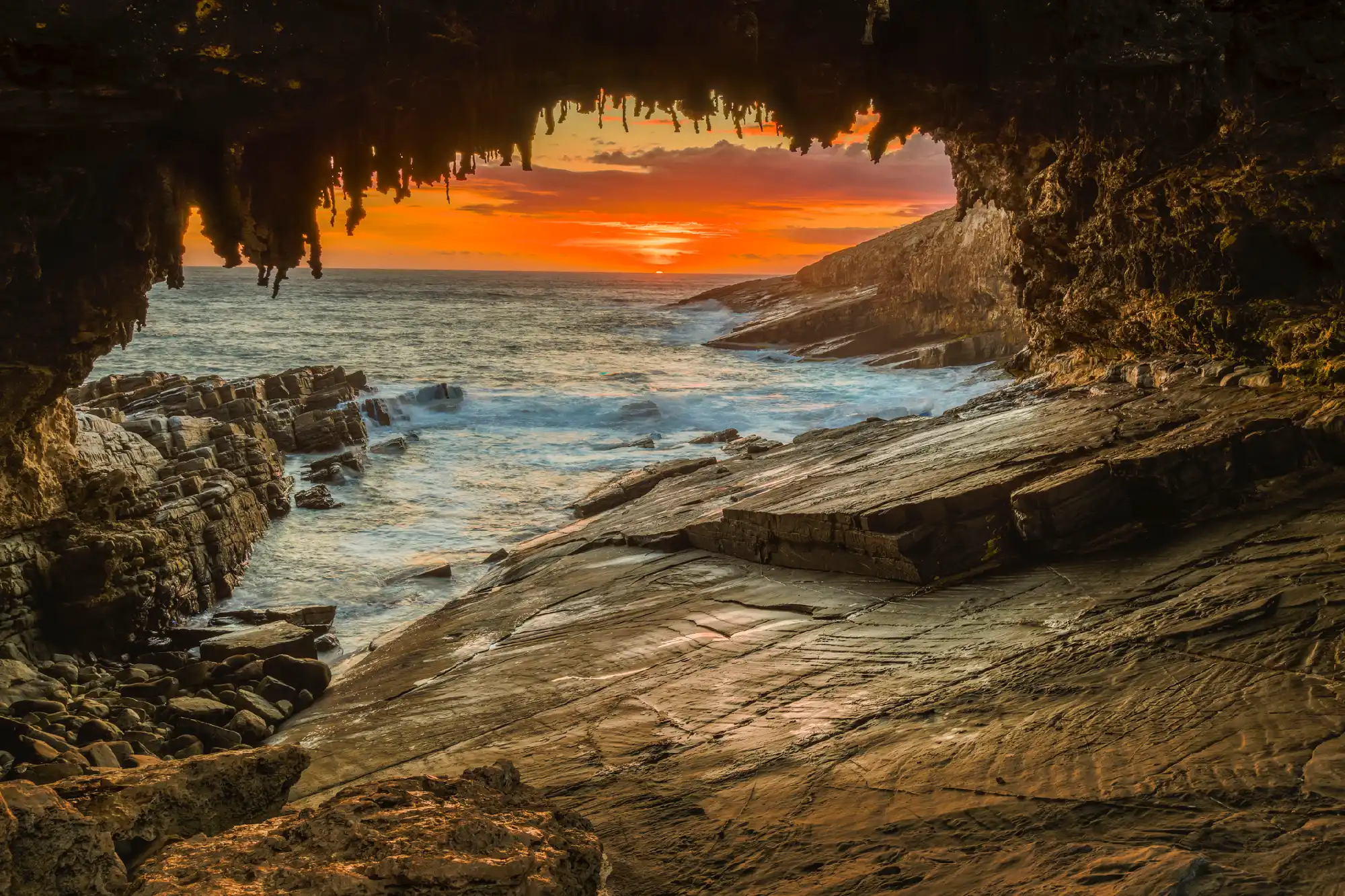
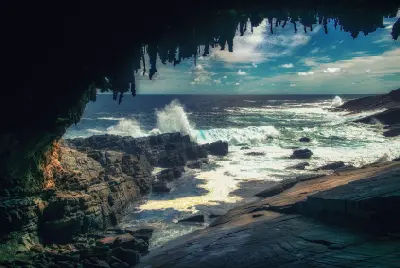
A vivid orange sunset illuminates the Southern Ocean through Admirals Arch, with hanging limestone formations framing the waves and rugged rock platform at Flinders Chase National Park on Kangaroo Island.
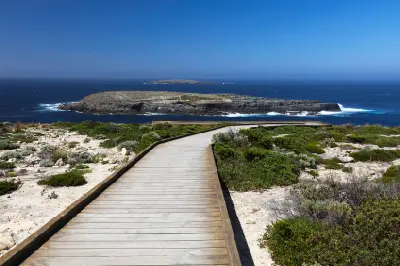
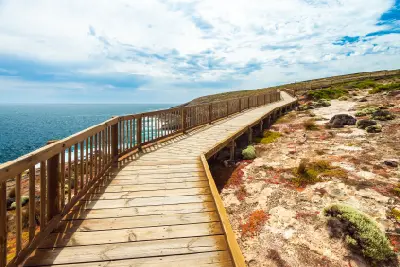
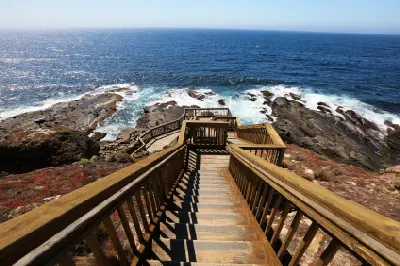
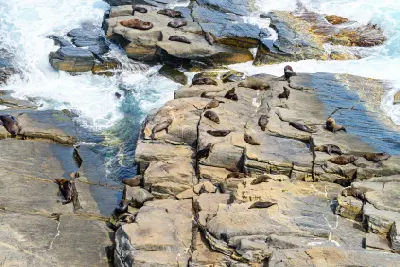
Admirals Arch is a naturally eroded rock arch at Cape du Couedic in Flinders Chase National Park on Kangaroo Island, South Australia. The arch frames the Southern Ocean through a weathered limestone opening, with a boardwalk descending towards the formation and a colony of long-nosed fur seals occupying the surrounding rocks. The sculptural arch, rugged coastline and resident seals provide opportunities for coastal landscape, wildlife and geological photography.
-36.06321, 136.70474
Gallery
Quick Facts
Access
Short Walk
5–15 min
Elevation Gain
30 m
Best Light
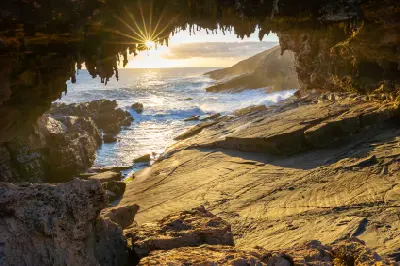
Low-angle light reveals the arch's weathered surfaces, while backlighting can illuminate sea spray and strengthen the contrast between the rock opening and ocea
Why This Light
Season
Year-Round Stable
Summer brings drier coastal vegetation, generally calmer seas and warmer light across the weathered rock, with fur seals occupying the surrounding shoreline. Winter brings rougher Southern Ocean swell, more frequent storm clouds and increased sea spray, while the arch and seal colony remain prominent throughout the year.
Crowds
Often Busy
Restrictions
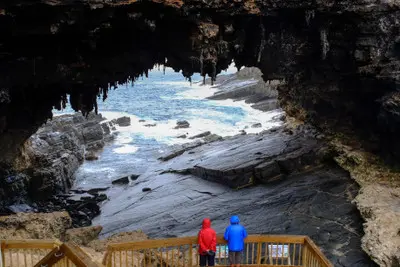
Admirals Arch is reached by sealed road within Flinders Chase National Park, with parking near Cape du Couedic Lighthouse. A boardwalk and steps descend towards the main viewing platforms, with some elevation change on the return walk. National park entry fees apply. Visitors must remain behind barriers and on designated paths to protect the fur seal colony and avoid exposed coastal edges. Strong winds, wet surfaces and heavy swell require care. Drone operations require appropriate authorisation.