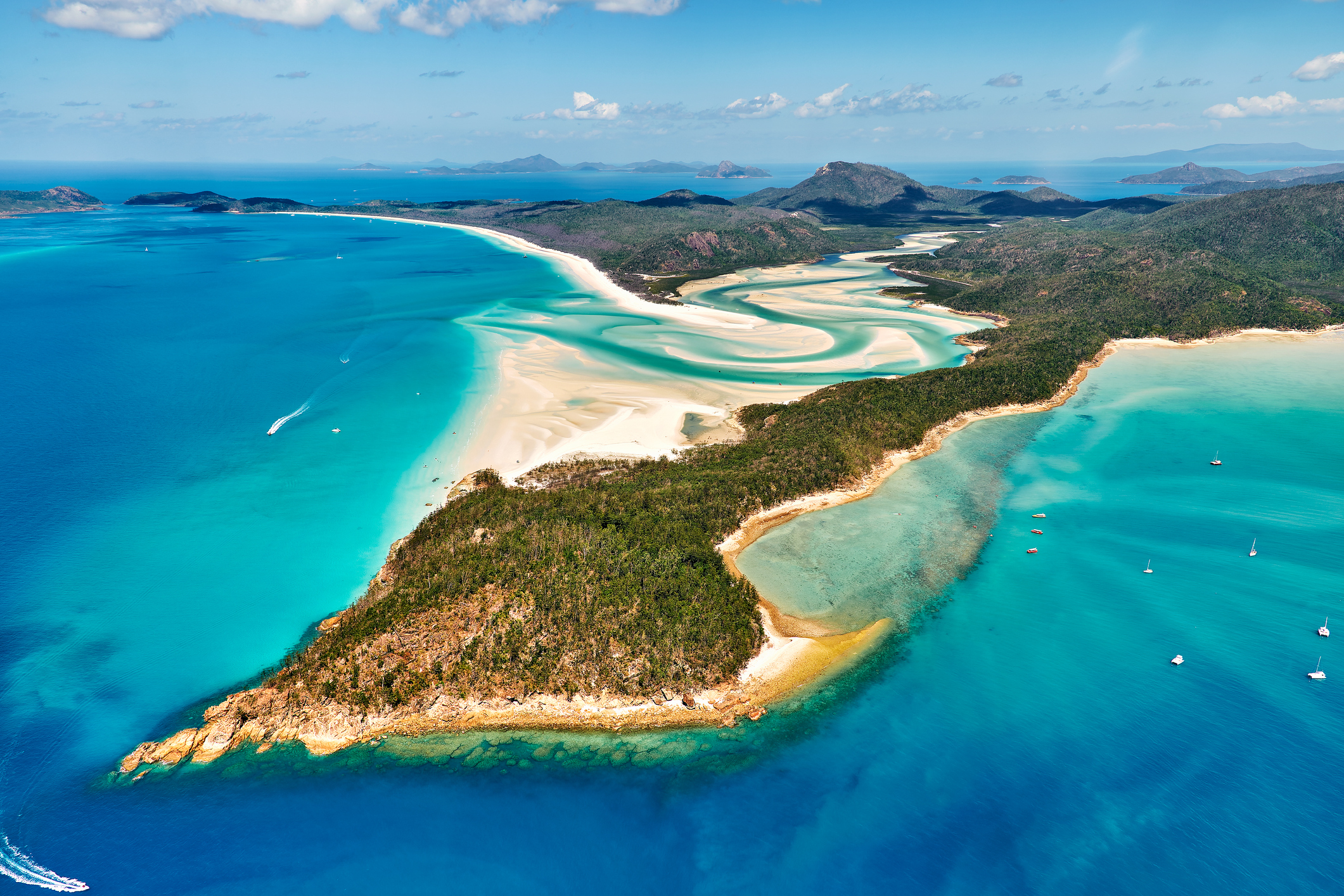
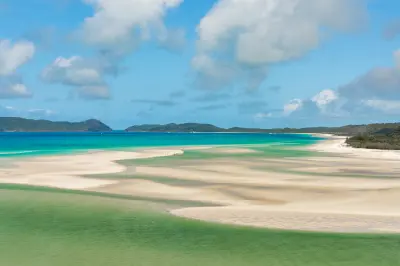
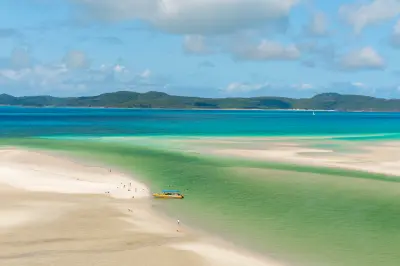
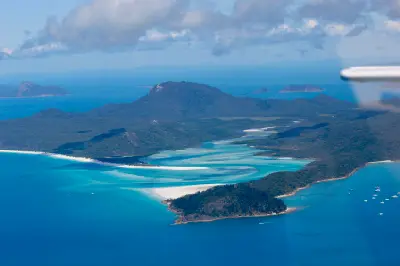
Whitehaven Beach sweeps along Whitsunday Island beside the swirling white silica sands and turquoise channels of Hill Inlet.
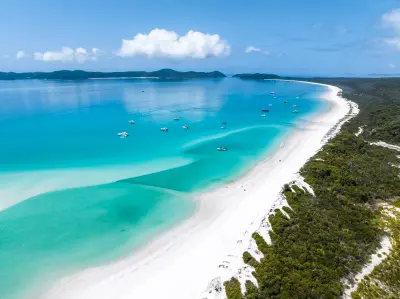
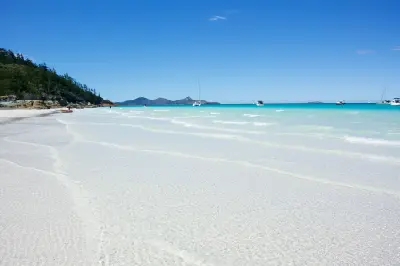
Whitehaven Beach is a long white-silica-sand beach on Whitsunday Island within the Great Barrier Reef World Heritage Area. The shoreline extends for several kilometres beside clear turquoise water, while its northern end merges into the shifting tidal channels and sandbanks of Hill Inlet. White silica sand, intensely coloured water and sweeping coastal forms provide opportunities for landscape, aerial and abstract photography.
-20.27641, 149.03525
Gallery
Quick Facts
Access
Short Walk
5–15 min
Elevation Gain
10 m
Best Light
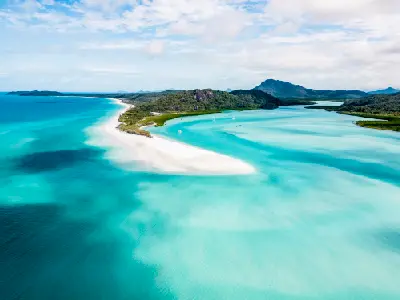
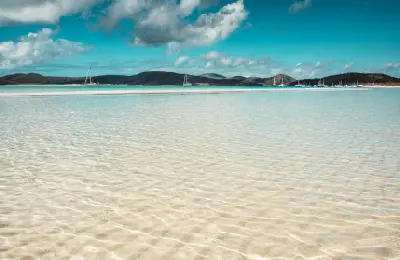
Bright light strengthens the separation between white silica sand and turquoise water, while calmer shallows can reflect sky and surrounding vegetation.
Why This Light
Season
Seasonally Distinct
Summer brings warmer water, greener island vegetation and more humid, changeable conditions, with tropical cloud and rainfall affecting the appearance of the coast. Winter brings generally clearer skies, lower humidity and softer vegetation tones, while the white sand and turquoise shallows remain visually prominent.
Crowds
Often Busy
Restrictions
Whitehaven Beach is on Whitsunday Island and is reached primarily by boat, with commercial tours and private vessels providing access from the surrounding Whitsundays. Visitors should use designated tracks and visitor areas and avoid disturbing dunes and coastal vegetation. Marine and beach conditions can change with wind, tides and tropical weather, and access may be affected by severe weather or park closures.