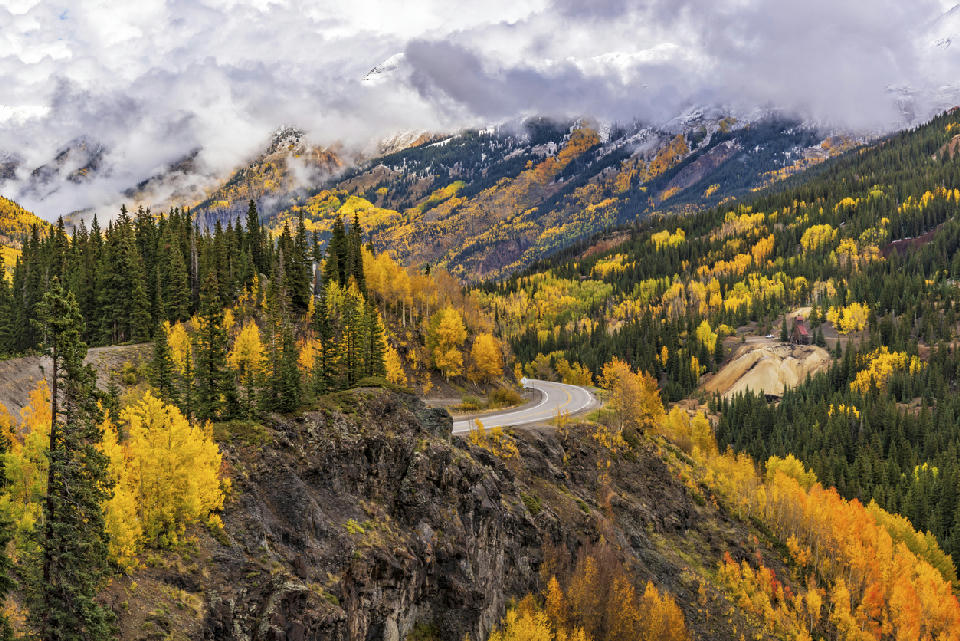
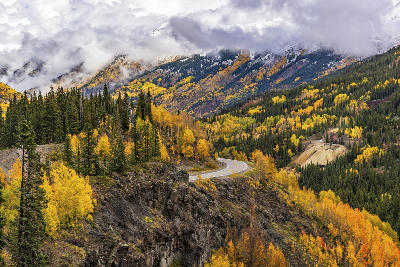
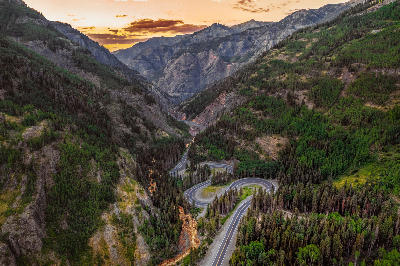
Low clouds over Red Mountain Pass with vibrant fall aspens along the Million Dollar Highway, San Juan Mountains, Colorado, USA.
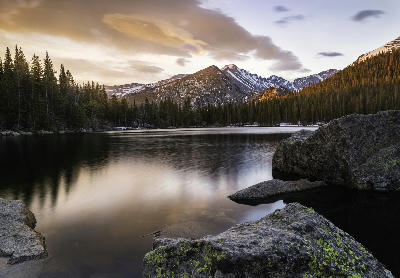
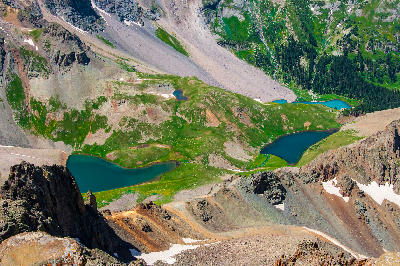
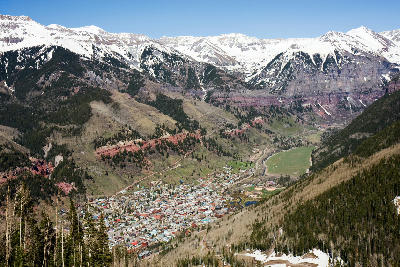
The Colorado Rockies and San Juan Mountains form a high-altitude alpine landscape in the central United States defined by broad mountain ranges, glacial valleys, and elevated basins distributed across a large geographic area. The region spans multiple mountain systems, where peaks, ridgelines, and open alpine terrain extend across significant distance rather than forming a single concentrated massif. Its spatial identity is defined by scale and elevation across dispersed terrain. The terrain transitions between alpine peaks, glacial basins, forested slopes, and high mountain passes. Elevation varies across the region, with large areas of terrain existing at high altitude, creating expansive upland environments rather than confined valley systems. Seasonal conditions strongly influence surface appearance. Snow cover, vegetation cycles, and atmospheric clarity shape contrast across mountains, valleys, and open alpine terrain.
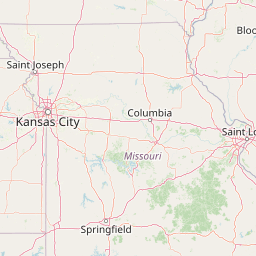
Structured Map of Colorado Rockies & San Juan Mountains
A connected view of the landscape, organised by regions, areas, and key locations.
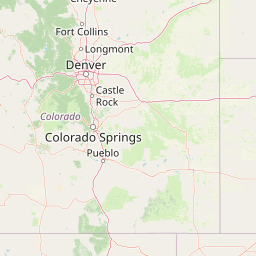
Ice Lakes Basin
water feature
Island Lake
water feature
San Juan Alpine Lakes
area district
Telluride Valley
landmark
Last Dollar Road
landmark
Blue Lakes
water feature
San Juan Mountains
area district
Yankee Boy Basin
landmark
Million Dollar Highway
landmark
Dallas Divide
landmark
Ouray
landmark
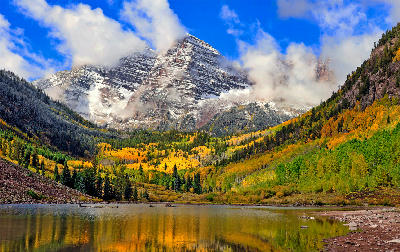
Maroon Bells
landmark
Crater Lake
landmark
Maroon Bells & Elk Mountains
area district
Maroon Lake
water feature
Maroon Creek Valley
landmark
Trail Ridge Road
landmark
Rocky Mountain National Park
area district
Emerald Lake
water feature
Dream Lake
water feature
Bear Lake
water feature
Alberta Falls
water feature
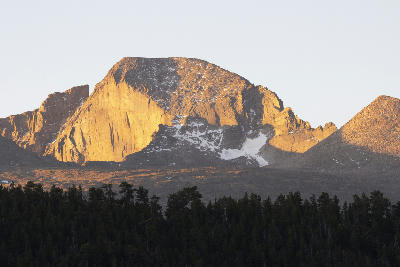
Longs Peak
landmark
Areas in Colorado Rockies & San Juan Mountains
Gallery
Overview
This region is structured as a network of mountain ranges and basins extending across Colorado. The Rocky Mountains provide the broader framework, while the San Juan Mountains introduce a more rugged and complex sub-region in the southwest. Unlike tightly compressed alpine systems, the landscape operates through dispersion. Peaks, valleys, and basins are spread across wide areas, with significant horizontal distance between major features. The visual structure is defined by scale and layering. Compositions often extend across multiple mountain ranges, with foreground basins leading toward midground ridgelines and distant peaks beyond.
Key photography subjects
- Alpine peaks rising across wide, open terrain
- Glacial basins set beneath surrounding ridgelines
- High mountain passes crossing elevated landscapes
- Forested slopes transitioning into alpine zones
- Layered mountain ranges extending into distance
- Open foregrounds leading to dispersed peaks
- Seasonal snow and light defining elevation contrast
Workshops in Colorado Rockies & San Juan Mountains
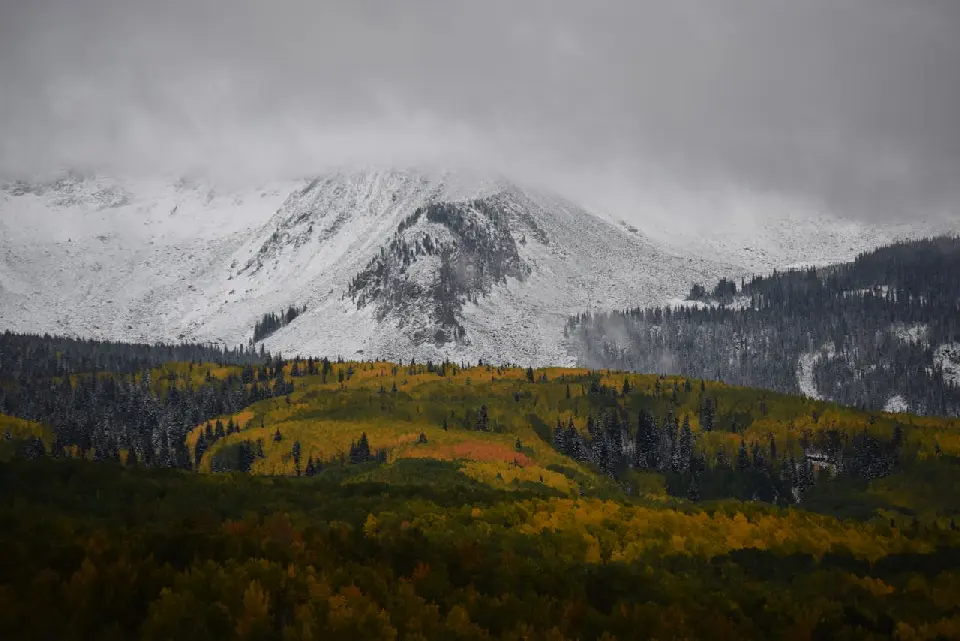
Colorado Fall Color Photography Art Retreat


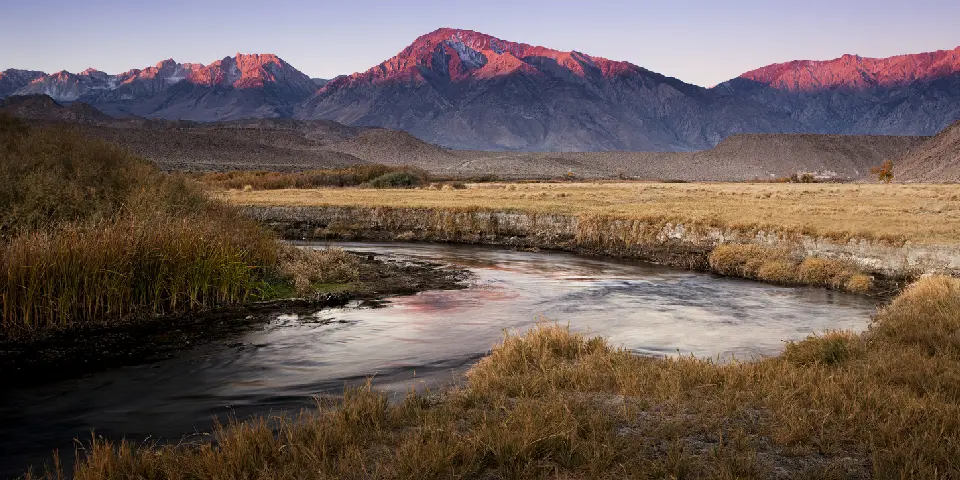
Autumn in Eastern Sierra

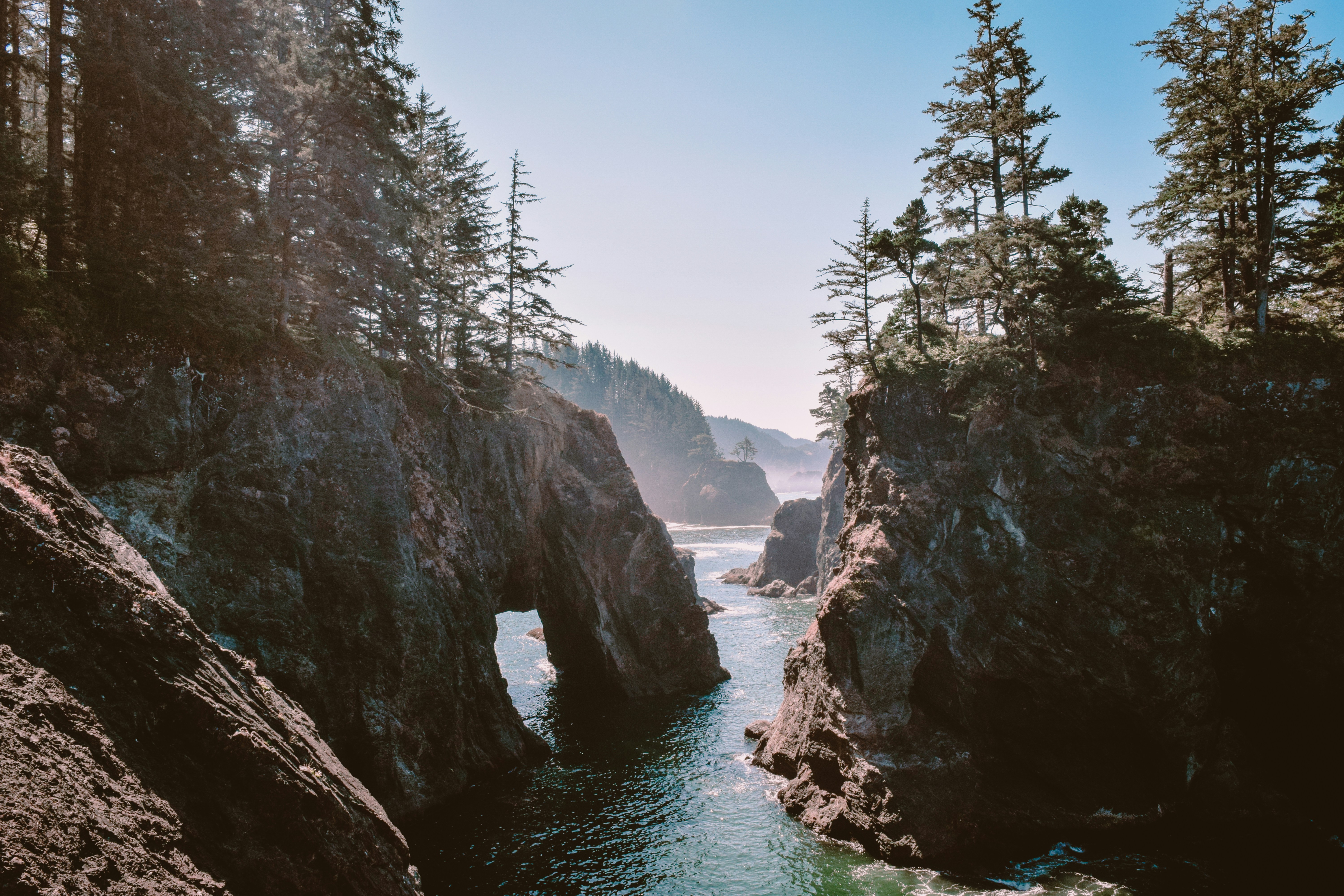
Oregon Coast Adventure Photography Workshop
Autumn in Utah Badlands