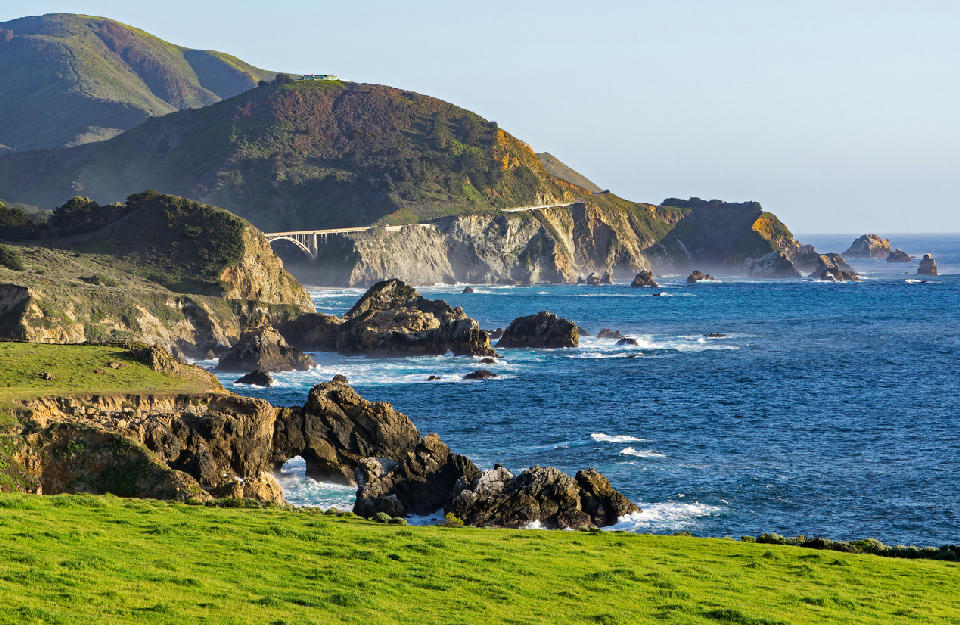
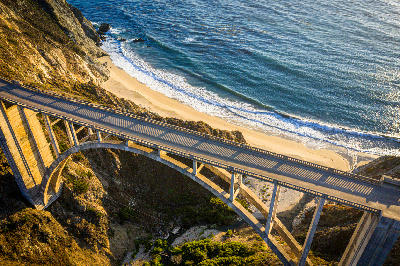
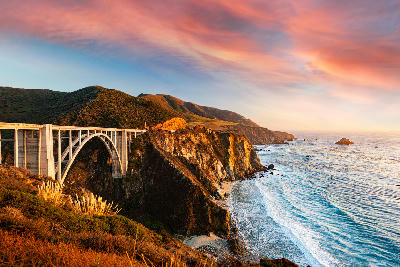
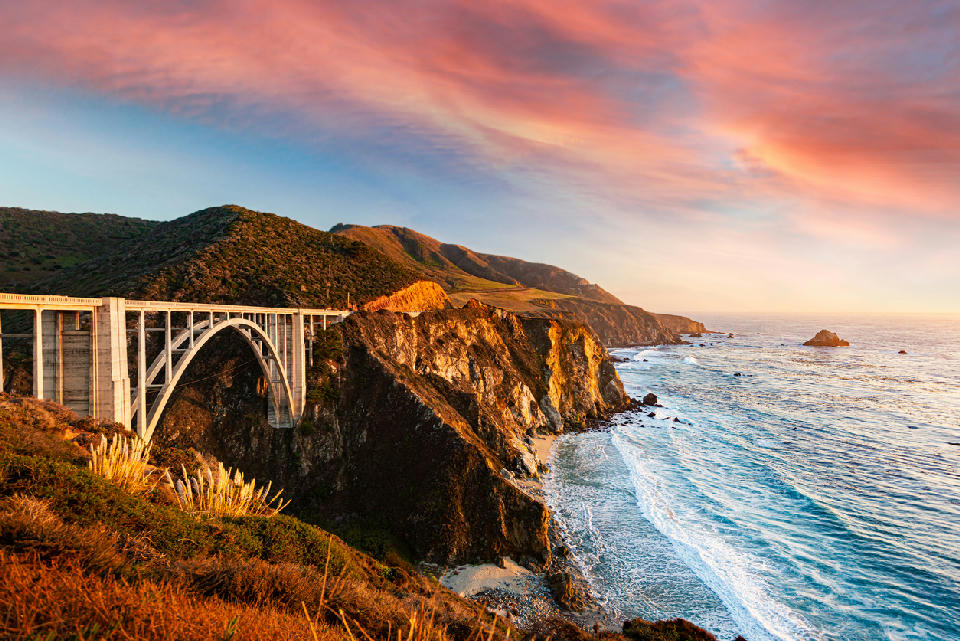
Bixby Creek Bridge on Big Sur coastline with cliffs and Pacific Ocean at sunset in California

    Big Sur coastline with Bixby Creek Bridge at sunset along the Pacific Coast Highway, California, USA

    California Coast

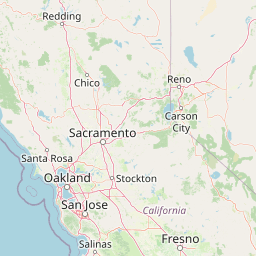
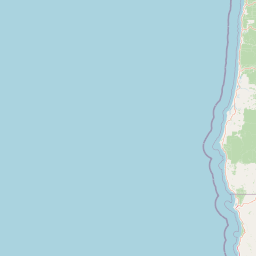
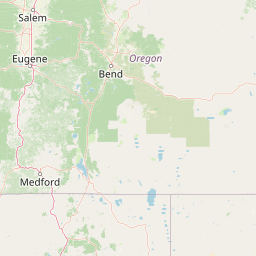
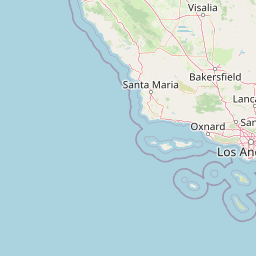
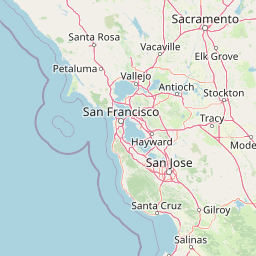
    The California Coast is a coastal landscape along the western United States defined by cliff systems, headlands, open ocean exposure, and long stretches of varied shoreline shaped by tectonic activity and marine erosion. The coastline runs along the Pacific Ocean, where land meets sea through a combination of rugged cliffs, sandy beaches, and elevated coastal terraces. Its spatial identity is defined by edge contrast and variation along a continuous coastal line.

    The terrain transitions between steep coastal cliffs, rocky outcrops, sandy beaches, and inland hills rising from the shoreline. Elevation changes vary across the region, with sections of abrupt vertical drop alongside areas of gradual coastal plains.

    Seasonal conditions influence visibility, ocean conditions, and atmospheric clarity. Coastal fog, changing light, and ocean movement shape contrast across cliffs, water, and shoreline features.

    Geographic discovery

    Explore California Coast by Area

    Choose a part of the California Coast to discover its landscapes, photographic character, and locations.

    Open interactive Explore

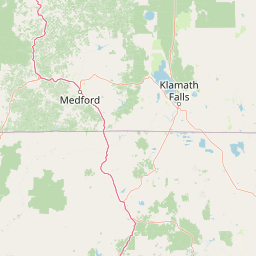
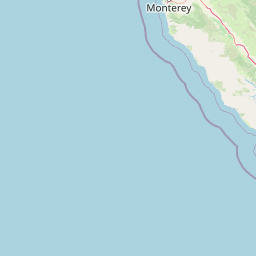
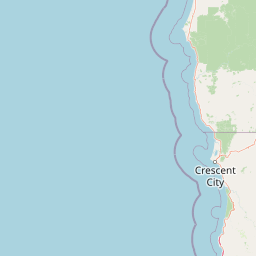
    Explore Areas in California Coast

    Open in Explore
    Big Sur coastline with Bixby Creek Bridge and rocky shoreline in California

    Big Sur Coast

    The Big Sur Coast is structured as a continuous cliff system extending along the Pacific Ocean. The coastline is defined by steep drops and narrow ledges, with the road and viewpoints following the contour of the terrain. Unlike more fragmented coastlines, Big Sur operates through alignment. The landscape unfolds linearly, with compositions built along the direction of the coast rather than across it. The visual structure is defined by contrast and placement. Cliffs, ocean, and elevated viewpoints interact to create compositions where vertical drop meets horizontal ocean space, often framed by repeating coastal features.

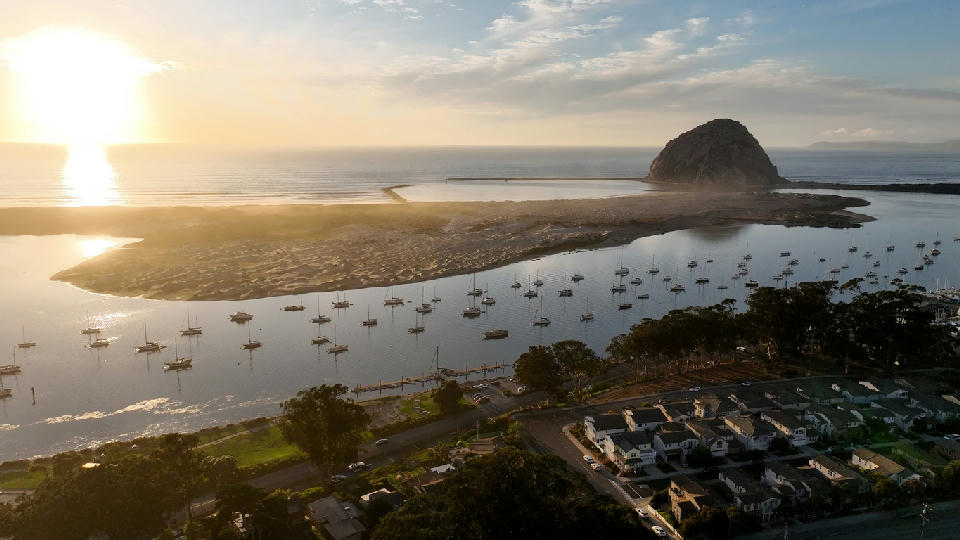
    Morro Bay harbor with boats and Morro Rock at sunset California

    Central California Coast

    The Central California Coast is structured as a sequence of open coastal sections where features such as sea stacks, rock formations, and headlands are spaced along the shoreline. Unlike tightly compressed cliff systems, this region introduces more lateral space between elements. The coastline unfolds gradually, allowing compositions to develop across wider foregrounds and midground spacing. Shoreline curvature and offshore formations guide the eye along the coast rather than confining it. The visual structure is defined by spacing and repetition. Sea stacks and rock formations act as recurring elements within open coastal scenes, creating compositions based on alignment, rhythm, and interaction with the ocean.

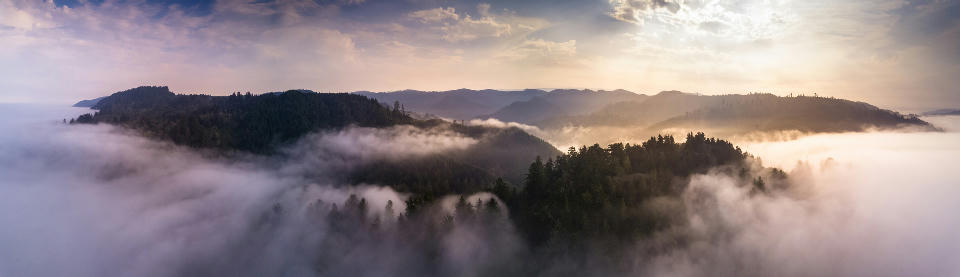
    Aerial view of coastal redwood forests emerging from low cloud and mist at sunrise in northern California.

    Northern California Coast & Redwoods

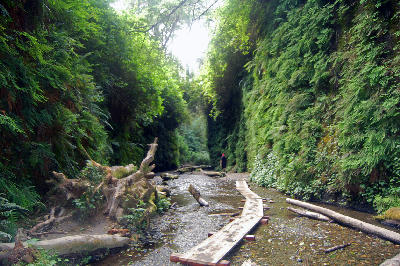
    This region is structured as a continuous forest–coast interface, where dense vegetation extends to the edge of the ocean. Redwood forests dominate inland areas, while the coastline introduces rocky headlands, beaches, and river outlets. Unlike open coastal systems, the landscape operates through enclosure and layering. Forest density creates vertical structure, while the coastline introduces contrast through open space and horizon. The visual structure is defined by vertical layering and edge contrast. Tall trees form enclosed environments, while breaks in the forest reveal coastal openings, producing compositions that shift between enclosed and open space.

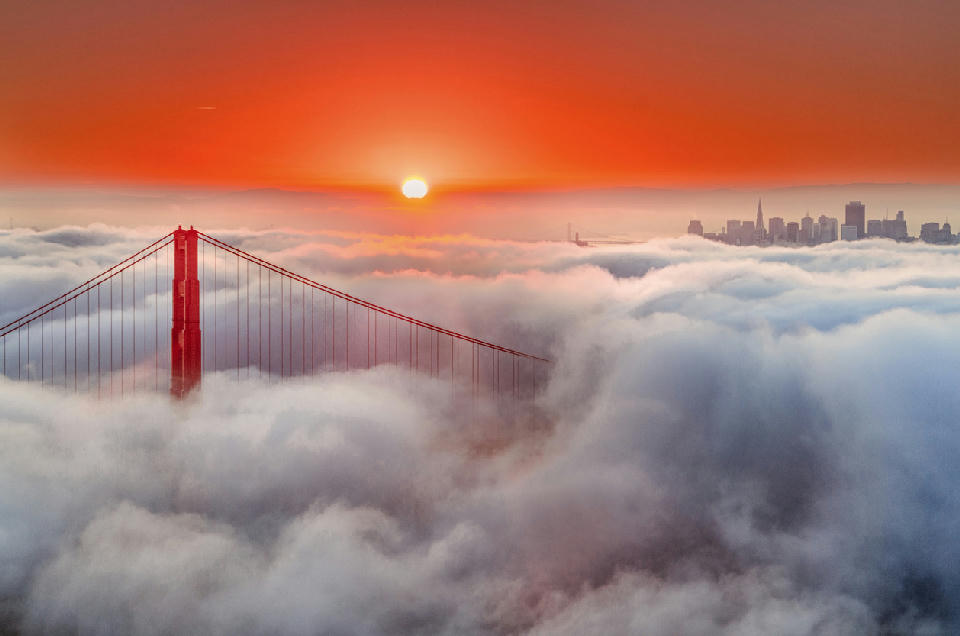
    Golden Gate Bridge emerging above fog at sunrise with San Francisco skyline in background

    San Francisco & Marin Headlands

    This region is structured around a narrow coastal gateway where the Pacific Ocean enters San Francisco Bay. The Golden Gate Bridge acts as the central visual anchor, positioned between headlands and open water. Unlike natural systems driven by terrain alone, this landscape operates through placement. Built structures, coastal forms, and natural features align within a confined space, creating compositions where elements are intentionally framed. The visual structure is defined by landmark relationships. The bridge, headlands, and surrounding terrain interact within a fixed spatial arrangement, producing compositions built around alignment, framing, and contrast between built and natural elements.

    Photographic journey

    California Coast Photography Route

    California Coast Route · 23 stops

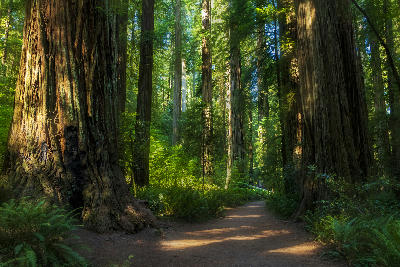
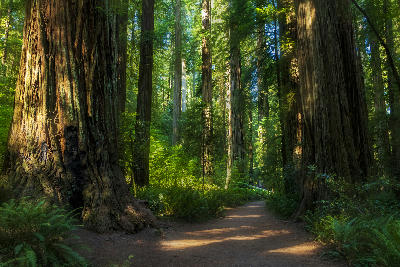
    Forest path surrounded by tall redwood trees with sunlight filtering through the canopy in Redwood National Park, California.01

    Redwood National Park

    Redwood National Park is a forest landscape defined by dense groves of tall redwood trees with limited sky visibility and vertical structure throughout. The environment is enclosed with minimal long-distance views. The composition resolves through scale, repetition, and the relationship between tree forms and light.

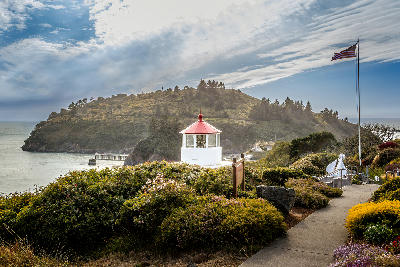
    Trinidad Head lighthouse with path and coastal headland California05

    Trinidad Head

    Trinidad Head is a coastal headland rising above the Pacific Ocean with open views across surrounding shoreline and offshore rocks. The headland forms an elevated vantage point with exposed terrain and clear sightlines. The composition resolves through elevation, layering, and the relationship between land, ocean, and horizon.

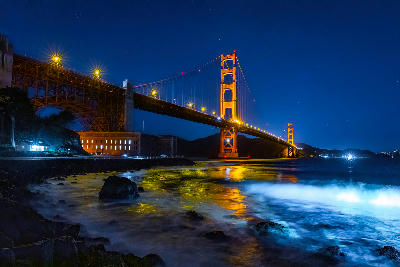
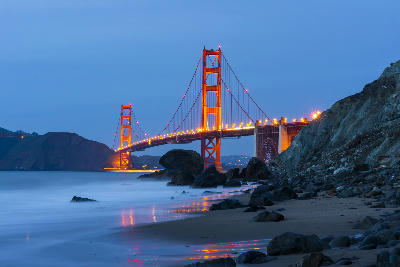
    Golden Gate Bridge illuminated at night with reflections in the bay and rocks in the foreground09

    Golden Gate Bridge

    Golden Gate Bridge is a suspension bridge spanning the entrance to San Francisco Bay, connecting the city to the Marin Headlands. The structure crosses open water with surrounding cliffs and headlands providing elevated viewpoints. The composition resolves through scale, structure, and the relationship between bridge, water, and landscape.

    Bixby Creek Bridge on the Big Sur coast along the Pacific Ocean, California.14

    Bixby Creek Bridge

    Bixby Creek Bridge is a concrete arch bridge spanning a coastal canyon along the Big Sur coastline. The structure sits above the ocean with cliffs and coastline extending on either side. The composition resolves through the relationship between the bridge, cliff edges, and ocean.

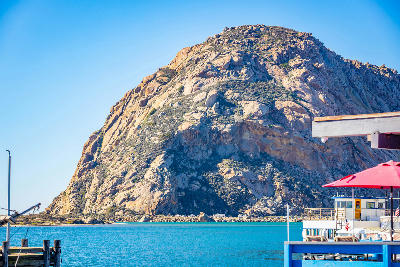
    Morro Rock volcanic plug in Morro Bay California with blue harbor water and coastal buildings in foreground19

    Morro Rock

    Morro Rock is a large volcanic plug rising directly from the shoreline at Morro Bay. The formation stands isolated from surrounding land with water on multiple sides. The composition resolves through scale, isolation, and the relationship between rock, ocean, and sky.

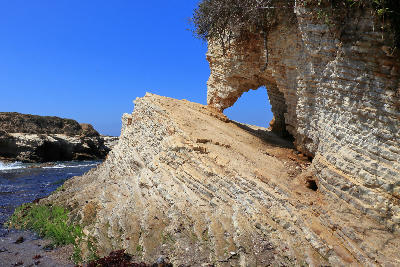
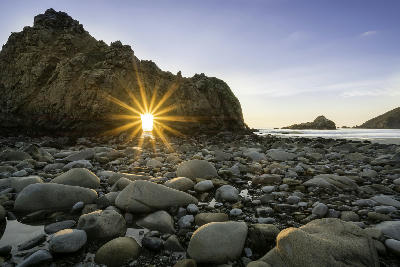
    Rock arch Spooners Cove Montana de Oro California23

    Spooner's Cove

    Spooner’s Cove is a sheltered coastal cove with sandy shoreline and surrounding rock formations within Montaña de Oro State Park. The cove forms a contained composition with cliffs and headlands enclosing the scene. The composition resolves through structure, foreground, and the relationship between beach, rock, and ocean.

    Explore the Full California Coast Route23 stops across the California Coast

    Overview

    The California Coast is structured as a long, continuous edge between land and ocean, with variation occurring along its length rather than within a confined system. Headlands, bays, and cliff systems create distinct segments, each with different relationships between terrain and water.

    Unlike more repetitive coastal systems, this region operates through variation. Sections of coastline shift between rugged cliffs, open beaches, and rolling coastal hills, producing a diverse range of compositional environments.

    The visual structure is defined by contrast and change. Compositions are built from the interaction between landform and ocean, where foreground shoreline elements lead toward midground cliffs and open horizons beyond.
    Key Photography Subjects

    • Coastal cliffs dropping into open ocean
    • Headlands projecting into wide coastal horizons
    • Varied shoreline transitions between rock and sand
    • Ocean movement interacting with coastal edges
    • Elevated viewpoints overlooking coastline variation
    • Coastal fog shaping depth and atmosphere
    • Light defining contrast across land–sea boundaries

    Gallery

    Workshops in California Coast

    No upcoming workshops scheduled for California Coast at this time.

    Check back soon or explore other destinations.