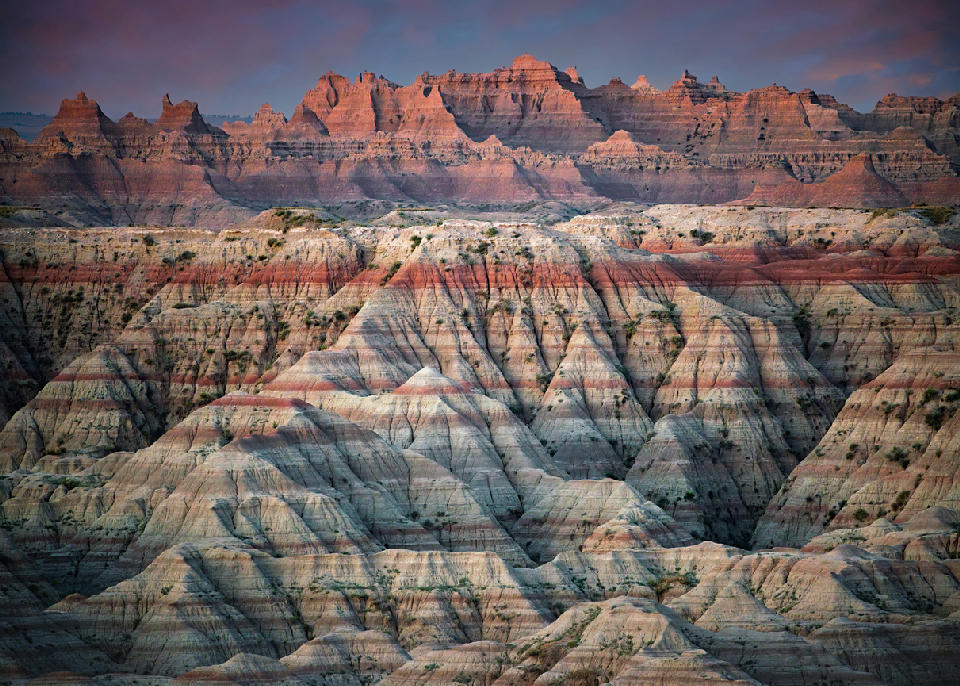
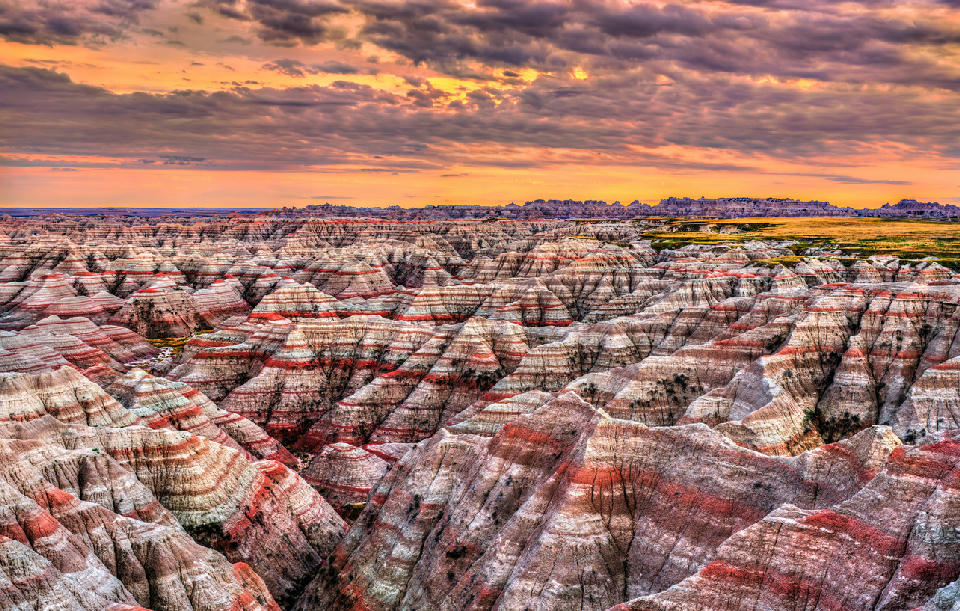
Big Badlands Overlook sunset layered formations South Dakota

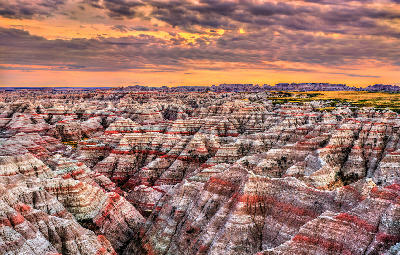
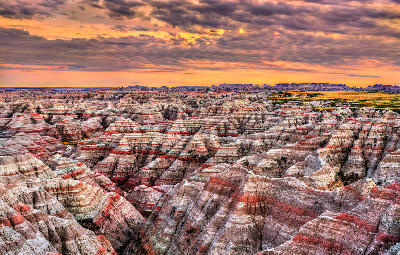
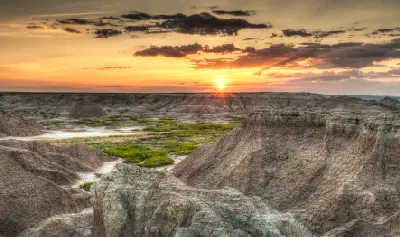
    Sunset light over layered red and white formations at Big Badlands Overlook in Badlands National Park, South Dakota.

    Badlands National Park

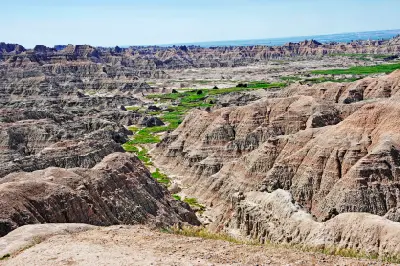
    Badlands National Park is defined by a dense concentration of eroded sedimentary formations rising from the plains of South Dakota. The landscape is structured by sharply carved ridges, pinnacles, and layered slopes formed through ongoing erosion, creating a highly textured terrain with little vegetation and minimal vertical obstruction.

    The terrain is composed of tightly packed formations rather than large-scale features, with elevation changes occurring across short distances. This creates a visually complex environment where patterns, lines, and surface detail dominate the landscape.

    Seasonal and atmospheric conditions influence colour, contrast, and visibility. Light interacts strongly with the layered sediments, emphasising form, depth, and texture across the terrain.

    Photographic journey

    Badlands National Park Photography Route

    Badlands National Park Photography Route · 9 stops

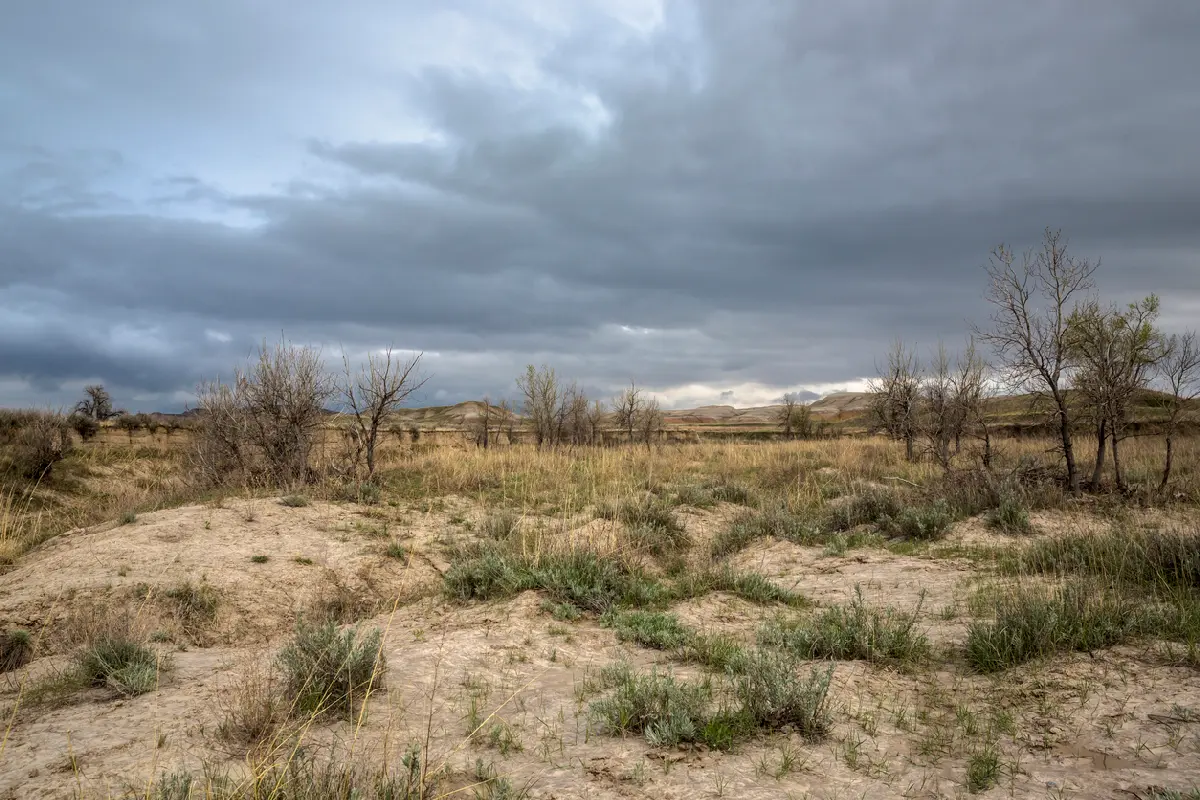
    Sage Creek prairie colourful mounds Badlands National Park South Dakota01

    Sage Creek Rim Road

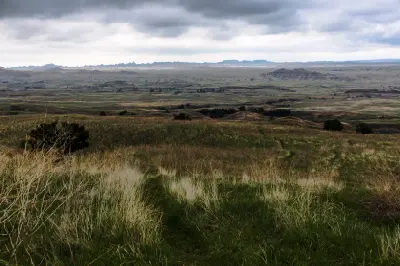
    Sage Creek Rim Road is a gravel route in Badlands National Park that follows the western edge of the badlands, overlooking open prairie and distant formations. The landscape is defined by wide grasslands transitioning into eroded ridges. Compositions form through scale, negative space, and the contrast between foreground prairie and distant badlands.

    Hay Butte Overlook sunset Badlands National Park South Dakota03

    Hay Butte Overlook

    Hay Butte Overlook is a roadside viewpoint in the Sage Creek area of Badlands National Park, looking out across open prairie toward distant badlands formations. The scene is defined by wide grasslands and low-relief terrain. Compositions form through scale, negative space, and the relationship between foreground prairie and distant ridgelines.

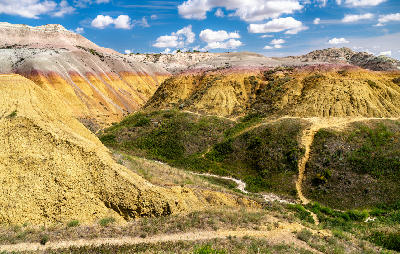
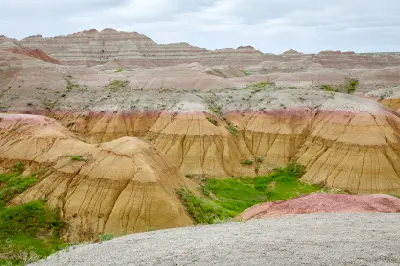
    Yellow Mounds Overlook Badlands National Park showing yellow and red layered hills with green grass South Dakota04

    Yellow Mounds Overlook

    Yellow Mounds Overlook is a roadside viewpoint in Badlands National Park, known for its bright yellow and red mineral layers set against darker badlands formations. The terrain is defined by rounded mounds and exposed sediment bands. Compositions form through colour contrast, layered structure, and the relationship between foreground mounds and surrounding ridges.

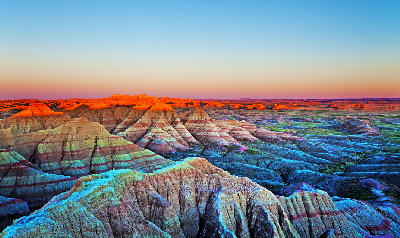
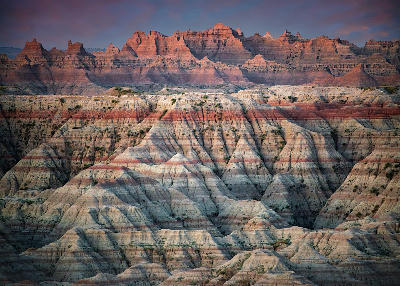
    Badlands ridge system multicolored layered formations South Dakota06

    Badlands Ridges

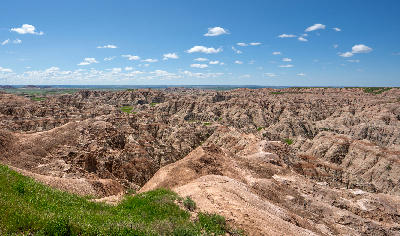
    The area is formed by erosion of soft sedimentary layers, creating a network of ridges, gullies, and spires across the landscape. The terrain is highly textured, with repeating patterns of lines and forms extending across the horizon. Photographically, the region works through layering, repetition, and structure. Ridge lines and erosion patterns create strong compositional elements, while colour variation between rock layers adds depth. Light plays a key role, with low-angle light defining texture and shadow across the formations.

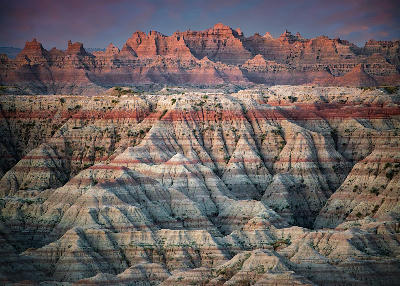
    Layered red and white badlands formations at Big Badlands Overlook in Badlands National Park at sunset07

    Big Badlands Overlook

    Big Badlands Overlook is a primary viewpoint in Badlands National Park, looking out across a dense network of eroded ridges and gullies. The terrain is defined by sharply layered formations and repeating spines. Compositions form through compression, pattern, and the relationship between foreground ridges and distant formations.

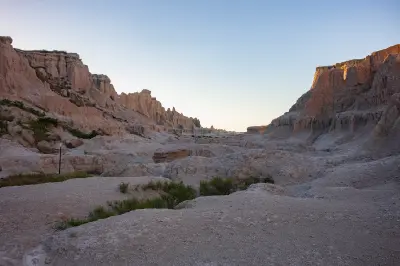
    Eroded canyon walls and dry wash terrain along Notch Trail in Badlands National Park09

    Notch Trail

    Notch Trail is a short badlands route leading through eroded formations to a cliff-edge view over the White River Valley. The scene is defined by pale ridges, narrow passages, and elevated exposure. Compositions form through cliff edges, layered badlands texture, and depth across the open valley.

    Explore the Full Badlands National Park Route9 stops across Badlands National Park

    Overview

    Badlands National Park is structured as a dense erosion formation system, where the landscape is defined by repetition and variation of small-to-medium scale geological forms rather than singular dominant features.

    The terrain consists of highly eroded sediment layers forming ridges, spires, and gullies. These formations are closely spaced, creating continuous surface detail across the landscape rather than isolated compositional elements.

    For photographers, the region functions through pattern-based composition. Instead of building scenes around large foreground and background relationships, compositions focus on repeating structures, layered textures, and abstract forms within the terrain.

    The visual structure is defined by density and complexity. Lines, ridges, and erosion channels create natural patterns that guide composition across the frame.
    Key Photography Subjects

    • Eroded ridgelines and sedimentary formations
    • Repeating patterns across layered badlands terrain
    • Pinnacles, spires, and sharp erosion features
    • Abstract compositions built from texture and form
    • Minimal vegetation creating clean visual separation
    • Light emphasising ridges, shadows, and surface detail
    • Colour variation across sediment layers

    Gallery

    Workshops in Badlands National Park

    No upcoming workshops scheduled for Badlands National Park at this time.

    Check back soon or explore other destinations.