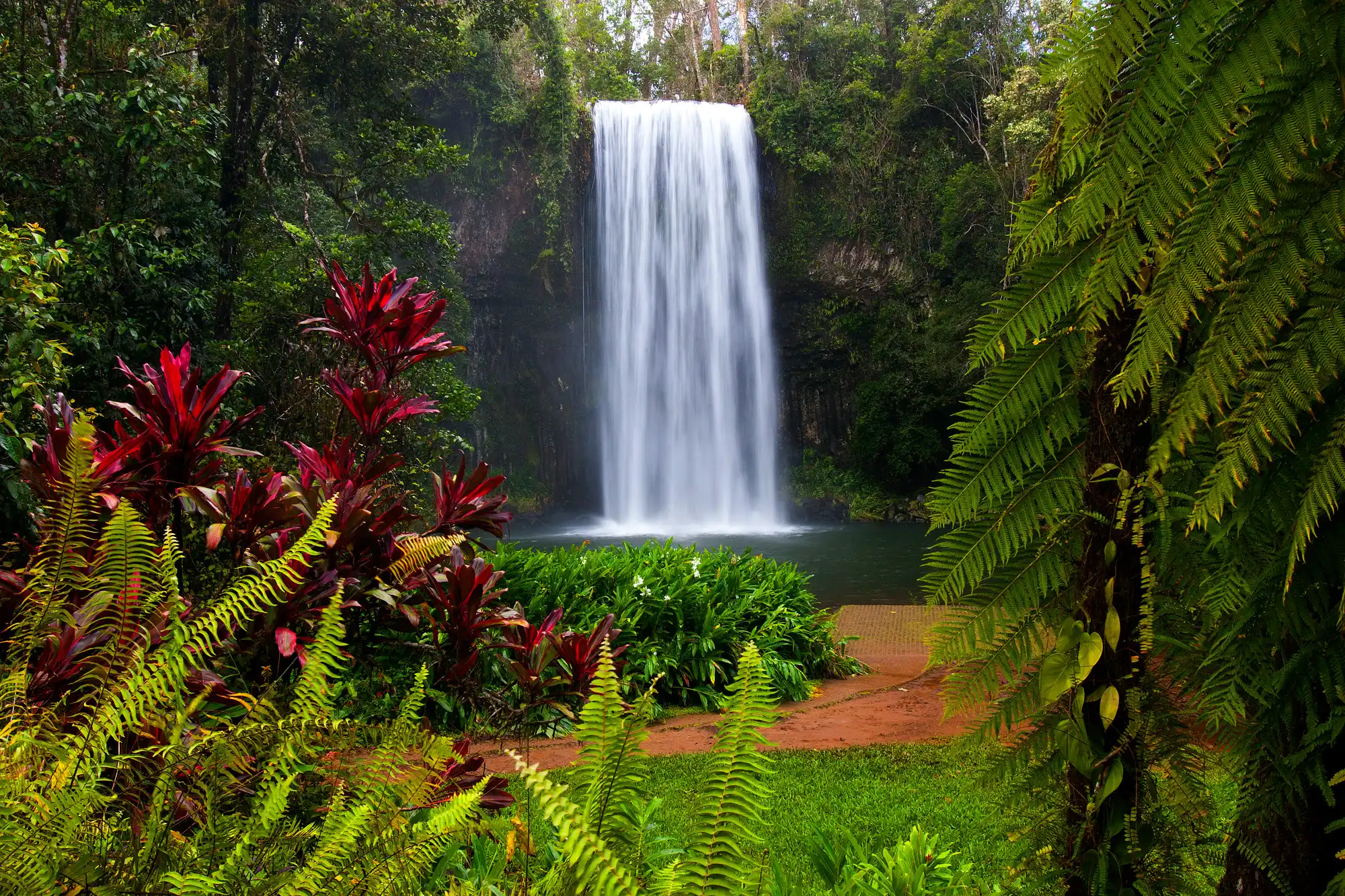
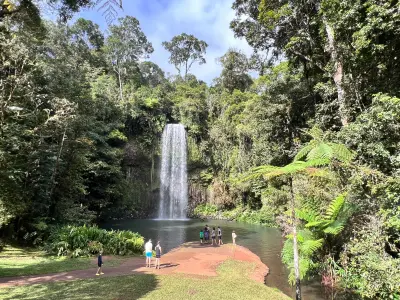
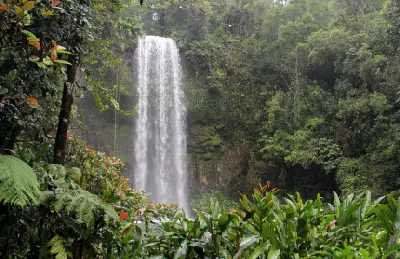
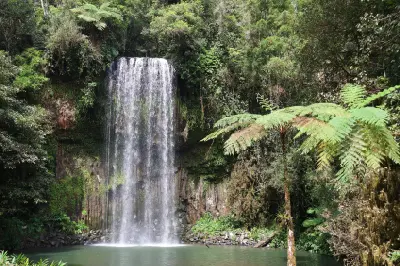
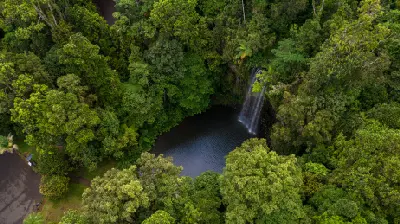
Millaa Millaa Falls plunges into a rainforest pool framed by tree ferns and lush tropical vegetation on Queensland’s Atherton Tablelands.
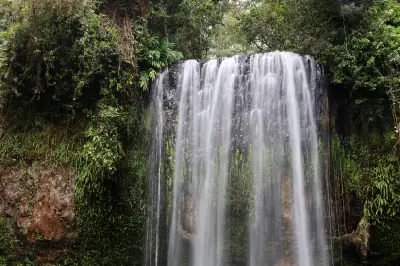
Millaa Millaa Falls is a single-drop waterfall on the Atherton Tablelands, where water descends over a basalt cliff into a broad rainforest-fringed pool. The falls are reached by a short path from the visitor area, with dense tropical vegetation surrounding the pool and rock face. The symmetrical waterfall, reflective pool and enclosed rainforest setting provide opportunities for waterfall, landscape and long-exposure photography.
-17.49578, 145.61060
Gallery
Quick Facts
Access
Short Walk
0–5 min
Elevation Gain
10 m
Best Light
Soft light balances bright water against shaded rainforest, while calmer sections of the pool can reflect the falls and surrounding vegetation.
Why This Light
Season
Seasonally Distinct
Summer brings higher rainfall, stronger waterfall flow and dense green vegetation throughout the surrounding rainforest. Winter brings generally lower flow and drier conditions, while the falls, pool and tropical vegetation remain visually prominent.
Crowds
Often Busy
Restrictions
Millaa Millaa Falls is reached by sealed road, with parking close to the falls and only a short walk required to reach the main viewing area and pool. The site can become busy, particularly during peak visitor periods. Rocks and surfaces near the water can be slippery, while waterfall flow, swimming conditions and water clarity vary with recent rainfall.