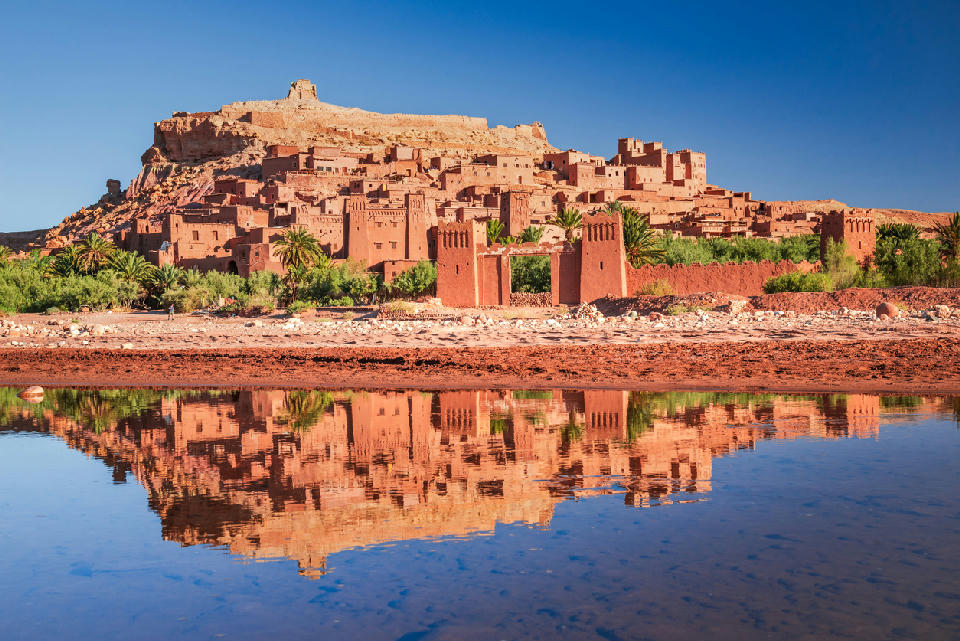
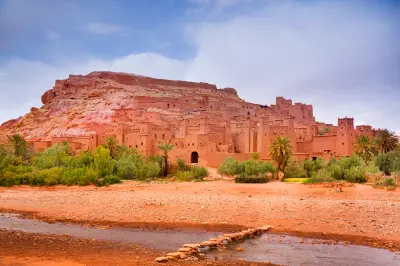
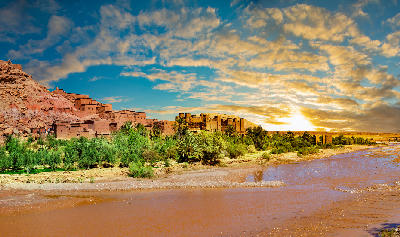
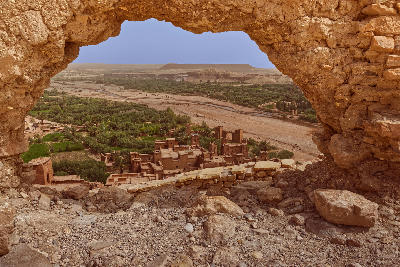
Sunrise reflections mirror the fortified earthen settlement of Aït Benhaddou in Morocco, where oasis vegetation, desert terrain, and layered mud-brick kasbah architecture define one of North Africa’s most iconic ksar landscapes.
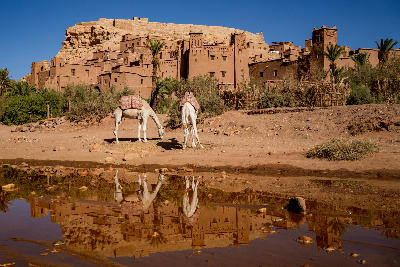
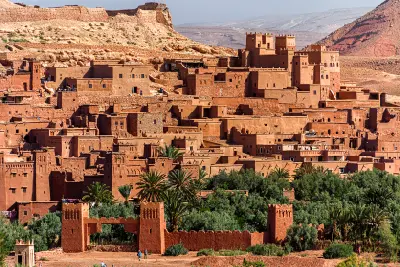
Aït Benhaddou is a historic fortified village in southern Morocco known for its earthen kasbah architecture, layered mud-brick structures, and desert valley setting along the former caravan route between the Sahara and Marrakech. The landscape is defined by terraced adobe buildings, defensive towers, and surrounding arid hills. Compositions form through geometry, texture, and the relationship between the kasbah structures and the surrounding desert environment.
31.04515, -7.13097
Gallery
Quick Facts
Access
Short Walk
15–45 min
Elevation Gain
40 m
Best Light
Low-angle light enhances mud-brick texture and creates strong separation between layered kasbah structures, defensive towers, and surrounding hillsides.
Why This Light
Season
Year-Round Stable
Summer produces brighter earthen surfaces and stronger contrast across the exposed kasbah walls and surrounding hillsides. Winter brings softer angled light that enhances mud-brick texture and creates clearer separation between architectural layers and the surrounding desert landscape.
Crowds
Often Busy
Restrictions
Access to certain interior kasbah sections may require entry fees or local guide arrangements depending on restoration activity and opening conditions.