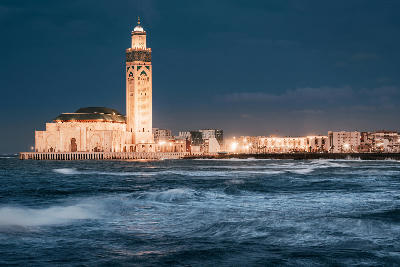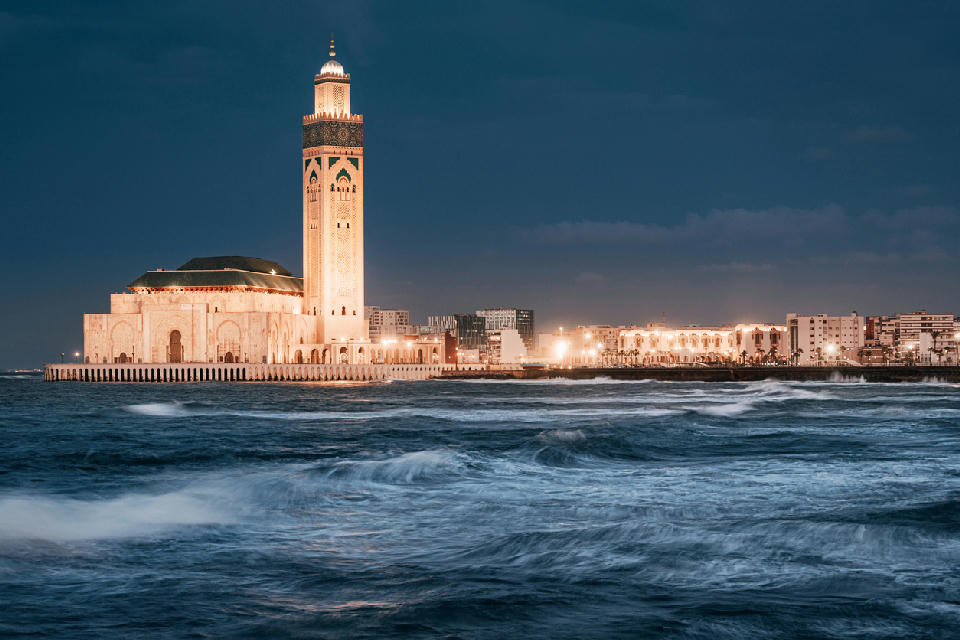
Hassan II Mosque, Casablanca, Morocco

    Warm dusk light illuminates the minaret and ocean-edge façade of the Hassan II Mosque, set against a deep blue Atlantic sky as long-exposure waves blur across the foreground.

    Morocco

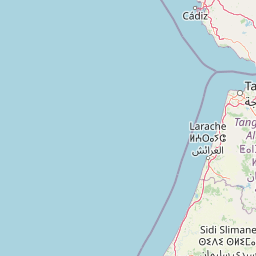
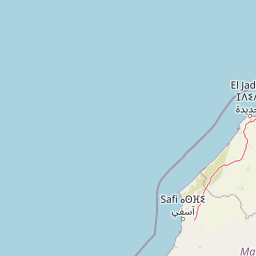
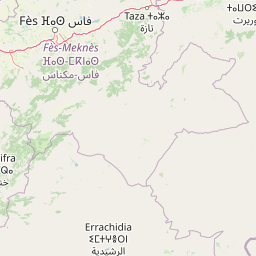
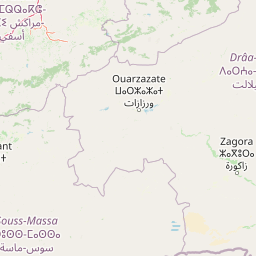
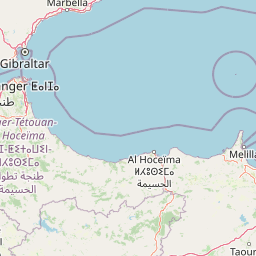
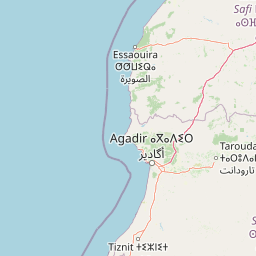
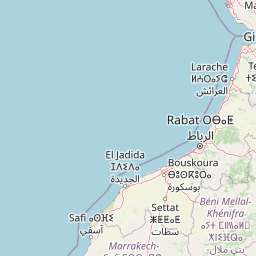
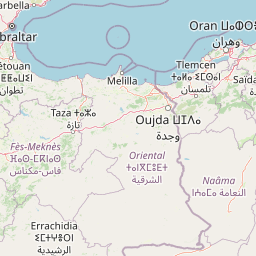
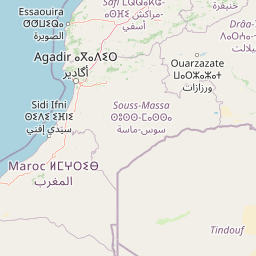
    Morocco occupies the north-western corner of Africa and is defined by a long Atlantic frontage, a shorter Mediterranean coastline, and a mountainous interior. Its geography spans coastal plains, high ranges, plateaus, and arid basins, creating strong spatial and visual variation across the country.

    The landscape transitions from ocean-influenced lowlands to elevated mountain terrain and broad interior plateaus and depressions. Settlement patterns and access vary significantly by region, with dense urban corridors and cultivated valleys contrasting with sparsely populated mountain and desert areas.

    Seasonal change affects vegetation, atmospheric clarity, and light quality, influencing photographic conditions throughout the year.

    Geographic discovery

    Explore Morocco by Area

    Choose a part of Morocco to discover its landscapes, photographic character, and locations.

    Open interactive Explore

    Explore Areas in Morocco

    Open in Explore
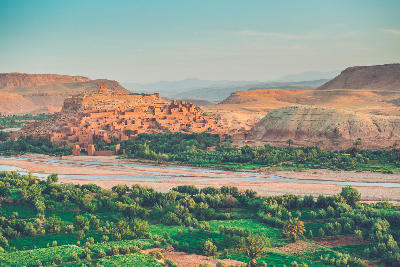
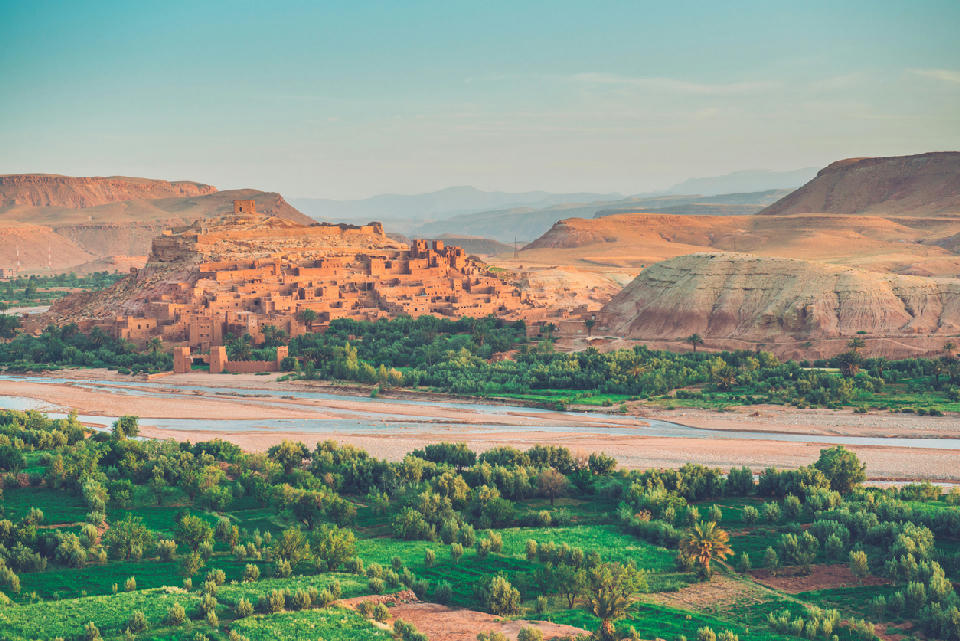
    Fortified desert settlement near Ouarzazate, Morocco with the Ounila River, oasis vegetation, and arid canyon landscapes at golden hour

    Aït Benhaddou & Southern Kasbahs

    Aït Benhaddou & Southern Kasbahs is structured as a fortified desert settlement system, where composition is defined by architectural repetition, geometric texture, and integration between human settlement and desert terrain. The landscape is dominated by earthen kasbahs and fortified villages rising above oasis vegetation and dry valleys. Towers, walls, stairways, and narrow passages create repeating structural patterns within the settlements, while surrounding plains and mountain backdrops provide broader environmental context. For photographers, the region functions through texture and layered architecture. Mud-brick surfaces, geometric forms, and clustered building structures create strong visual rhythm across both wide scenes and tighter compositions. The visual structure is defined by architectural mass within arid terrain. Desert villages blend into surrounding hillsides and valley systems, producing compositions where settlement and landscape merge visually through colour and texture.

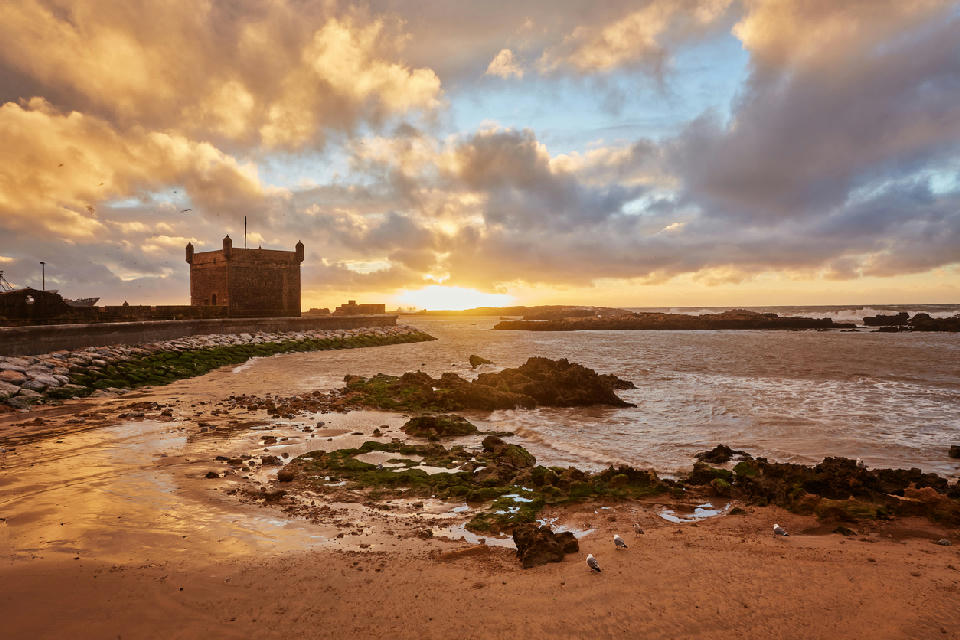
    Sunset over the fortified Atlantic walls of Essaouira along Morocco’s rocky coastline

    Atlantic Morocco

    Atlantic Morocco functions as a coastal-medina landscape system, where photography is shaped by the interaction between ocean conditions, fortified architecture, and working harbour environments. The region combines Atlantic shorelines with dense urban coastal structure. Harbour walls, sea fortifications, rocky coastlines, fishing activity, and tightly packed medina districts create layered compositions linking urban detail with broader ocean environments. For photographers, the region works through texture, atmosphere, repetition, and contrast. Whitewashed walls, stone fortifications, narrow streets, and harbour structures create strong framing elements, while changing coastal weather continuously alters light, visibility, and colour across the shoreline. The Atlantic Ocean acts as a dominant environmental force across the region. Mist, sea haze, storm light, reflected water surfaces, and low-angle sunset conditions create strong atmospheric variation throughout the coastline.

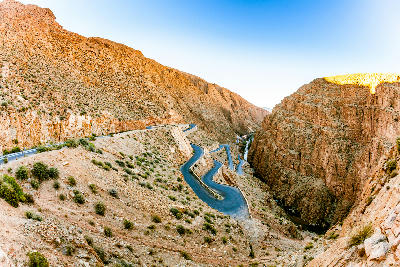
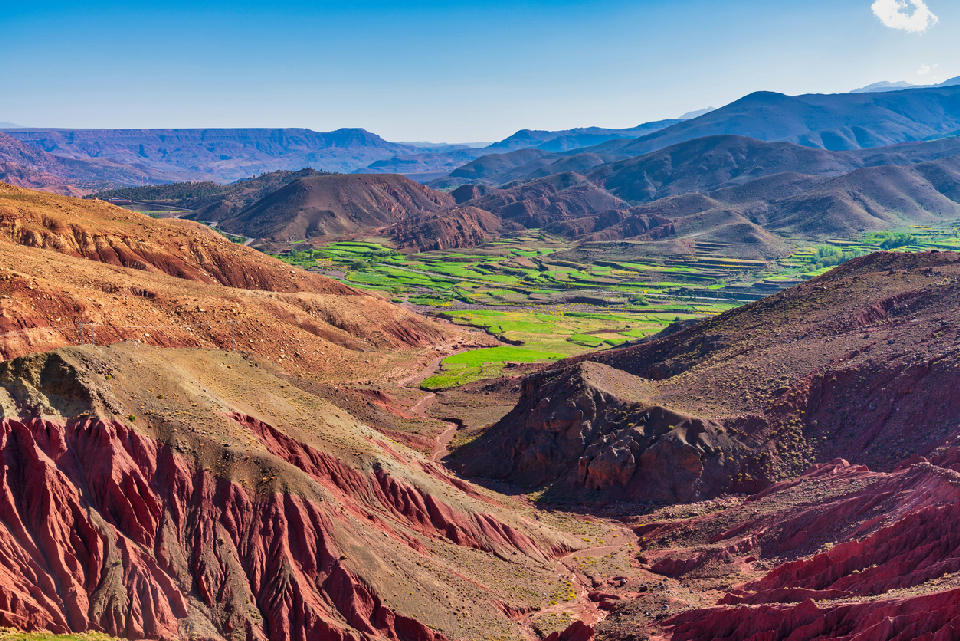
    Atlas Mountains, Morocco

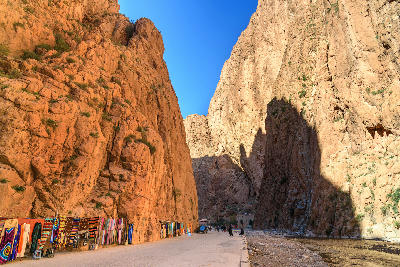
    Atlas Mountains & Canyon Landscapes

    Atlas Mountains & Canyon Landscapes functions as a mountain–canyon transition system, where photographic structure is defined by elevation change, geological layering, and the interaction between mountain terrain and human settlement. The region is characterised by deep valleys, winding roads, canyon corridors, terraced slopes, and exposed ridgelines extending across multiple Atlas sub-ranges. Landscapes transition between rugged alpine terrain and dry canyon environments as elevation decreases toward the desert edge. For photographers, the region works through scale, depth, and terrain layering. Mountain ridges, canyon walls, and valley systems create strong structural separation across compositions, while villages, roads, and cultivated terraces provide scale references and visual anchors within broader scenes. The visual identity is shaped by erosion, elevation, and atmospheric perspective. Long sightlines across valleys and mountain corridors create layered compositions where haze, shadow, and directional light strongly influence contrast and depth.

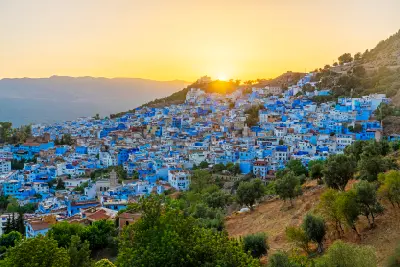
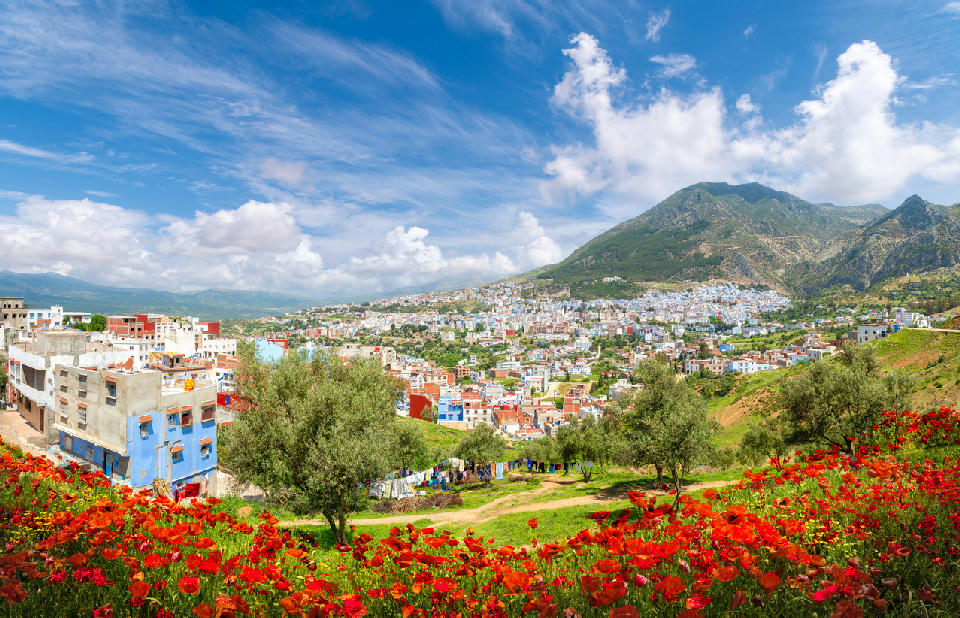
    Spring view of Chefchaouen with red poppies and the blue medina beneath the Rif Mountains in Morocco

    Chefchaouen & Rif Mountains

    Chefchaouen & Rif Mountains is structured as a blue medina and mountain backdrop system, where composition is defined by colour, elevation, and enclosure within a hillside town. The medina provides dense foreground detail through alleyways, doorways, staircases, painted walls, and layered architectural surfaces. Beyond the town, the Rif Mountains form a broader landscape frame, giving context and scale to the compact urban structure. For photographers, the region functions through colour consistency and vertical layering. Blue-painted surfaces create visual unity across the medina, while terraces and viewpoints connect the enclosed streets to the surrounding mountains. The visual structure is defined by urban detail within mountain terrain. Narrow passages create intimate compositions, while elevated views reveal the town as a layered blue settlement set into the slopes.

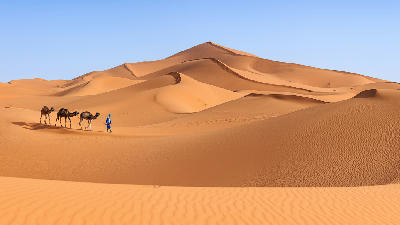
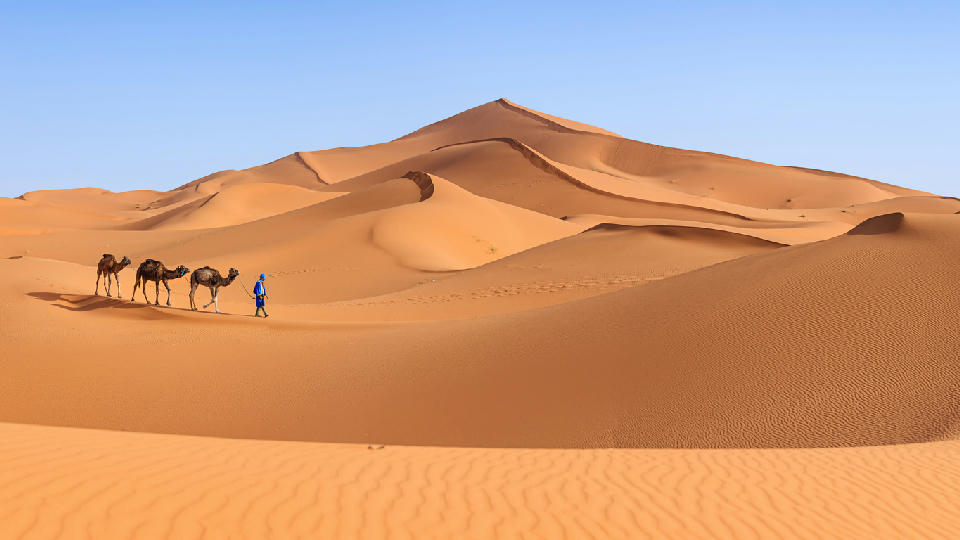
    Camel caravan walking across the sand dunes of Erg Chebbi in the Sahara Desert near Merzouga, Morocco.

    Sahara Desert & Erg Chebbi

    Sahara Desert & Erg Chebbi is structured as a large-scale dune and minimalist desert system, where composition is defined by shape, shadow, and open spatial separation across the dune field. The Erg Chebbi dunes rise abruptly from surrounding flat desert terrain, creating strong visual contrast between smooth dune forms and open rocky plains. Curved dune ridges, wind-shaped surfaces, and isolated desert subjects create compositions built around simplicity and tonal separation. For photographers, the region functions through minimalism and abstraction. Dunes create repeating lines and flowing forms, while camel caravans, desert camps, and isolated vegetation provide focal points within otherwise uncluttered terrain. The visual structure is defined by wind-shaped geometry. Crest lines, sand textures, and directional light create layered patterns extending across the dunes.

    Photographic journey

    Morocco Photography Route

    Morocco Grand Tour · 18 stops

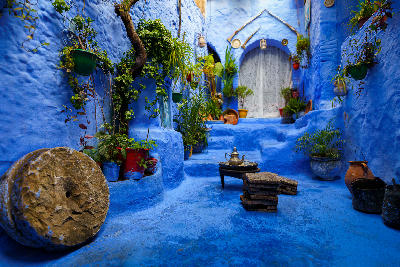
    Blue-painted courtyard and staircase leading to a traditional arched doorway in Chefchaouen, Morocco01

    Chefchaouen

    Chefchaouen sits on the western slopes of the Rif Mountains, with the historic medina arranged along narrow, ascending streets and terraced neighbourhoods. Buildings are finished in varying shades of blue, offset by white trim, tiled thresholds and small courtyards, creating strong visual continuity across the city. Elevation changes produce layered sightlines over rooftops, alleys and surrounding hills. From a photographic perspective, the city presents repeating patterns of colour, staircases and doorways, with frequent transitions between open plazas and tight passages. The contrast between blue surfaces, neutral stone and greenery from nearby hills allows for both wide city views and intimate street compositions, particularly in early and late daylight.
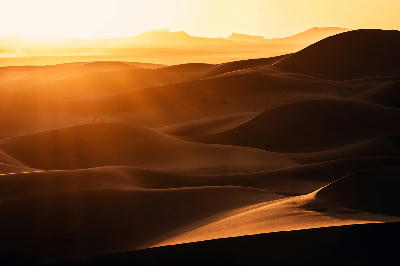
    Sunrise light over layered sand dunes in the Erg Chebbi desert near Merzouga, Morocco.04

    Erg Chebbi Dunes

    Erg Chebbi is a major Sahara dune field in eastern Morocco known for its towering orange sand dunes, sweeping ridge lines, and expansive desert scale. The landscape is defined by smooth dune geometry, wind-shaped textures, and open horizons extending across the desert basin. Compositions form through minimalism, shadow separation, and the relationship between dune ridges and surrounding desert space.

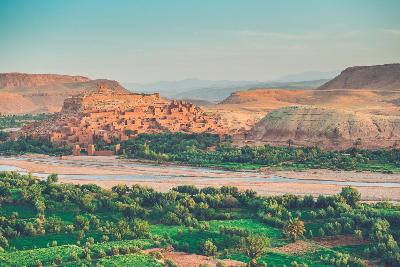
    Fortified desert settlement near Ouarzazate, Morocco with the Ounila River, oasis vegetation, and arid canyon landscapes at golden hour08

    Aït Benhaddou & Southern Kasbahs

    Aït Benhaddou & Southern Kasbahs is structured as a fortified desert settlement system, where composition is defined by architectural repetition, geometric texture, and integration between human settlement and desert terrain. The landscape is dominated by earthen kasbahs and fortified villages rising above oasis vegetation and dry valleys. Towers, walls, stairways, and narrow passages create repeating structural patterns within the settlements, while surrounding plains and mountain backdrops provide broader environmental context. For photographers, the region functions through texture and layered architecture. Mud-brick surfaces, geometric forms, and clustered building structures create strong visual rhythm across both wide scenes and tighter compositions. The visual structure is defined by architectural mass within arid terrain. Desert villages blend into surrounding hillsides and valley systems, producing compositions where settlement and landscape merge visually through colour and texture.

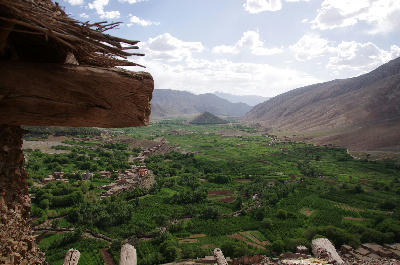
    Panoramic view of Aït Bouguemez Valley in Morocco’s High Atlas Mountains11

    Aït Bouguemez Valley

    Aït Bouguemez Valley is a fertile mountain valley in the Central High Atlas of Morocco known for terraced agriculture, traditional villages, and surrounding mountain ridges. The landscape is defined by green agricultural fields, earthen village structures, and layered mountain terrain extending through the valley system. Compositions form through repetition, texture, and the relationship between cultivated land and surrounding mountain landscapes.

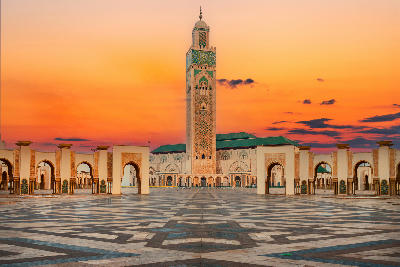
    Sunset view of Hassan II Mosque and its towering minaret in Casablanca, Morocco15

    Hassan II Mosque

    Hassan II Mosque is a monumental mosque complex on the Atlantic coastline of Casablanca, Morocco, known for its oceanfront setting, intricate Islamic architecture, and towering minaret. The landscape is defined by geometric detail, expansive courtyards, and the interaction between the mosque structure and the Atlantic Ocean. Compositions form through symmetry, scale, and the relationship between architectural patterns, open space, and coastal atmosphere.

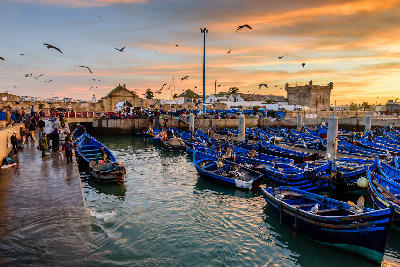
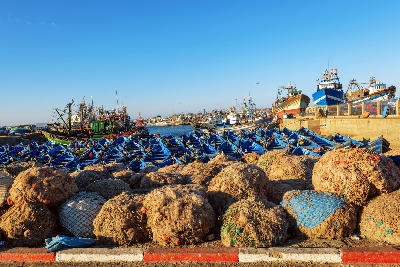
    Traditional blue fishing boats inside Essaouira Harbour at sunrise on Morocco’s Atlantic coast18

    Essaouira Harbour

    Essaouira Harbour is a historic fishing harbour on Morocco’s Atlantic coast known for its blue wooden fishing boats, stone harbour walls, and active maritime atmosphere. The landscape is defined by clustered boats, fishing equipment, and the interaction between the harbour structures and the Atlantic Ocean. Compositions form through repetition, texture, and the relationship between maritime activity and coastal light.

    Explore the Full Morocco Route18 stops across Morocco

    Overview

    Morocco’s terrain is structured around the Rif and Atlas mountain systems, which divide the country into distinct climatic and drainage zones. Elevation shifts are pronounced, with uplands separating coastal plains from interior basins and plateaus.

    Coastal regions present contrasting environments along the Atlantic and Mediterranean, while inland landscapes transition toward semi-arid and desert conditions. This produces strong changes in texture, colour, and perceived scale across relatively short distances.

    Light and visibility vary with latitude, altitude, and weather systems, with haze, dust, and maritime cloud influencing contrast and colour. Travel distances between locations can be substantial, particularly across interior and desert regions.

    Key Photography Subjects

    • Mountain ranges, escarpments, and elevated plateaus
    • Atlantic and Mediterranean coastal landscapes
    • Desert basins, dunes, and arid plains
    • River valleys, oases, and inland water bodies
    • Historic cities and traditional architecture
    • Rural landscapes and agricultural land use patterns
    • Seasonal light, atmosphere, and weather effects

    Gallery

    Workshops in Morocco

    No upcoming workshops scheduled for Morocco at this time.

    Check back soon or explore other destinations.