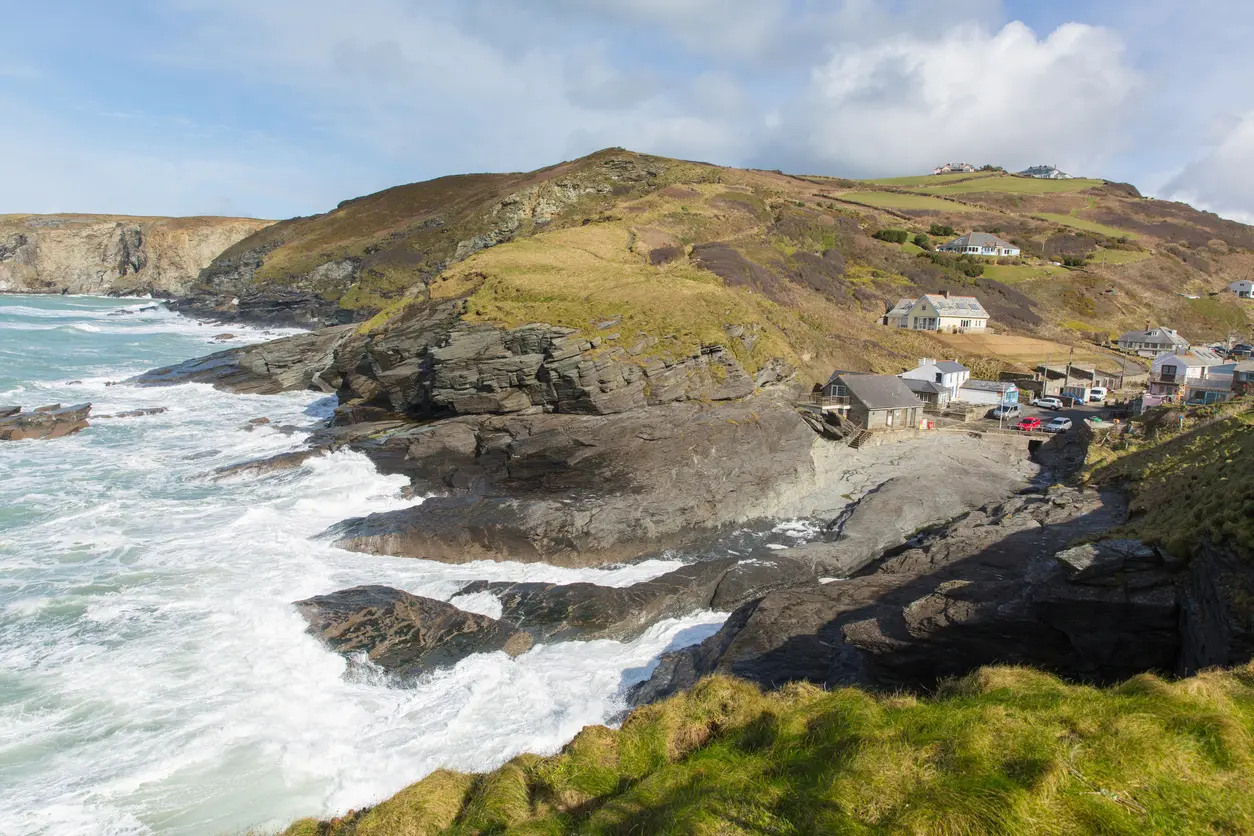
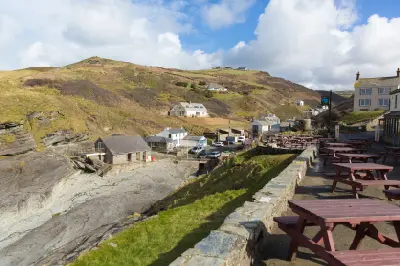
Atlantic waves crash against the rugged rock formations of Trebarwith Strand, with coastal cottages nestled beneath the hills of North Cornwall.
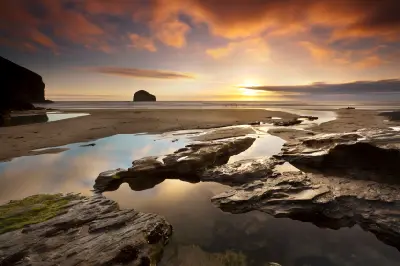
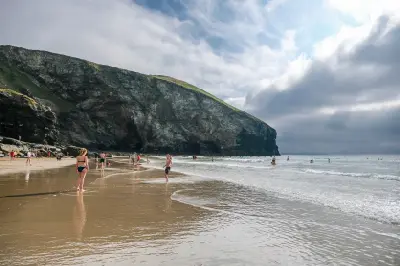
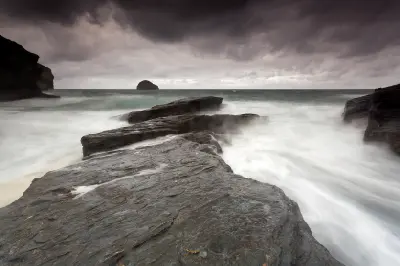
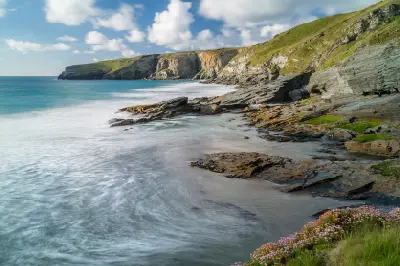
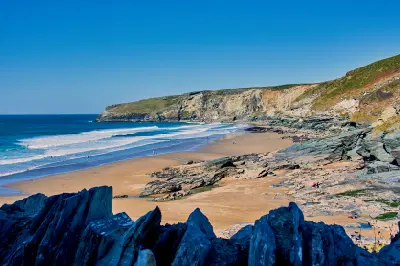
Trebarwith Strand is a tidal beach on Cornwall's north coast, surrounded by steep slate cliffs and exposed rock platforms. At low tide, broad stretches of sand and layered rock formations emerge, with the distinctive Gull Rock standing offshore. The combination of tidal textures, Atlantic surf and rugged coastal geology provides varied seascape compositions.
50.64473, -4.76036
Gallery
Quick Facts
Access
Short Walk
5–15 min
Elevation Gain
20 m
Best Light
Late light catches the layered slate and offshore Gull Rock, while overcast skies soften contrast across wet rock platforms and breaking surf.
Why This Light
Season
Weather-Dependent
Summer brings lighter sand, warmer-toned cliff vegetation and periods of gentler surf, with exposed rock platforms visible around low tide. Winter brings darker wet slate, larger Atlantic swells and more frequent white water against the cliffs, while the beach may be substantially reduced by seasonal sand movement.
Crowds
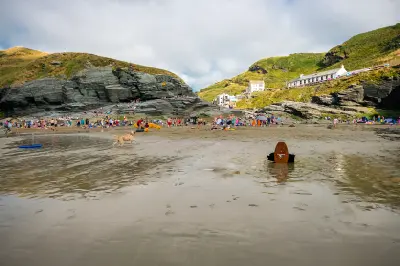
Busy Midday
Restrictions
Trebarwith Strand is reached from the village by a descending road and access route towards the beach, with parking available uphill. The beach is highly tidal and much of the sand and rock platform disappears beneath the sea at high tide. Check tide tables before visiting, particularly when planning compositions around Gull Rock or the exposed slate formations. Wet rocks can be extremely slippery, and Atlantic waves may surge unexpectedly across the platforms. Avoid the shoreline during large swells or rising tides, and do not approach unstable cliff edges.