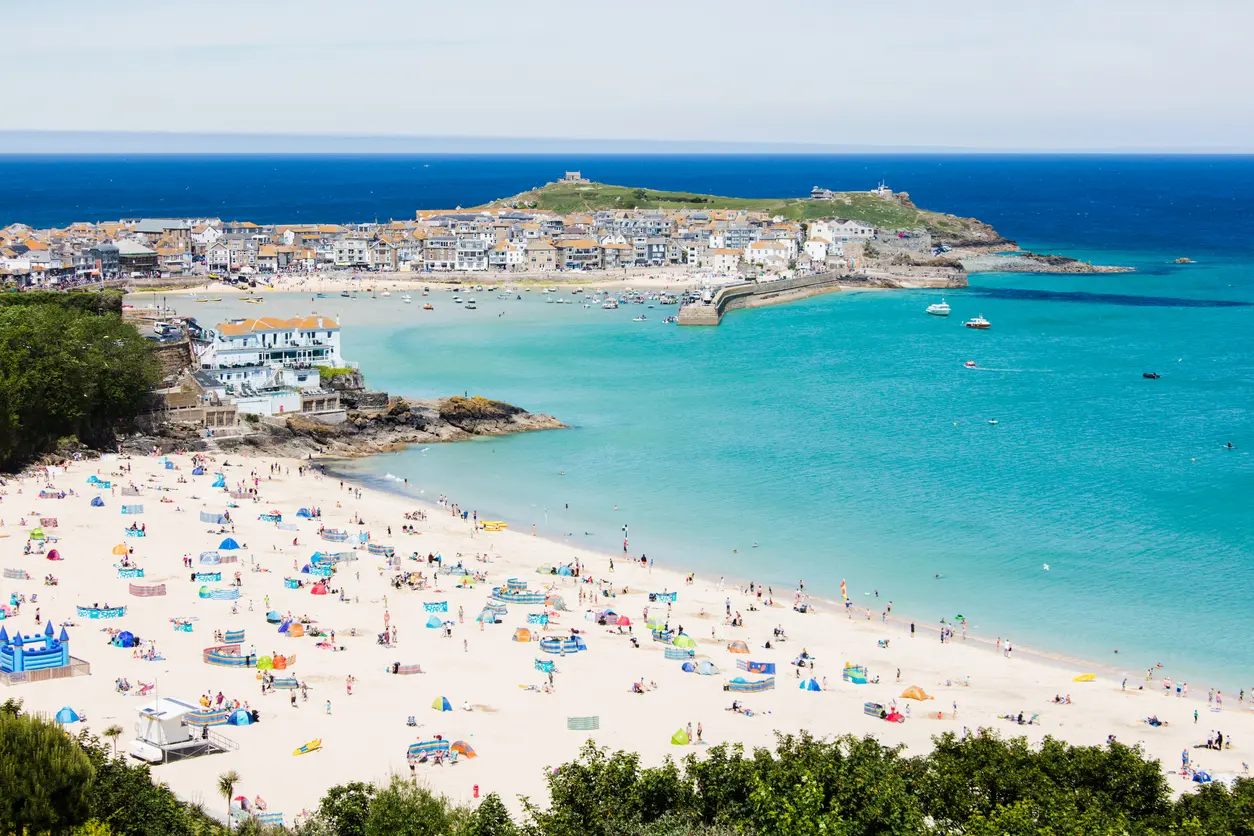
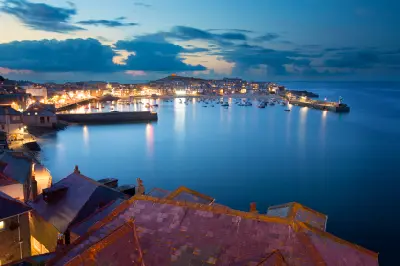
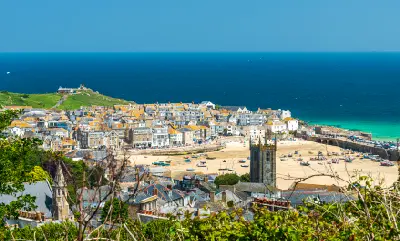
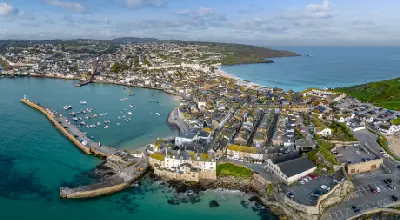
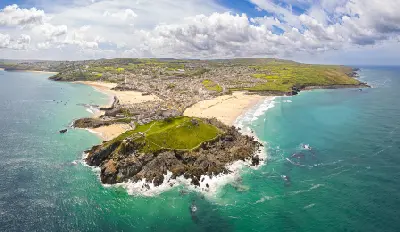
Panoramic view of St Ives Harbour in Cornwall, England, with golden sandy beaches, turquoise waters, colourful seaside buildings and fishing boats beneath the headland overlooking the Atlantic Ocean.
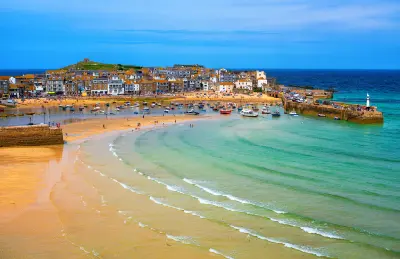
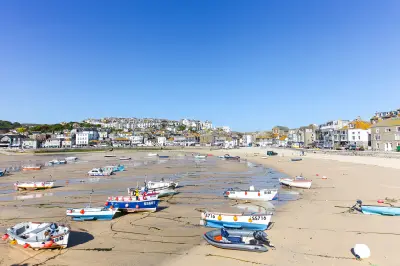
St Ives Harbour is a historic fishing harbour on Cornwall's north coast, overlooking St Ives Bay and the Atlantic Ocean. A curved waterfront of stone buildings, sandy tidal shores and working boats surrounds the harbour, with Smeaton's Pier extending towards its lighthouse. The combination of maritime architecture, changing tides and compact coastal streets provides opportunities for harbour, architectural and coastal photography.
50.21112, -5.47772
Gallery
Quick Facts
Access
Roadside / Step-out
0–5 min
Elevation Gain
0 m
Best Light
Low-angle light defines the harbour buildings and pier, while calm water and wet sand reflect boats, stone façades and the waterfront.
Why This Light
Season
Seasonally Distinct
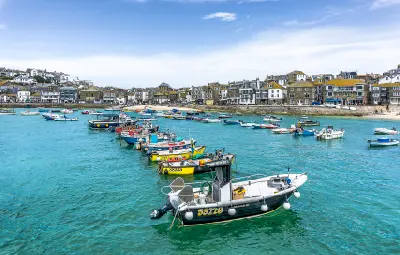
Summer brings brightly coloured boats, busy waterfront activity and turquoise water around the harbour, with changing tides exposing broad areas of pale sand. Winter brings quieter waterfront scenes, subdued coastal vegetation and more frequent Atlantic swell, with shifting cloud and wave conditions around the harbour entrance.
Crowds
Often Busy
Restrictions
St Ives Harbour is accessible from public streets, the waterfront promenade and Smeaton's Pier, with useful photographic viewpoints concentrated around the harbour basin. Parking in the historic centre is limited, particularly during summer, and visitors may need to walk from larger car parks or use local transport. The harbour remains operational, so slipways, fishing equipment and working areas should be kept clear. Tidal changes expose sand and moored boats at low water, while harbour walls and steps can become slippery or affected by waves during unsettled conditions.