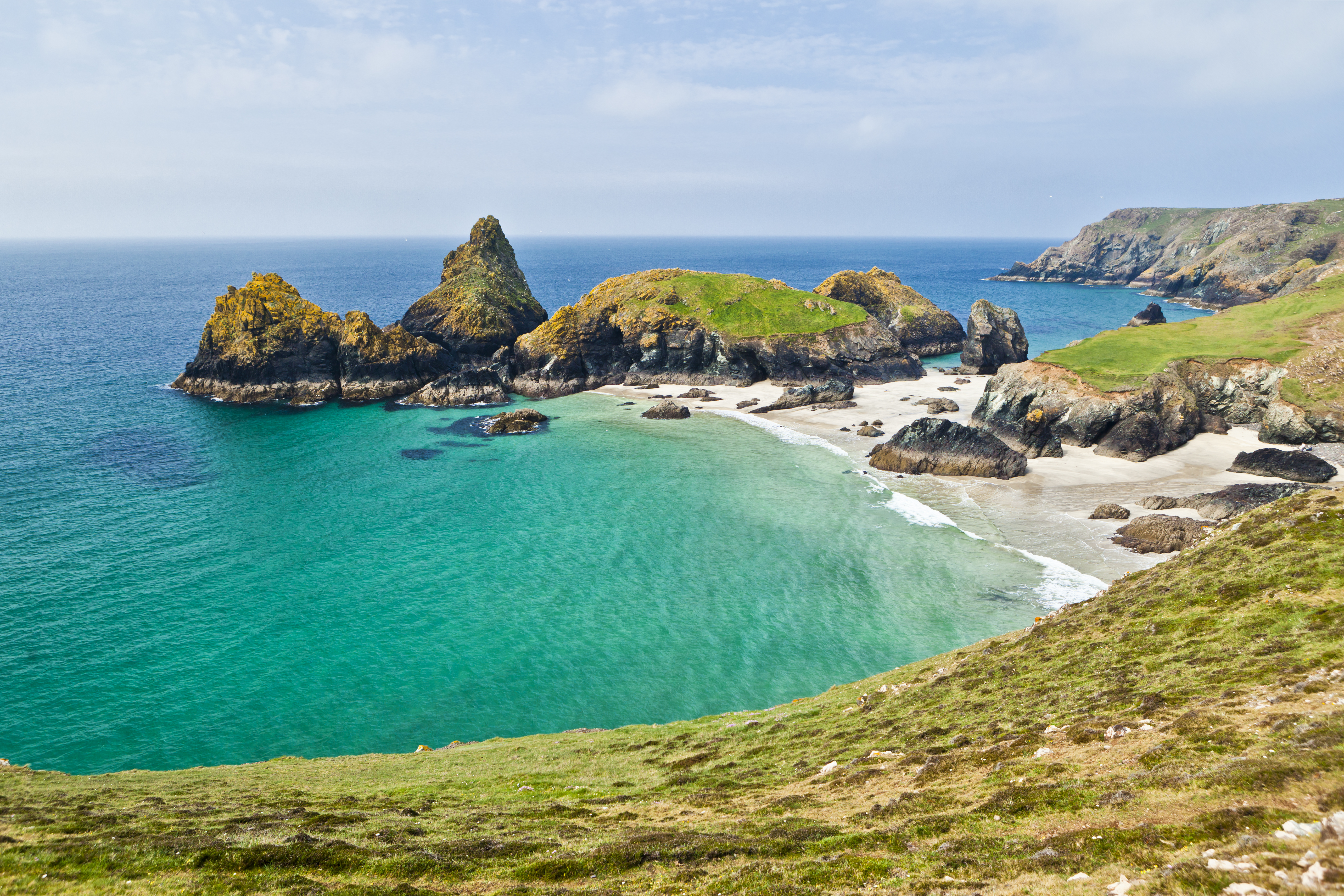
Overlooking Kynance Cove in Cornwall, England, this bright daytime coastal view captures vibrant turquoise waters, white sandy beaches, grassy clifftops, and rugged sea stacks beneath a softly clouded sky.
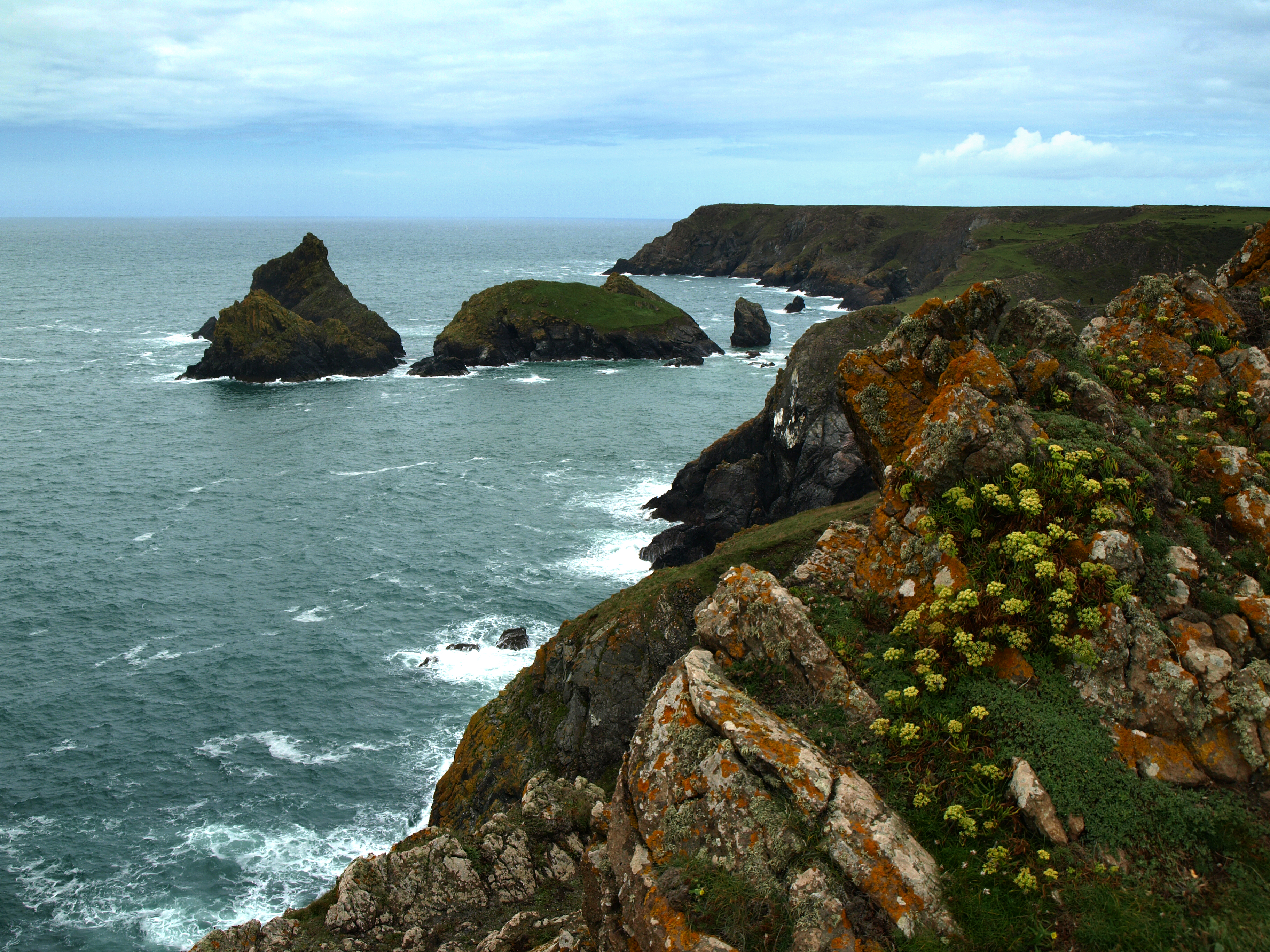
Kynance Cove is a tidal coastal inlet on the west side of the Lizard Peninsula in Cornwall, south-west England. The cove is characterised by white sand, turquoise water, dark serpentine rock formations and offshore stacks, with access to the beach depending on tide levels. Its combination of rock formations, curved shoreline, sea colour and changing tidal conditions provides opportunities for coastal landscape and detail photography.
49.97380, -5.23014
Gallery







Quick Facts
Access
Short Walk
5–15 min
Elevation Gain
30 m
Best Light
Low-angle light reveals the texture and colour of the serpentine rocks, while overcast conditions reduce contrast across the beach and cliffs.
Why This Light
Season
Seasonally Distinct
Summer brings greener coastal vegetation, brighter conditions and turquoise water, with the sandy beach and rock formations exposed according to the tide. Winter brings more muted coastal vegetation, shorter daylight hours and frequently changeable skies, with rougher sea conditions possible.
Crowds
Often Busy
Restrictions
Kynance Cove is managed by the National Trust, with a car park above the cove and paid parking for non-members. A short coastal path descends towards the beach, with steep sections and steps. A longer, less steep route provides alternative access. The beach is tidal, and rising water can cut off sections of the shoreline, including access around some rocks and coves. Check tide times before descending and follow any current access restrictions.