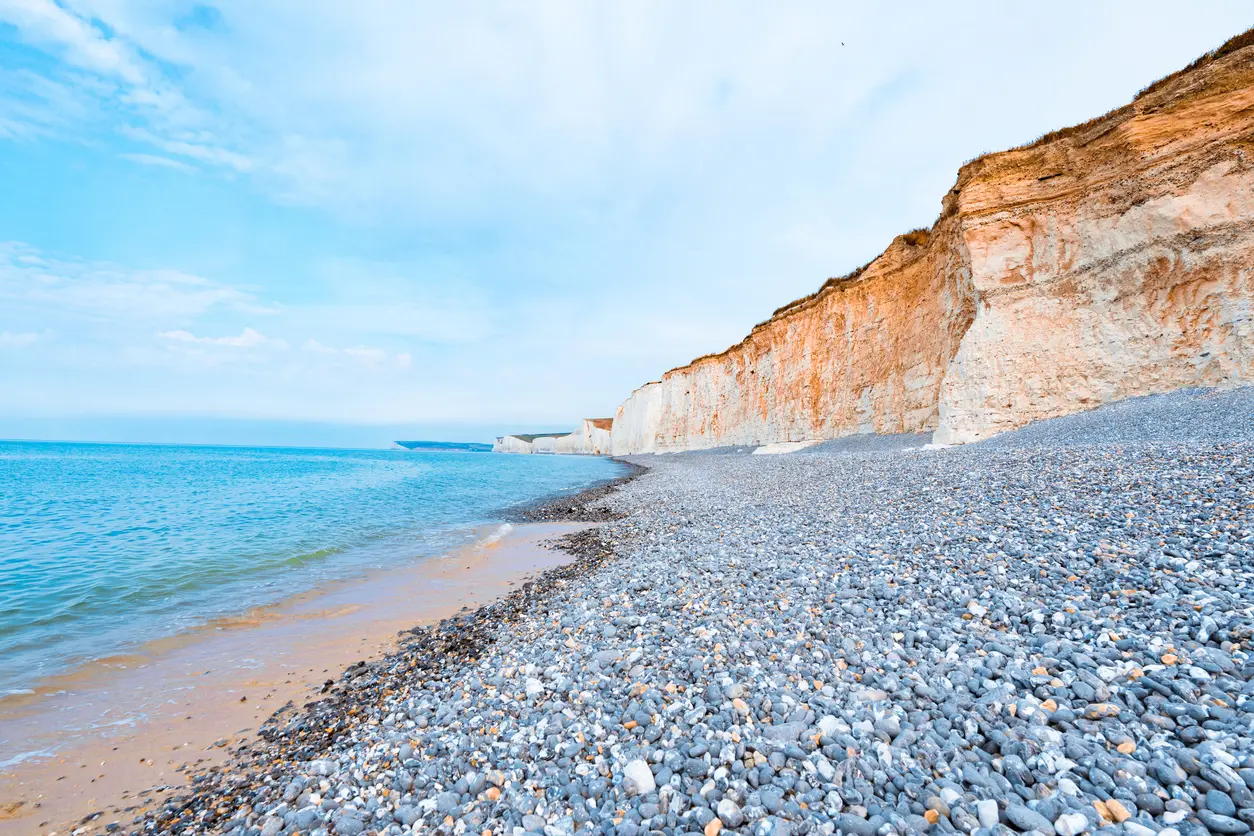
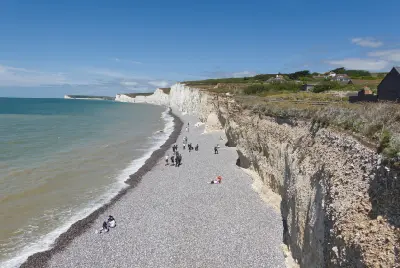
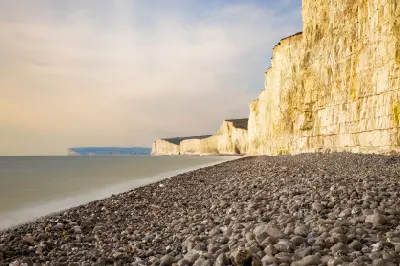
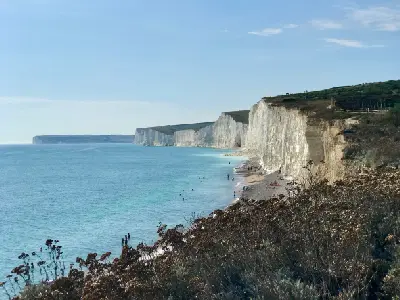
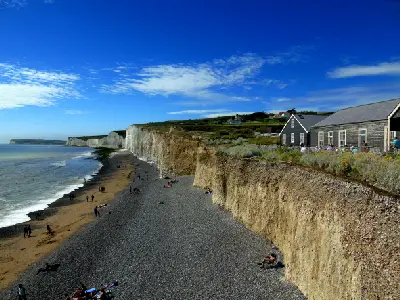
The white chalk cliffs of Birling Gap rise above a sweeping shingle beach, with warm sunlight illuminating the cliff faces along the East Sussex coastline.
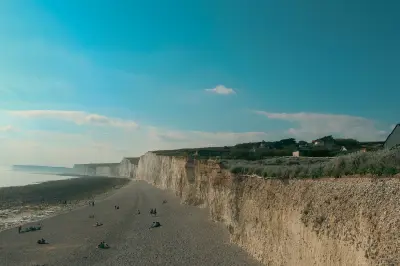
Birling Gap is a coastal inlet on the Sussex coast between the Seven Sisters Cliffs and Beachy Head, where a valley meets the English Channel. Its shingle beach, exposed chalk platforms and steep white cliffs create a distinctive coastal landscape. Beach-level viewpoints offer dramatic perspectives of the chalk formations, shoreline textures and breaking waves.
50.74329, 0.20287
Gallery
Quick Facts
Access
Short Walk
0–5 min
Elevation Gain
15 m
Best Light
Low-angle sunlight reveals chalk textures and coastal contours, while overcast skies soften contrast between the white cliffs and darker shoreline.
Why This Light
Season
Year-Round Stable
Summer brings green coastal grassland, brighter sea colours and pale chalk cliffs under longer daylight hours. Winter brings darker seas, muted vegetation and stronger wave action across the exposed chalk platforms and shingle beach.
Crowds
Busy Midday
Restrictions
Birling Gap has a National Trust visitor car park close to the upper coastal viewpoints, with beach access via a staircase when open. The beach consists of shingle and exposed chalk platforms, with access affected by tides and sea conditions. The chalk cliffs are actively eroding, with unstable edges and a risk of rockfall. Parking charges apply, and beach access may be temporarily restricted following cliff falls or storm damage.