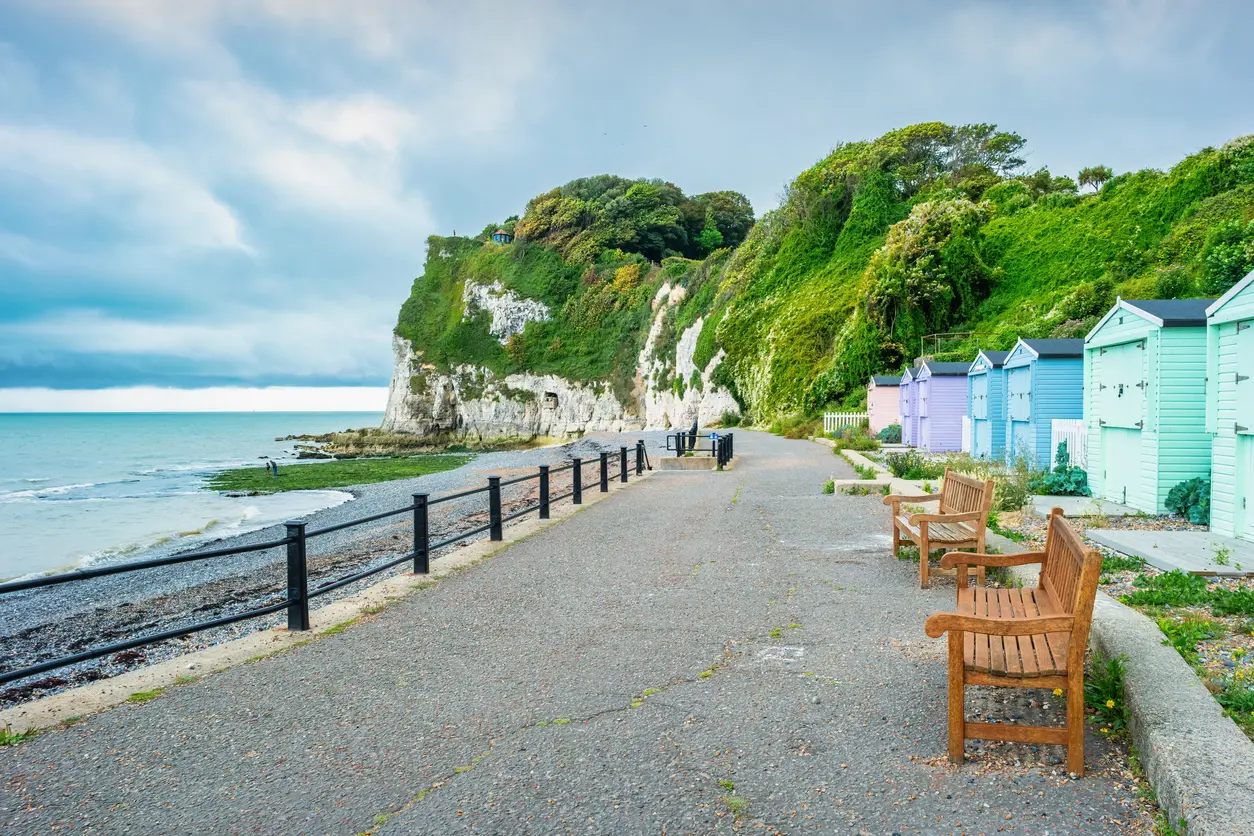
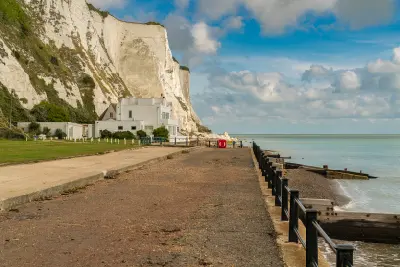
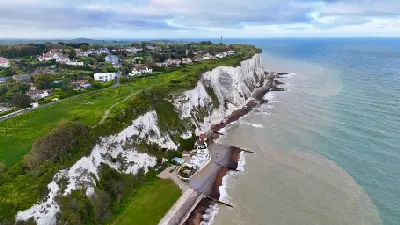
Pastel-coloured beach huts line the seafront at St Margaret's Bay, beneath steep, green-covered chalk cliffs overlooking the English Channel on the Kent coast.
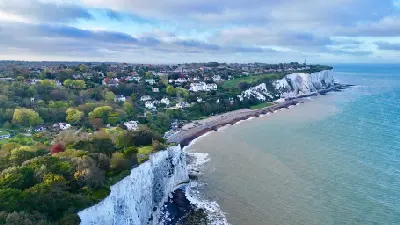
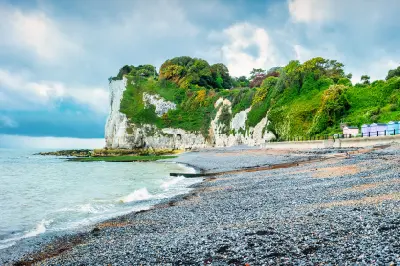
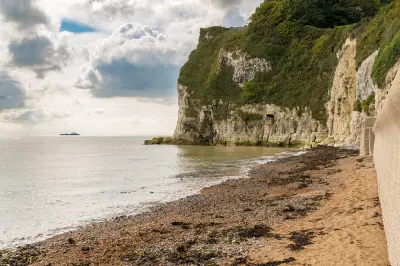
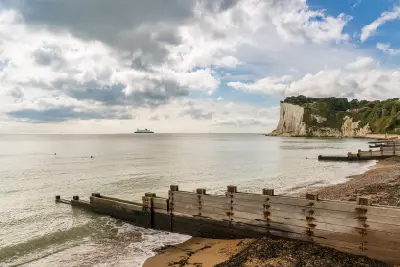
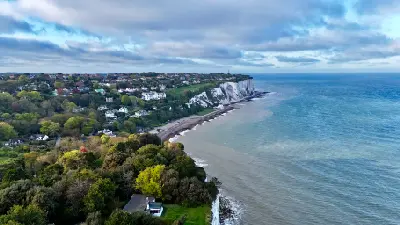
St Margaret's Bay is a sheltered coastal bay between Dover and Deal on the southeastern Kent coastline, enclosed by towering white chalk cliffs. Its shingle beach, exposed chalk platforms and steep coastal slopes create a distinctive enclosed seascape. Beach-level viewpoints offer opportunities for dramatic cliff compositions, textured shoreline foregrounds and atmospheric maritime photography.
51.15063, 1.38601
Gallery
Quick Facts
Access
Roadside / Step-out
0–5 min
Elevation Gain
0 m
Best Light
Early sunlight illuminates the seaward chalk faces, while overcast conditions soften contrast between the white cliffs and darker shoreline.
Why This Light
Season
Year-Round Stable
Summer brings brighter sea colours, green vegetation above the cliffs and longer daylight hours across the sheltered bay. Winter brings rougher seas, muted coastal vegetation and low-angle sunlight that accentuates the exposed chalk faces.
Crowds
Busy Midday
Restrictions
Access is via a steep, winding road descending to the seafront car park, with immediate pedestrian access to the shingle beach. Parking charges apply. Low tide exposes additional chalk platforms, while high tide restricts movement along the shoreline. Keep clear of unstable cliff faces and check tidal conditions before exploring beyond the main beach.