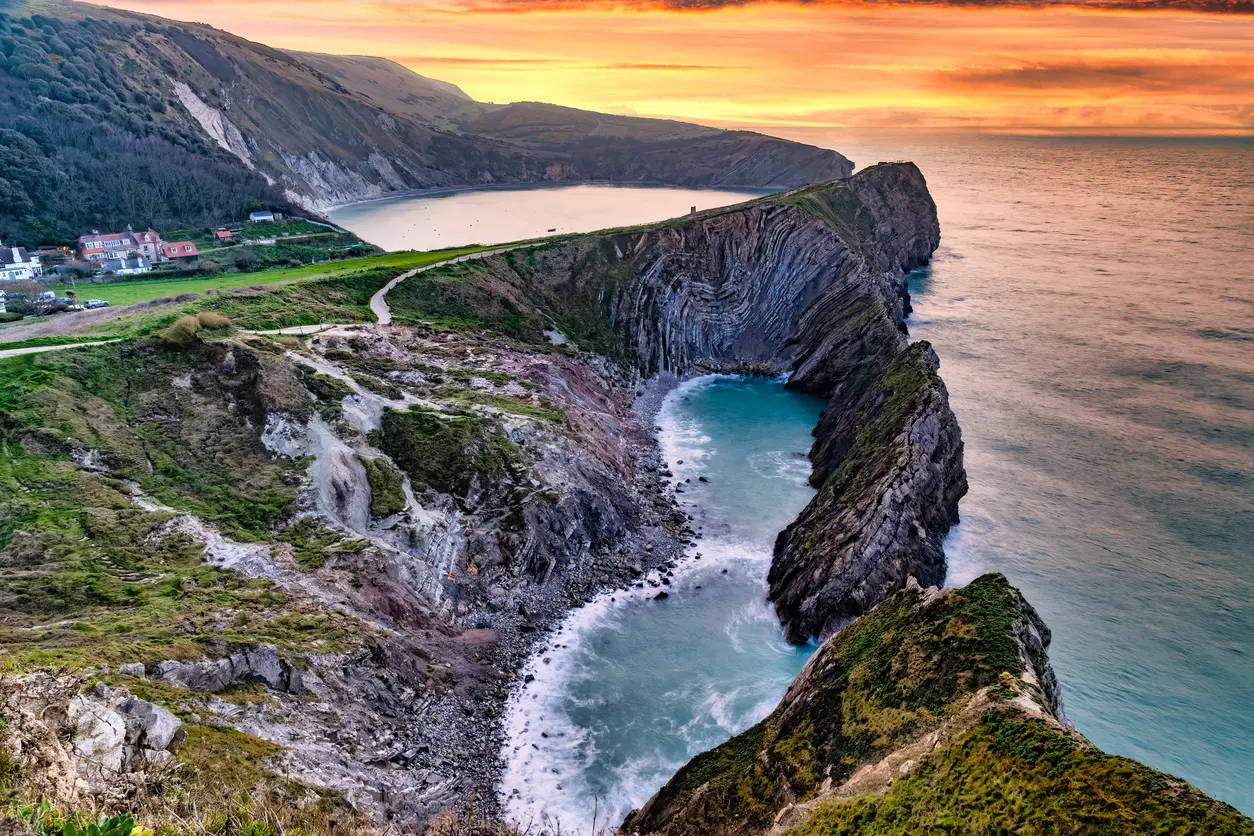
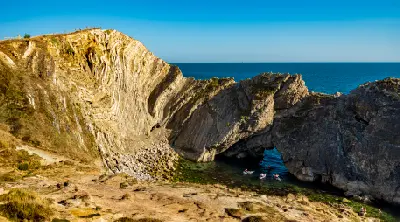
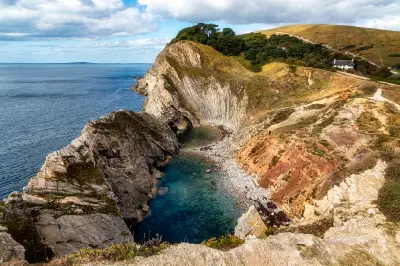
Dramatic sunrise over Stair Hole on Dorset’s Jurassic Coast, illuminating the spectacular folded limestone cliffs and turquoise inlet, with Lulworth Cove visible in the background.
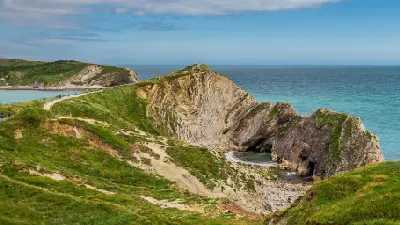
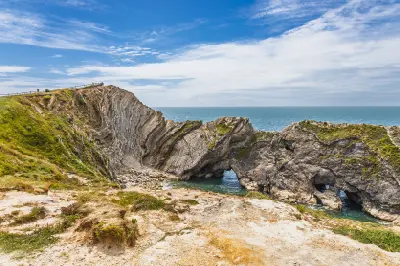
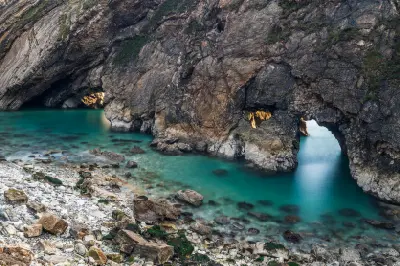
Stair Hole is a small coastal inlet immediately west of Lulworth Cove on Dorset's Jurassic Coast, known for its tightly folded limestone strata and natural rock arches. The exposed geological layers, collectively known as the Lulworth Crumple, form striking patterns around the enclosed water. Elevated viewpoints reveal the folds, arches and contrasting colours of the surrounding cliffs.
50.61809, -2.25274
Gallery


Quick Facts
Access
Short Walk
5–15 min
Elevation Gain
15 m
Best Light
Angled light reveals the folded limestone ridges and arch edges, while overcast skies preserve detail across pale rock, shaded folds and water.
Why This Light
Season
Year-Round Stable
Summer brings green cliff-top vegetation and clearer turquoise or blue water around the limestone arches, with the folded rock layers visible in settled conditions. Winter brings muted grassland, stronger wave action through the openings and more frequent wet rock surfaces that emphasise the geological textures.
Crowds
Busy Midday
Restrictions
Stair Hole is reached by a short walk from the main visitor parking area at West Lulworth, following paths towards the western side of Lulworth Cove. The principal photographic viewpoints are on the cliff top above the inlet, where the folded limestone layers and natural arches can be seen without descending to the shore. The paths include uneven ground and exposed cliff edges, with steep drops around the inlet. The rock faces are subject to erosion and rockfall, and direct access into Stair Hole is not recommended. Parking charges generally apply at the main Lulworth visitor car park.