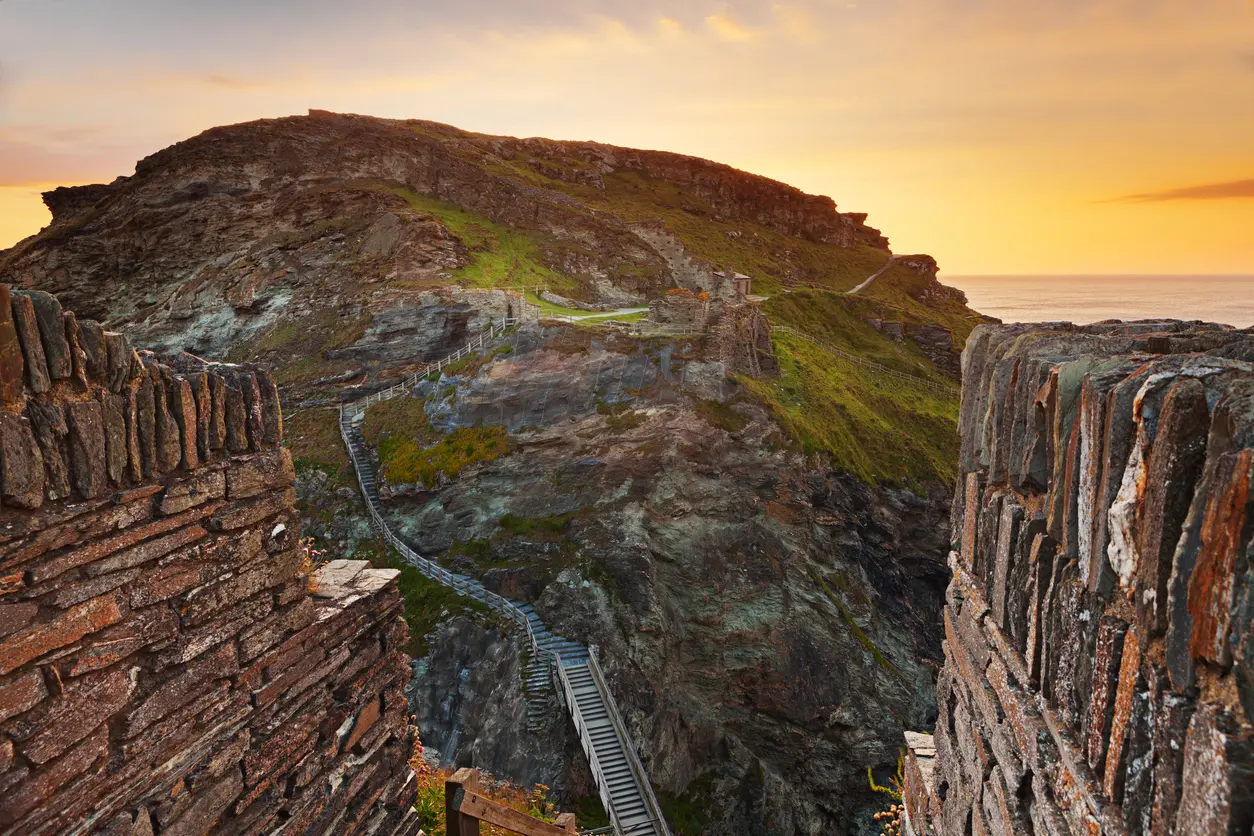
Golden sunset light illuminates the dramatic ruins of Tintagel Castle in Cornwall, where a winding wooden staircase crosses steep rocky cliffs towards the historic headland overlooking the Atlantic Ocean.
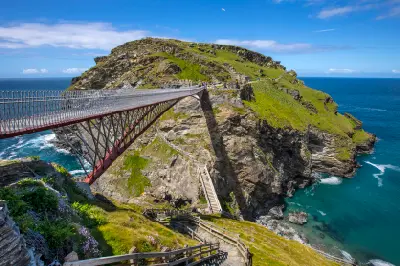
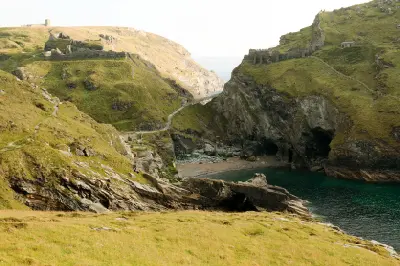
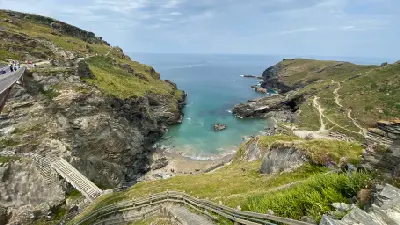
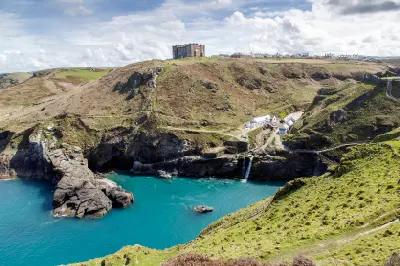
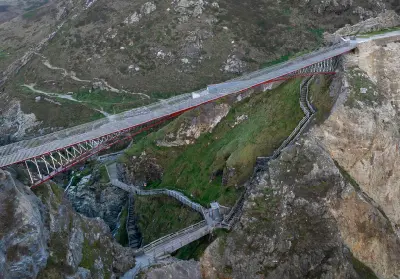
Tintagel Castle is a medieval castle site on Cornwall's north coast, occupying a steep headland and adjoining island above the Atlantic Ocean. Ruined stone walls, exposed coastal paths and a modern footbridge connect the historic remains across a deep rocky gap. The combination of medieval architecture, rugged cliffs and elevated sea views provides opportunities for architectural and coastal landscape photography.
50.66867, -4.76215
Gallery
Quick Facts
Access
Moderate Hike
15–45 min
Elevation Gain
80 m
Best Light
Low-angle light reveals the texture of the castle ruins and cliff faces, while diffuse light balances shaded stonework against the open sea.
Why This Light
Season
Weather-Dependent
Summer brings green coastal grassland and vegetation around the stone ruins, with longer daylight illuminating the exposed headlands and Atlantic water. Winter brings subdued vegetation, stronger coastal swell and more frequent sea spray, with changing cloud and wave conditions around the cliffs and castle remains.
Crowds
Often Busy
Restrictions
Tintagel Castle is reached on foot from Tintagel village along a descending access route, with steep paths and steps across the historic site. Admission is ticketed, and the footbridge provides access to the island ruins, although exposed sections may close during strong winds or severe weather. The castle occupies uneven cliff-top terrain with limited shelter, and exploring the island involves additional steps and changes in elevation. Photographers can also obtain coastal views from surrounding public paths without entering the ticketed site. Check current opening arrangements, weather-related closures and drone permissions before visiting.