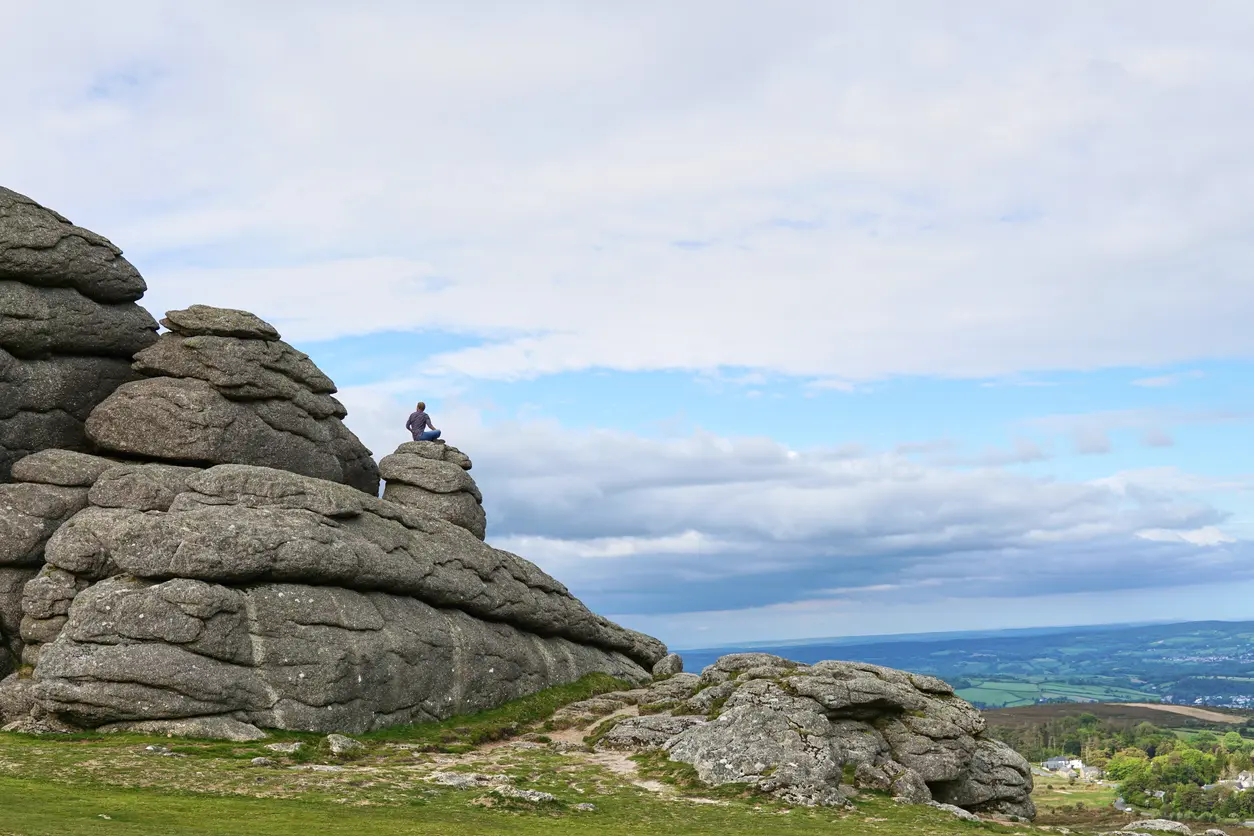
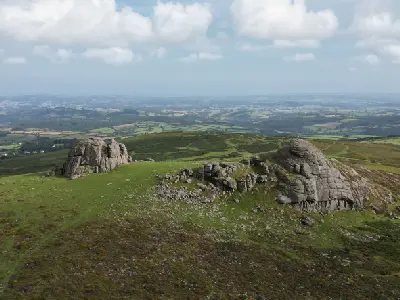
A visitor sits atop the weathered granite formations of Haytor Rocks in Dartmoor National Park, Devon, England, overlooking the rolling countryside beneath a partly cloudy sky.
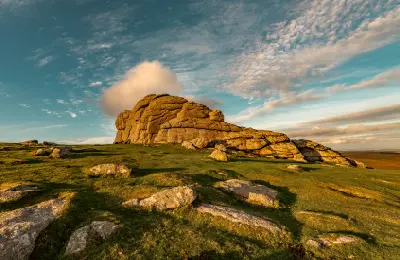
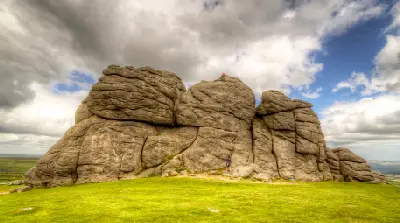
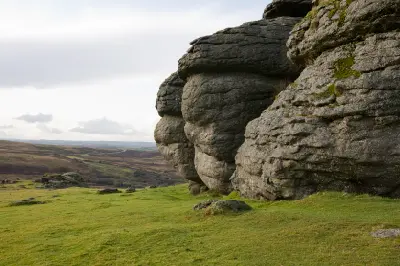
Haytor is a prominent granite outcrop on the eastern edge of Dartmoor, rising above open moorland with extensive views across the surrounding countryside. Its two main rock masses form a distinctive silhouette, surrounded by grassland, scattered granite boulders and weathered stone. The exposed summit provides opportunities for wide landscapes, rock studies and atmospheric moorland photography.
50.57984, -3.75678
Gallery
Quick Facts
Access
Short Walk
15–45 min
Elevation Gain
75 m
Best Light
Low-angle sunlight defines the granite faces and scattered boulders, while backlit cloud and mist can separate the tor from the surrounding moorland.
Why This Light
Season
Year-Round Stable
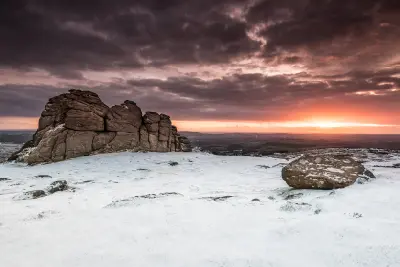
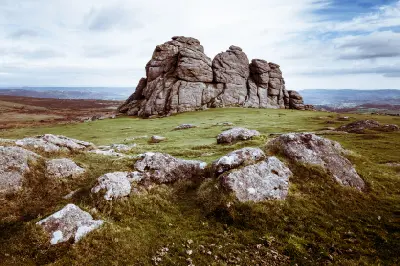
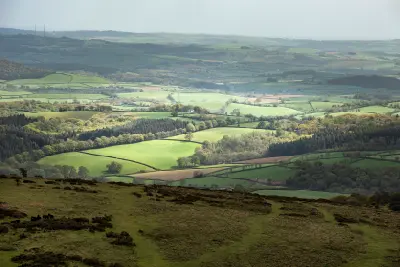
Summer brings green moorland grasses, patches of flowering vegetation and warmer tones across the granite, with the surrounding landscape often visible over long distances. Winter brings muted brown grassland, exposed rock textures and more frequent mist, frost and low cloud around the tor.
Crowds
Busy Midday
Restrictions
Haytor is reached from roadside parking areas near Haytor Vale, with an uphill walk across open moorland to the granite outcrops. The main approach is relatively short but involves a sustained grassy ascent, uneven ground and occasional rocky sections. Paths can become muddy or slippery after rain, and the exposed summit is subject to strong winds, mist and rapidly changing weather. Climbing the granite formations is unnecessary for most compositions and introduces additional fall risk. Keep to established routes where possible and observe livestock and moorland conservation guidance.