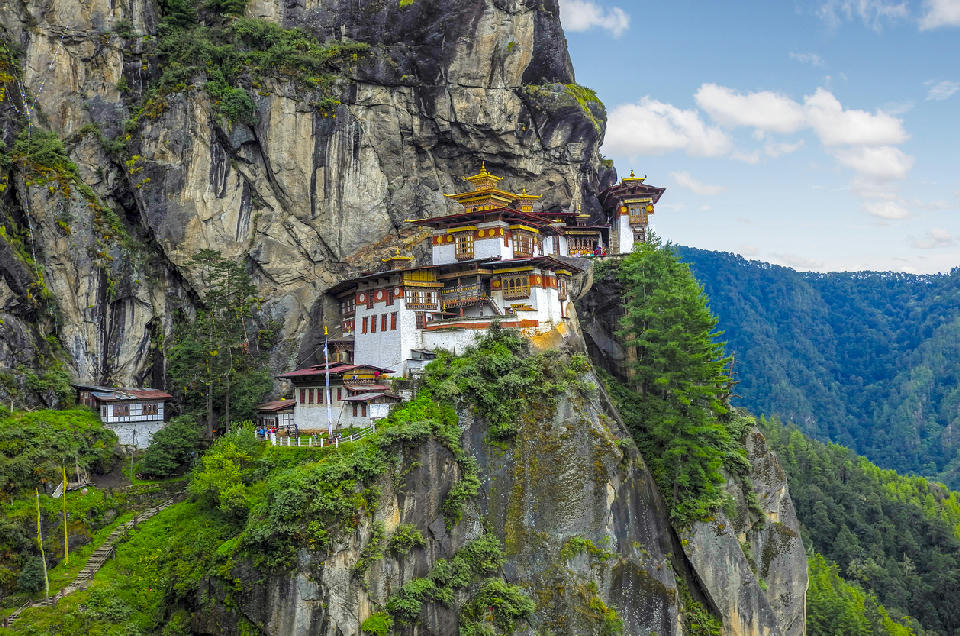
Taktsang Monastery built into a steep cliff face above a forested valley in Bhutan.
Bhutan is a landlocked Himalayan country in South Asia characterised by steep mountain ranges, deep river valleys, and a strong gradient from subtropical lowlands to high alpine terrain. Elevation changes are abrupt, creating distinct landscape zones over relatively short distances. The country’s geography supports a wide range of visual environments, from forested foothills and terraced farmland to glaciated peaks and high-altitude plateaus. Settlement density is low, and much of the landscape remains structurally intact, with development concentrated in valleys and river corridors. Seasonal variation plays a significant role in shaping photographic conditions, with monsoon cloud, winter snow, and clear post-monsoon air each producing different atmospheric and tonal qualities.
Key POIs in Bhutan
Explore Areas in Bhutan


Areas in Bhutan
Gallery
Overview
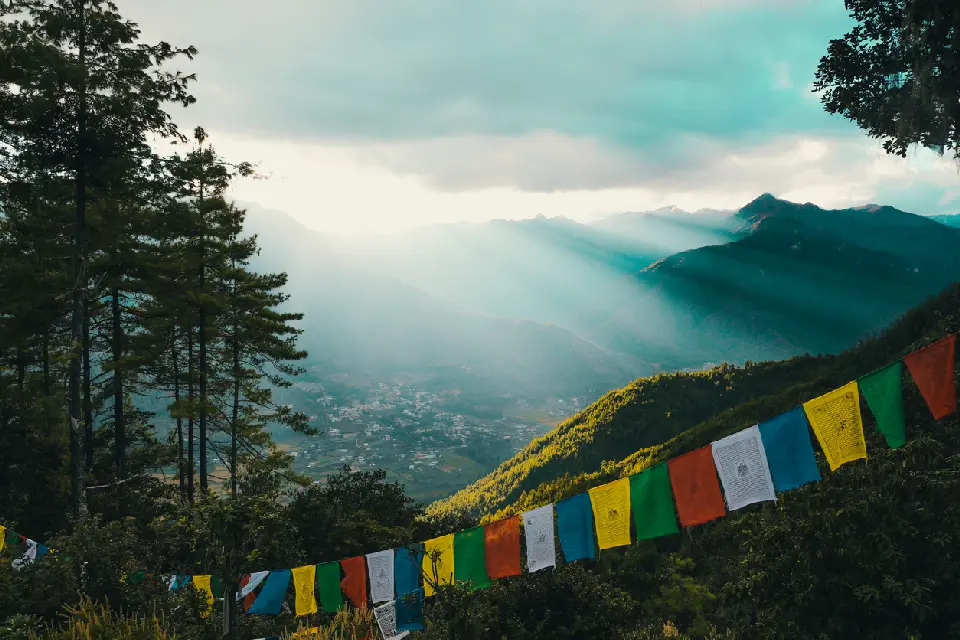
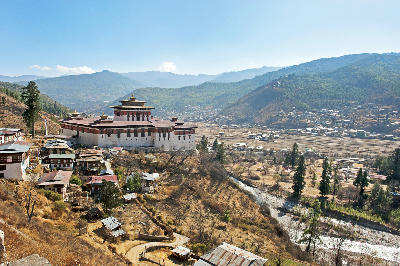
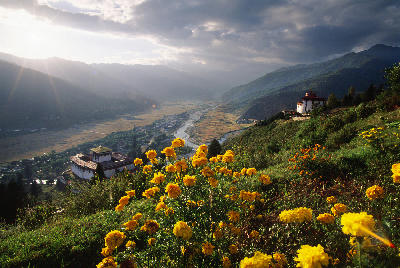
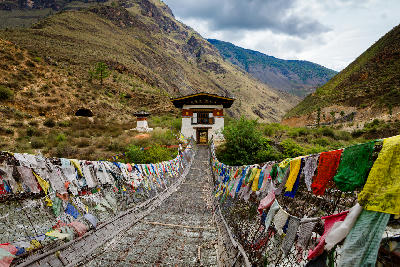
Bhutan’s landscapes are defined by vertical relief and layered terrain, with major river systems cutting through parallel mountain ranges that run broadly north to south. These valleys create natural travel corridors and host most towns, monasteries, and agricultural land, while higher elevations remain sparsely populated. Forested slopes dominate much of the country, transitioning to alpine grassland and rocky terrain at higher altitudes. In the north, glaciers and high passes mark the border with the Tibetan Plateau, while the southern foothills open into warmer, lower-elevation landscapes with broader valleys and denser vegetation. Light conditions vary widely by region and season. Cloud movement, mist, and changing weather patterns are frequent, creating shifting visibility and contrast. Many locations are accessible by road, though elevation gain and winding routes mean that distance and travel time are not directly correlated.
Key photography subjects
- Himalayan mountain ranges and high passes
- Deep river valleys and layered ridgelines
- Forested landscapes and alpine terrain
- Glaciers, snowfields, and high-altitude plateaus
- Monasteries, dzongs, and valley settlements
- Agricultural terraces and rural land use patterns
- Seasonal atmosphere, cloud, and light variation